








Introduction:Where does the sweetness in honey-processed coffee come from? Many people mistakenly assume it’s due to added honey, but the key actually lies in the mucilage layer retained during drying. This article takes the renowned Mozart coffee beans from Costa Rica’s Tarrazú region as an example, to deeply explore the origins of the names “Honey” and “Miel” for two types of honey processing, how the ratio of mucilage retention affects flavor, and the classification logic behind white, yellow, red, and black honey. It also provides professional roasting suggestions and V60 pour over parameters to help you better understand how anaerobic honey processing can bring out captivating aromas of raisin, osmanthus, and pineapple.
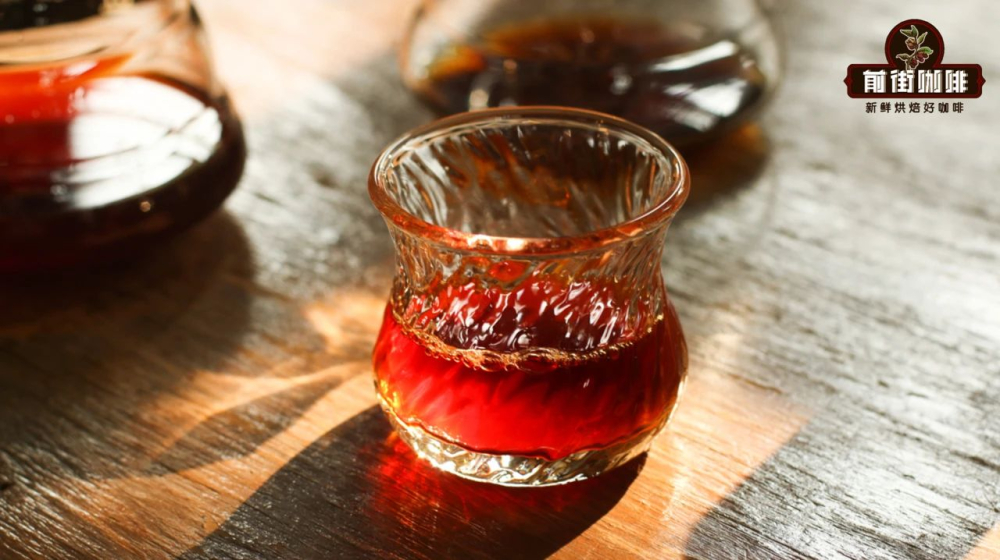
When it comes to coffee beans with notable sweetness and rich flavor layers, many coffee enthusiasts first think of Mozart from Costa Rica’s Tarrazú region. Grown at an altitude of about 1,800 meters, this coffee, thanks to its anaerobic honey processing, exudes intense dried fruit and raisin aromas. Upon tasting, one can also perceive the delicate fragrance of osmanthus and the refreshing sweetness of pineapple. But many assume this sweetness comes from honey — which is not the case.
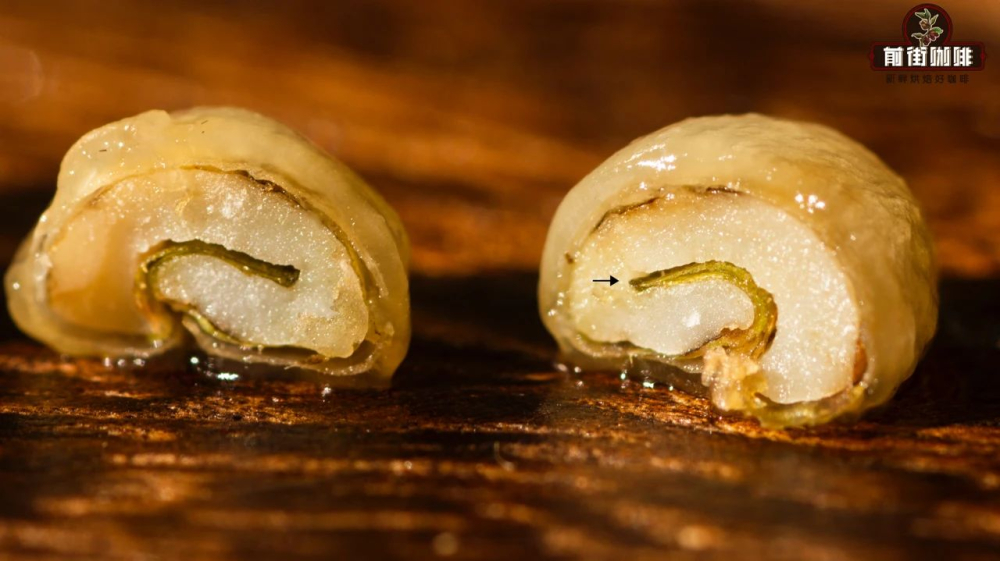
The “honey” in honey processing doesn’t refer to actual honey being added, but rather the sticky, honey-like mucilage layer that is deliberately retained after the coffee fruit’s flesh is removed. During sun drying, this mucilage dries along with the coffee bean, releasing natural sugars that impart a soft and enchanting fermented sweetness. This is why honey-processed coffees often have intense fruitiness and sweetness.
Regarding the English terminology for “honey processing,” the common terms are “Honey Process” and “Miel Process.” Here, “Miel” means “honey” in Spanish, and this term originally comes from Costa Rica, where local farmers used it to describe the honey-like mucilage on the surface of coffee beans. Honey processing can be seen as an evolution of Brazil’s pulped natural method. Its hallmark is that after removing the skin, part or all of the mucilage is retained before proceeding with sun drying or shade drying.
Coffee beans are essentially the seeds of the coffee fruit, encased in multiple layers including the outer skin, pulp, mucilage, and inner parchment. The differences among various processing methods lie in how these outer layers are removed, and how drying methods and timing are controlled. In honey processing, the skin and part of the pulp are first removed, but the mucilage is intentionally kept, then the beans are slowly dried in the sun or under shaded conditions. This allows the sugars in the mucilage to penetrate the seed, thereby influencing the final flavor profile.
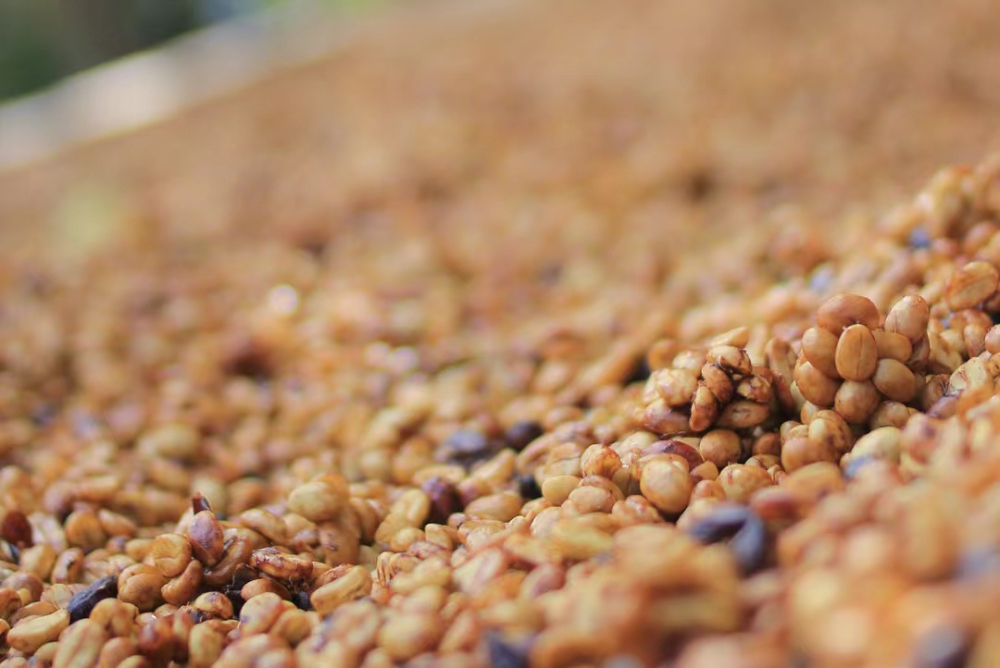
Based on the proportion of mucilage retained, honey processing is generally divided into four main categories: white honey (retaining about 40%–50% mucilage), yellow honey (60%–70%), red honey (80%), and black honey (almost 100%). Generally speaking, the more mucilage retained, the stronger the fermentation, the more pronounced the sweetness, but also the longer the drying time required and the stricter the control needed. Especially for black honey, drying directly in sunlight can easily lead to over-fermentation, so shading is typically used, along with a drying period of 14 days or longer.
Due to its mountainous terrain, Costa Rica’s main coffee-growing areas are concentrated in the Talamanca Mountains at altitudes of 1,200 to 2,000 meters, such as the well-known Tarrazú region. The large day-night temperature variation at high altitudes helps the coffee beans mature slowly, accumulating richer flavor compounds. However, these regions have limited water resources, making water-intensive washed processing unsuitable. Additionally, they don’t receive as much sunlight as other areas, which isn’t ideal for traditional sun drying. As a result, farmers adopted a modified version of Brazil’s pulped natural method: first removing the skin, then retaining some mucilage, and controlling the sun drying or shaded drying environment. This approach saves water while effectively highlighting the flavors.
Anaerobic honey processing is a premium technique that has emerged in recent years. Before removing the skin, the whole coffee cherry is placed in an oxygen-free environment for fermentation, then the skin is removed and a small amount of mucilage is retained for drying. This method is able to impart distinct fermented aromas to the coffee even with minimal fruit residue, significantly enhancing flavor complexity and layering. Costa Rica’s Tarrazú region, in particular, is well suited for such refined processing, giving rise to distinctive specialty coffees like Mozart.
Why does a certain coffee brand particularly champion Mozart from the Tarrazú region? The reason lies in its high growing altitude of 1,800 meters, placing it within the high-altitude zone of the Tarrazú region. The high-altitude environment slows down the growth rate of the coffee beans, allowing ample time for sugar and flavor compound accumulation. Paired with anaerobic honey processing, this bean exhibits a delicate yet balanced taste, much like listening to a classical Mozart symphony — rich in detail yet harmoniously unified.
In terms of roasting, to fully showcase Mozart’s balance of acidity and sweetness as well as its layered profile, roasters typically opt for a medium roast. During this process, the time between first crack (yellowing) and first crack (first pop) is intentionally extended to allow the Maillard reaction to fully develop, further enhancing sweetness and aroma complexity. For home brewers, the brand also offers practical V60 pour over recommendations.
It is recommended to use a V60 #01 filter cone, with a grind size of medium-fine, similar to the size of fine sugar (able to pass 80% through a Chinese No. 20 standard sieve). Use about 15 grams of coffee, with water temperature controlled at 91°C, and a brew ratio of 1:15. Employ a pulse pouring method: the first pour adds 30 grams of water for a 30-second bloom; the second pour uses a slow circular motion to add water up to 125 grams, then pause for drainage before continuing to pour up to 225 grams. Finally, remove the filter just before the water level exposes the coffee bed. The total extraction time is advised to be around 1 minute and 50 seconds.
Through this combination of processing, roasting, and brewing methods, Mozart coffee beans can express pronounced fermented aromas, accompanied by the sweet richness of raisins, the delicate fragrance of osmanthus, and the tropical fruit sweetness of pineapple. It is a honey-processed specialty coffee highly suitable for in-depth appreciation.
The above content is compiled by CoffeeHunters, a coffee news website.


