







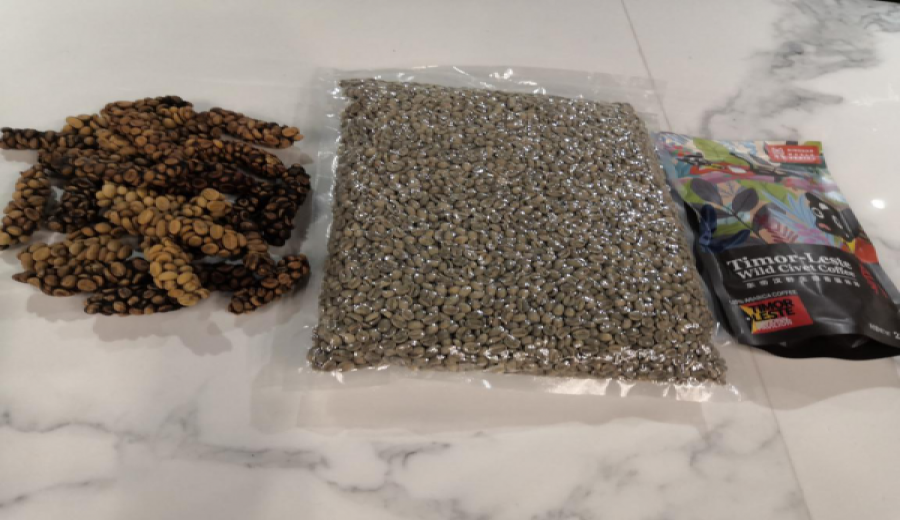
Introduction:As one of the rarest and most expensive coffee varieties in the world, civet coffee often surprises with its unique flavor. However, improper brewing can easily waste its precious potential. This article will detail how to fully showcase the distinctive caramel sweetness and the refreshing minty aftertaste of civet coffee through proper filter selection, appropriate coffee-to-water ratio, precise grind size and water temperature, along with a three-stage pouring technique—helping you perfectly extract the essence of this top-tier coffee.
Civet coffee is one of the rarest and most valuable coffees in the world, with wild-grown beans commanding up to around NT$14,000 per kilogram in the orthodox market. With such a high price tag, even the slightest misstep during brewing not only fails to bring out its unique flavors but also represents a significant waste of quality. If you’re fortunate enough to get your hands on this premium coffee bean, how should you brew it to fully showcase its value? This guide will take you step-by-step—from choosing the right filter, to setting the coffee-to-water ratio, grind size, and water temperature, to the detailed operation of the three-stage pour—so you can gradually master the key elements of extraction.
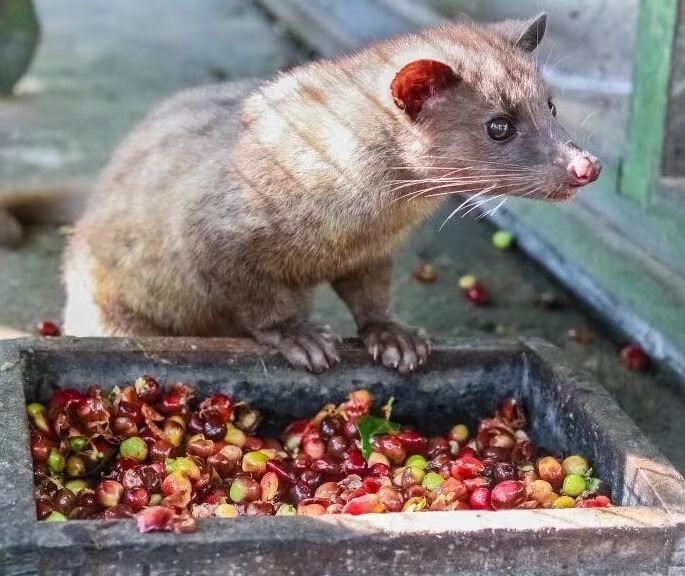
 These coffee beans from Indonesia, naturally fermented through the digestive system of the civet, offer an unforgettable flavor experience. After consuming coffee cherries, the beans undergo a special fermentation process within the civet’s digestive tract by unique microbial flora. Since the intestines cannot break them down, the beans are eventually excreted in feces. This process imparts a rich, full-bodied taste and an aroma profile distinct from that of regular coffee. Compared to coffees from other regions, Indonesian coffee often carries an earthy and herbal undertone, but civet coffee features an even more pronounced earthiness, with a syrupy-smooth mouthfeel and a hint of cool mintiness in the aftertaste that adds the perfect finishing touch to the overall flavor.
To fully experience this unique coffee profile, pour over brewing is the preferred method. First, in terms of filter choice, the Kono dripper is highly recommended. Its design features ribs extending from the bottom to the middle section, with smooth walls on the upper half. When the filter paper fits tightly against the dripper, water cannot bypass the coffee grounds, forcing it to penetrate the coffee bed more evenly—enhancing the richness of extraction. This design is especially suitable for extracting bold-flavored coffees like Golden Mandheling or Blue Mountain No.1, and it works exceptionally well for civet coffee, which also aims for a rich mouthfeel.
 In terms of coffee dosage, it is recommended to use 15 grams of coffee grounds, a quantity suitable for most one- to two-cup pour over drippers. It’s important to note that more coffee is not always better—excessive coffee can lead to uneven water flow and affect extraction consistency. In addition, regarding the coffee-to-water ratio,1:15 is an ideal choice. Although some coffee enthusiasts prefer a higher concentration of 1:13, overly concentrated ratios can introduce excessive bitterness and astringency, which is counterproductive to appreciating the delicate sweetness and complex layers inherent in civet coffee.
Grind size adjustment is equally crucial. For a dark-roasted coffee like civet coffee, a medium-coarse grind that passes through a #20 sieve at 70% is recommended. Due to the relatively loose structure of dark roasts, grinding too fine can lead to over-extraction, resulting in burnt and carbonized flavors; conversely, grinding too coarse may cause under-extraction, yielding a flat, watery taste. A moderately coarse grind balances flavor release and mouthfeel, delivering a rich yet refreshing coffee experience.
Water temperature control is also key. It is recommended to use water at 87 to 88°C for brewing. If the water is too hot, it may amplify undesirable impurities in the beans, resulting in sharp, burnt bitterness; if too low, the coffee may exhibit dull acidity and unpleasant fermented notes. A moderate temperature helps bring out the caramel, chocolate, and nutty aromas of civet coffee while preserving its rich and full-bodied base.
Finally, in terms of pour over technique,the three-stage pouris the brewing method that best highlights the layered complexity of civet coffee. The first stage is the bloom, where about 30 milliliters of hot water are poured to allow the coffee grounds to fully absorb water and release carbon dioxide, preparing for subsequent flavor extraction. Next, the second stage involves pouring 100 milliliters to steadily extract the main body of flavors. Finally, the third stage adds 95 milliliters, which helps enhance sweetness, making the overall mouthfeel rounder and bringing out a caramel-like sweet note along with a subtle minty aftertaste, leaving a long and captivating finish.

The above content is compiled by CoffeeHunters, a coffee news website.


