








Introduction:Do you know how to use the coffee flavor wheel? From its first edition in 1995 to the upgraded version in 2016, the SCAA Coffee Taster’s Flavor Wheel has always been an industry benchmark. However, it also presents cultural differences and usability barriers. This article delves into the evolution, differences, and limitations of the old and new versions of the flavor wheel, explores how regions like Taiwan and Indonesia have adapted localized versions that better reflect their local culinary cultures, and even offers suggestions for a simplified flavor wheel that is easier for consumers to use—helping you more intuitively describe and experience the myriad aromas and flavors of coffee.
In the learning journey of specialty coffee, that colorful ring—often referred to as the SCAA 2016 Coffee Taster’s Flavor Wheel—is always both loved and hated. As early as 1995, the SCAA launched the first-generation flavor wheel, divided into positive and negative flavor sections. It was the industry’s first systematic attempt to categorize and summarize the flavors that coffee might present, providing coffee professionals at the time with a unified language for communication.
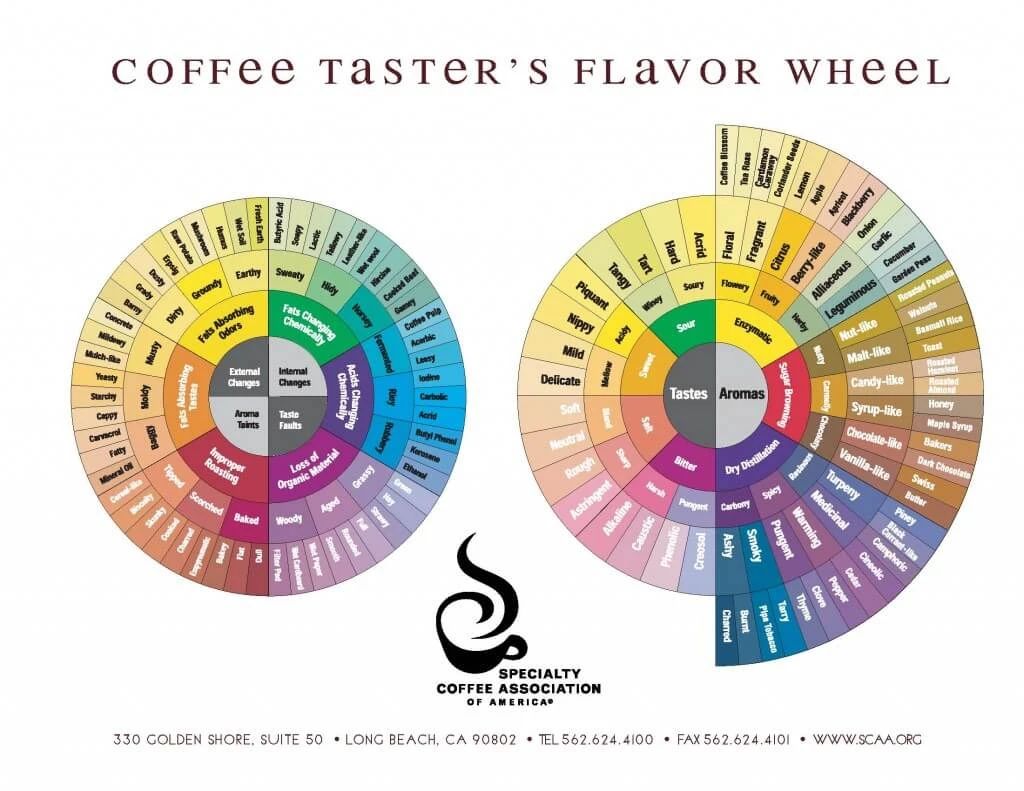
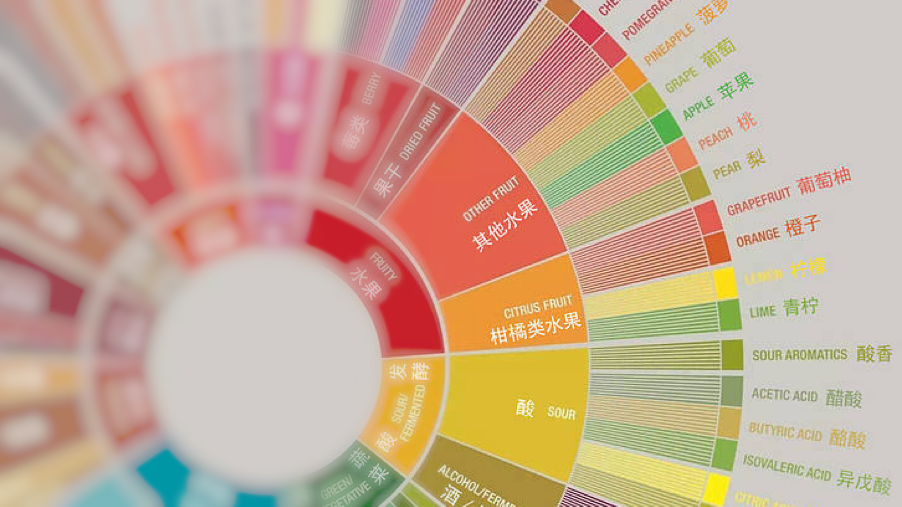
The 1995 SCAA flavor wheel listed up to 90 specific analog flavor descriptors, such as common adjectives like fruits, floral notes, and caramel, as well as more nuanced taste sensations like spices and nuts. This allowed coffee producers, roasters, and cuppers around the world to communicate about flavors based on the same standard. This flavor map not only laid the foundational framework for flavor description but also gradually became an authoritative reference tool recognized by the industry.
By 2016, the SCAA upgraded the flavor wheel once again. This revision involved many key institutions, including the World Coffee Research (WCR), Kansas State University in the United States, the University of Hohenheim in Germany, and representatives from various coffee-growing regions. Together, they analyzed and tested the flavor characteristics of 105 samples from 13 major coffee-producing countries, compiling them into the World Coffee Research Sensory Lexicon, which served as the scientific foundation for the new flavor wheel.
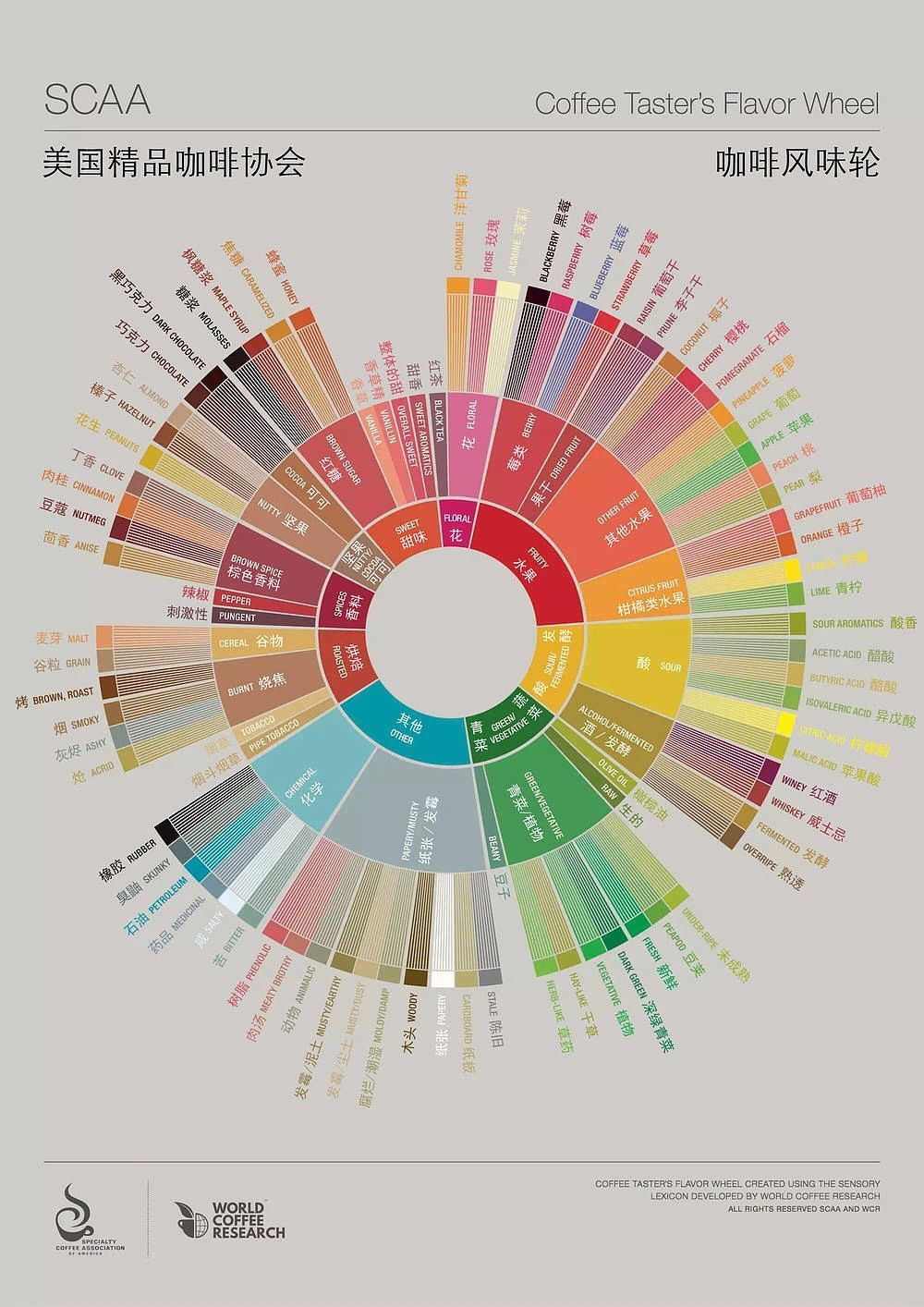
Then, a research team from the University of California, Davis, used traditional sensory evaluation and statistical analysis methods. They invited 72 experts to rank and classify these flavor attributes, ultimately producing a brand-new flavor wheel chart. The 2016 edition of the SCAA Coffee Taster’s Flavor Wheel merged the previously separate positive and negative flavor sections and further refined the distinctions among a diverse range of positive flavors. Although the total number of analog flavor descriptors slightly decreased to 85, the classification and descriptions became more precise.
Notably, the visually appealing and practical new flavor wheel was designed by the renowned London creative agency One Darnley Road. Each color was carefully selected to enhance the connection and recognizability between the color blocks and their corresponding flavors, helping users more intuitively associate and remember them.

However, this widely acclaimed flavor wheel still has its limitations in regions with non-English-speaking populations or significant differences in dietary culture. For example, flavor analogs commonly found in the U.S., such as grapefruit, cherry, and maple syrup, may not be part of everyday dietary experiences in Asian markets. Therefore, when a coffee is described as having grapefruit acidity or maple sweetness, many consumers may find it hard to visualize.
To bridge this cultural gap, some regions with more mature specialty coffee cultures have begun developing localized flavor wheels. For instance, the Taiwan Coffee Research Laboratory launched a locally adapted flavor wheel in 2018, featuring 95 flavor substances. It not only includes common fruit categories but also expands to Southeast Asian specialty fruits such as longan, wax apple, durian, dates, and smoked plums. It also incorporates flavor descriptors with East Asian culinary characteristics, such as soy sauce, meaty notes, ginseng, and cedar.
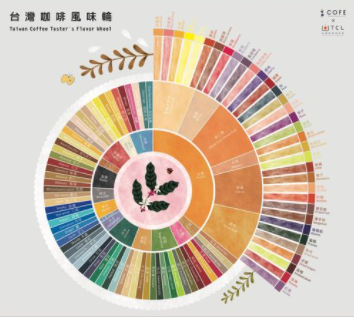
The head of the Taiwan Coffee Research Laboratory also pointed out that terms like dates, roselle, dried longan, sweet fermented rice, and osmanthus are quite common in local cuppings but may be very unfamiliar to international cuppers. Additionally, Indonesia, under the leadership of experts like Mr. Christian, has developed a flavor wheel with local characteristics, covering 36 aroma types and 82 sensory descriptors, with particularly detailed subdivisions of spices—compared to the SCAA version, which lists only six spices. The Indonesian version is more aligned with its identity as the “Spice Kingdom.”
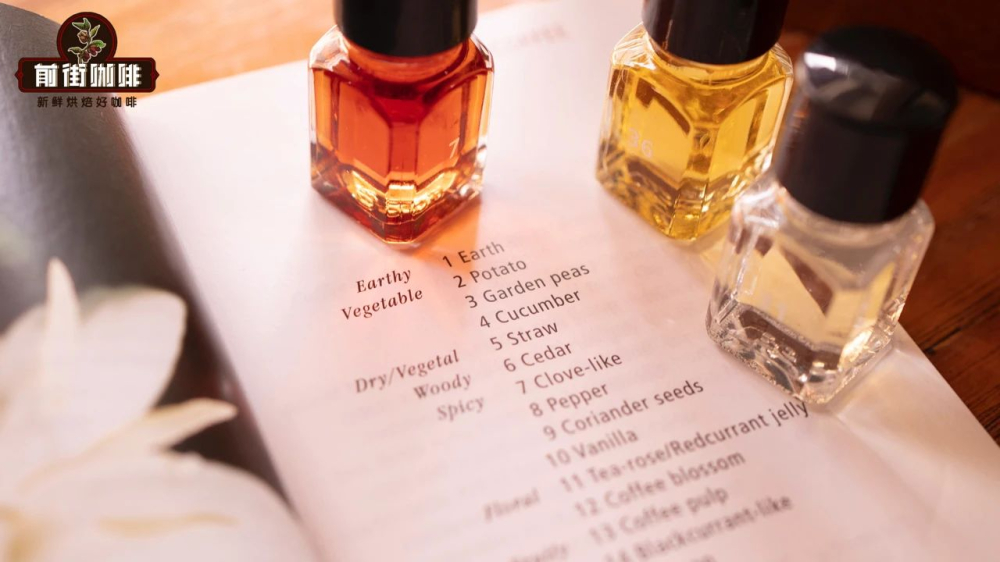
Christian also added that some flavors considered drawbacks in the SCAA flavor wheel—such as the smell of coffee pulp—are indeed often seen as defects in washed processing methods. However, in natural or honey-processed coffees, this fruity pulp aroma can actually be an expression of rich aromatic layers and should not be dismissed outright. Therefore, understanding the logic and cultural context behind the flavor wheel is essential for more accurate interpretation and application.
For the average consumer, the professional-grade SCAA flavor wheel may be too complex and inaccessible. Therefore, the Belgian roasting brand Cuperus introduced a more simplified “consumer flavor wheel,” consisting of just six major categories: bright fruity, nutty, sweet fruity, floral, chocolatey, and spicy/vanilla. These six types actually correspond to the main positive flavor categories in the 2016 edition of the flavor wheel. They are not only easier to understand but also allow general coffee drinkers to quickly grasp the outline of coffee flavors, thereby enhancing their tasting experience.

In summary, whether it’s the professional version or the localized and simplified versions of the flavor wheel, they all aim to help us more accurately describe, share, and enjoy the diverse flavors of coffee. By understanding the design concepts and differences among various versions of the flavor wheel, you can also more confidently explore the unique characteristics of different coffees and find the one that best suits your palate.
The above content is compiled by CoffeeHunters, a coffee news website.


