







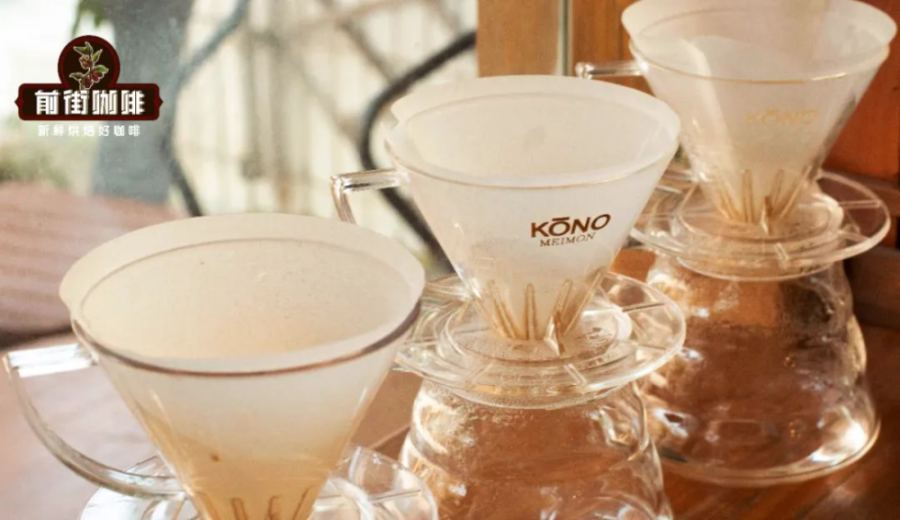
Introduction:The flavor of pour over coffee depends not only on the coffee beans and grind size, but the fit between the filter paper and the filter cone also plays a critical role. Through comparative experiments, this article explores in depth how misaligned or poorly fitted filter paper affects water flow paths, extraction efficiency, and ultimately the flavor profile. Starting with measured data from two commonly used filter cones—V60 and KONO—this guide helps you master practical techniques such as wetting the filter, centering it properly, and eliminating air bubbles to avoid channeling, which can lead to over-extraction or under-extraction.
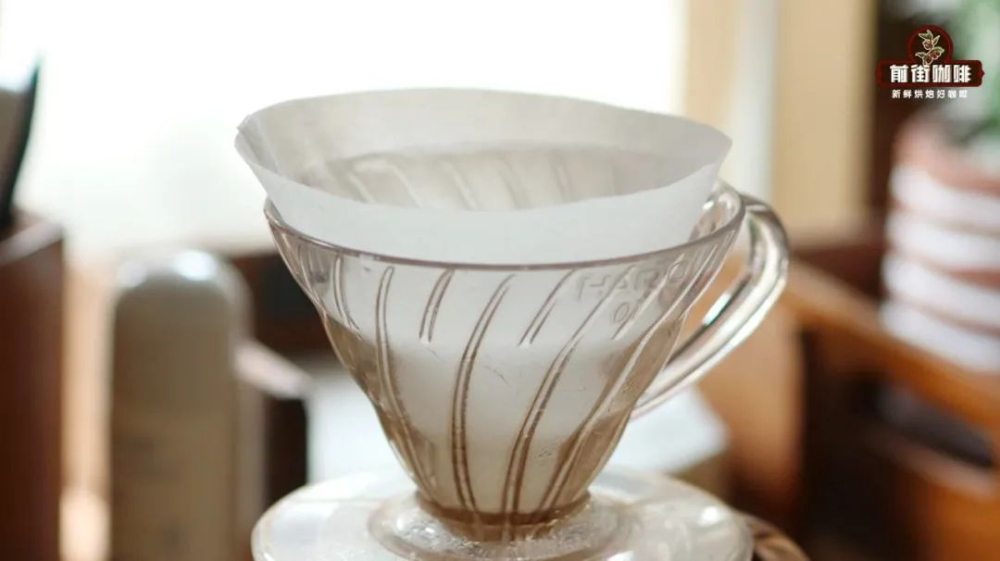
For many coffee enthusiasts, the first step before brewing is often wetting the filter paper. This seemingly simple action primarily serves to secure the filter tightly against the cone to prevent paper particles from affecting taste, while also using hot water to preheat the equipment. However, most tutorials emphasize the “tight fit” aspect but rarely discuss how the degree of contact between the filter and the cone actually impacts extraction uniformity and the complexity of flavors.
To better understand these differences, we specially designed two sets of experiments, conducting pour overs with filter papers in different states of alignment, observing and comparing their effects on the final coffee flavor. Through actual tasting and data measurement, we aim to give you a more intuitive understanding of this often-overlooked detail.
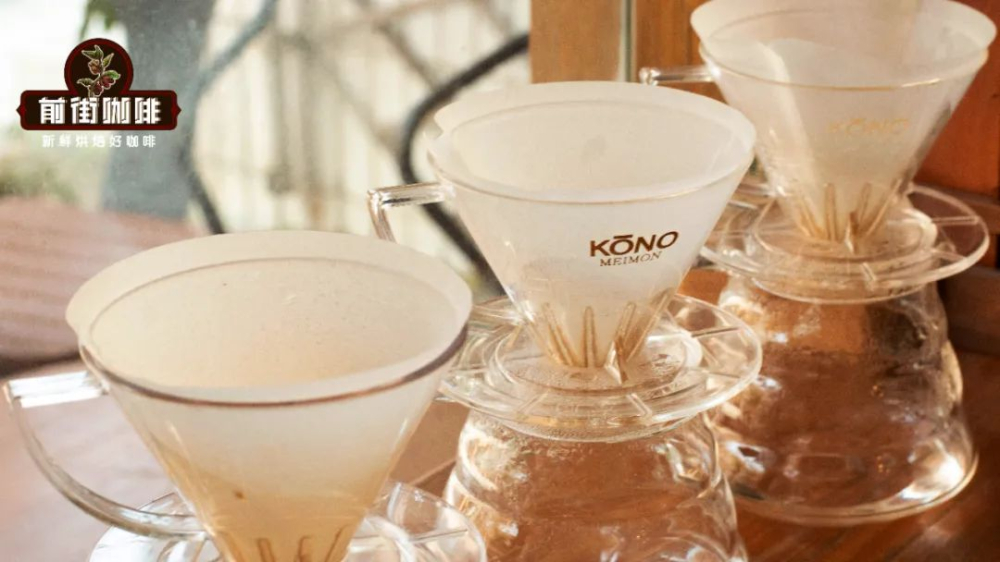
In the experiments, we selected two commonly used filter cones in our shop—V60 and KONO—and two types of coffee beans with distinct flavor profiles: one being a Guatemalan · Flower God with bright acidity, and the other a Brazilian · Red Bourbon with prominent nutty notes. Both experiments used the same parameters: 15 grams of coffee, a 1:15 brew ratio, and a three-pour method. Only the grind size and water temperature were slightly adjusted according to the characteristics of each filter cone to mimic real brewing scenarios.
For the V60 group, the parameters were: EK43s grinder setting 10, water temperature 90°C; for the KONO group, setting 10.5 and water temperature 87°C. These settings help showcase the ideal extraction performance of each filter cone while highlighting the variations caused by the fit of the filter paper.
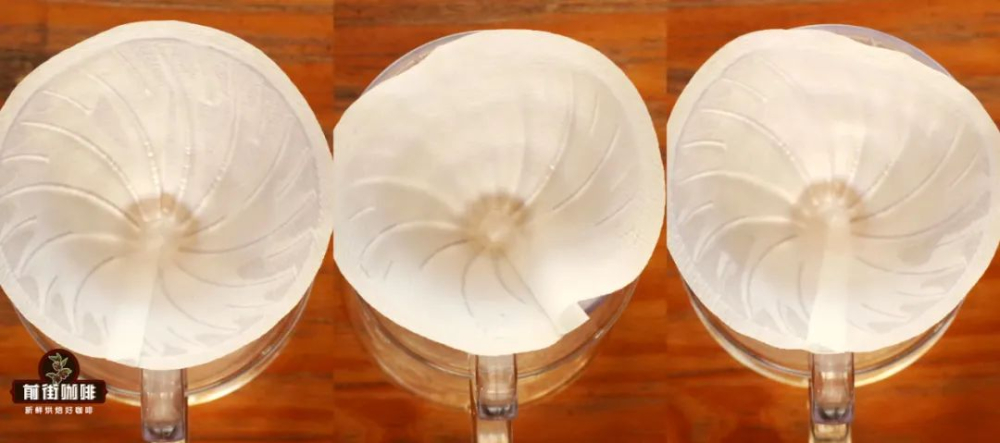
The core of this experiment was categorizing the fit between the filter paper and the cone into three states: the first being the ideal state, where the filter paper fits perfectly with no bubbles or misalignment; the second where the filter paper is off-center, causing one side to adhere and the other to hang loose; and the third where the filter paper and cone are completely unaligned, showing obvious gaps or large air bubbles.
First, let’s look at the V60 group’s brewing results: the three brews took 1 minute 54 seconds, 2 minutes 4 seconds, and 2 minutes 12 seconds respectively, with TDS concentrations of 1.12%, 1.19%, and 1.26%. In terms of flavor, all three brews used the same washed Guatemalan · Flower God, generally exhibiting delicate floral notes, fresh lemon acidity, yellow stone fruit tones, along with hints of almond and green tea in the aftertaste. However, compared to the first brew (with perfectly fitted filter paper), the latter two (with poor alignment) had noticeably heavier mouthfeels, with more pronounced acidity and bitterness—especially the third brew (completely unaligned), which also had a slight astringency in the finish.
Next, observe the KONO group: the three brews took 2 minutes 7 seconds, 1 minute 54 seconds, and 1 minute 46 seconds, with TDS concentrations of 1.13%, 1.06%, and 0.98% respectively. Since the KONO filter cone has a slower flow rate and is better suited for dark roasts or beans aiming for a fuller body, we used Brazilian · Red Bourbon. The first brew produced coffee with distinct creamy chocolate, caramel biscuit, and pu’er tea aromas, overall balanced with a long-lasting sweet aftertaste. In contrast, the second brew’s flavor was more muted, with weak chocolate notes, a thinner mouthfeel, and watery texture; the last brew almost lacked noticeable aroma, had a rough texture, and was dominated by bitterness, likely due to under-extraction.
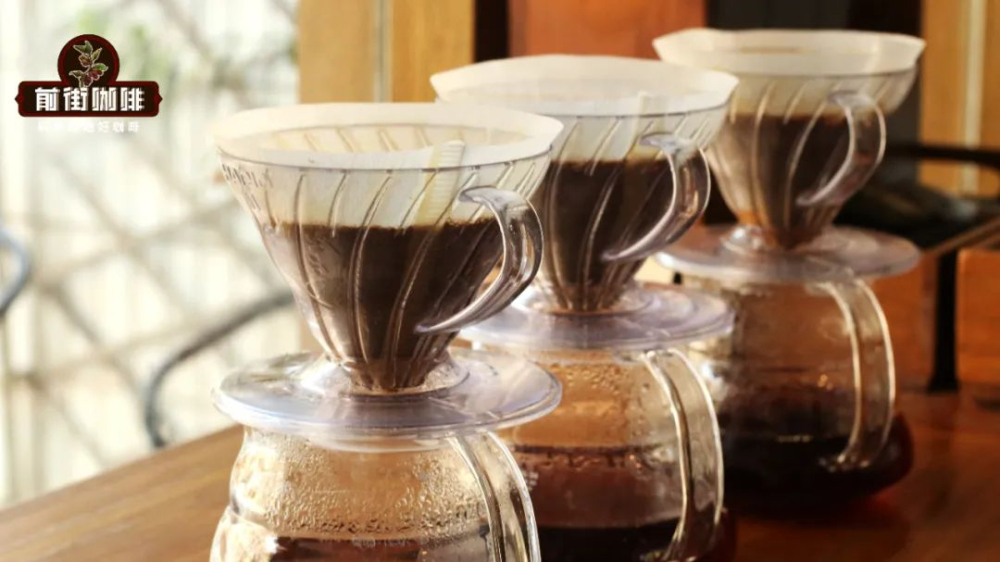
These two sets of experiments clearly show that whether using a fast-flowing V60 or a KONO that emphasizes immersion and body, the fit between the filter paper and the cone directly affects how water distributes through the coffee bed, thereby altering overall extraction uniformity and concentration. While the general flavor profile may be similar, the actual taste and layering in the cup can differ significantly.
Especially for a V60, which features multiple spiral ribs, the function of the ribs is to support the coffee bed, allowing water to evenly penetrate and extract a rich range of flavors. But in our experiments, we found that when the filter paper isn’t fully adhered, coffee grounds tend to shift to one side and don’t receive even water distribution. As the pouring progresses, areas without proper contact lack support, leading to bubble formation and causing water to concentrate through the fitted sections. This results in over-extraction in some zones and under-extraction in others.
The KONO filter cone, with its smooth inner wall and fewer guiding ribs (only about a quarter of the height at the bottom), mainly relies on the filter paper tightly adhering to the walls to guide water slowly through the bottom. This design helps prolong water-coffee contact time, making it especially suitable for immersion-style extraction of dark roasts. But if the filter paper doesn’t fully adhere, water can easily form “channels” in the unattached areas, flowing through too quickly and leaving some coffee grounds under-extracted—resulting in a thin, rough mouthfeel and even noticeable bitterness.
In summary, regardless of the type of filter cone, after wetting the filter paper, ensure it fully covers the inner wall with no bubbles or shifts before adding coffee and pouring water. This not only prevents channeling but also stabilizes flow rate and improves extraction uniformity, ultimately delivering a richer, more balanced coffee flavor. Next time before your pour over, take a few extra seconds to check the filter paper—it might just surprise you with how much your coffee experience improves.
The above content is compiled by CoffeeHunters, a coffee news website.


