








Introduction:Dirty coffee has become a favorite among many coffee enthusiasts for its unique visual layering effect and bold flavor. This article delves into the fundamental differences between Dirty coffee and iced lattes, helping you master the key elements that influence layering during preparation—such as cup selection, coffee flow rate, and espresso quality—along with exploring whether a moka pot is suitable as a Dirty base. It will guide you in replicating a professional-level visual and taste experience at home.
The charm of Dirty coffee lies in pouring freshly extracted hot espresso directly into chilled milk, allowing the two liquids with vastly different temperatures to create a striking contrast in a transparent glass, resulting in a mesmerizing gradient effect. Over time, the dark coffee slowly seeps downward, as if dyeing the pure white milk with a rich hue—this dynamic visual experience is one of the main reasons why Dirty coffee is so popular.

However, many people attempting to make Dirty coffee at home often encounter issues where the coffee and milk quickly mix, failing to maintain a clear separation. This is closely related to several key factors, from container choice to technique, all of which can impact the final presentation. Below, we’ll analyze common mistakes and offer improvement tips.
First, let’s talk about the art of cup selection.It is recommended to use a tall glass with a relatively narrow opening.This shape helps prolong the spread of the coffee, creating better visual layers. A special tip: pre-chilling the glass has a dual benefit—it not only slows down the coffee’s penetration but also helps maintain the overall flavor profile of the drink.
The height from which you pour during extraction is equally crucial. Many people overlookthe control of the distance between the portafilter and the milk surface,as pouring from too high can cause the coffee to form a strong jet that disturbs the milk’s surface—not only ruining the layered effect but also potentially altering the overall taste. The ideal approach is to let the coffee flow directly onto the milk’s surface. If your equipment setup is limited, you can first catch the espresso in a small container, then use a spoon to gently guide it in, ensuring the concave side of the spoon faces upward to create a buffer layer.
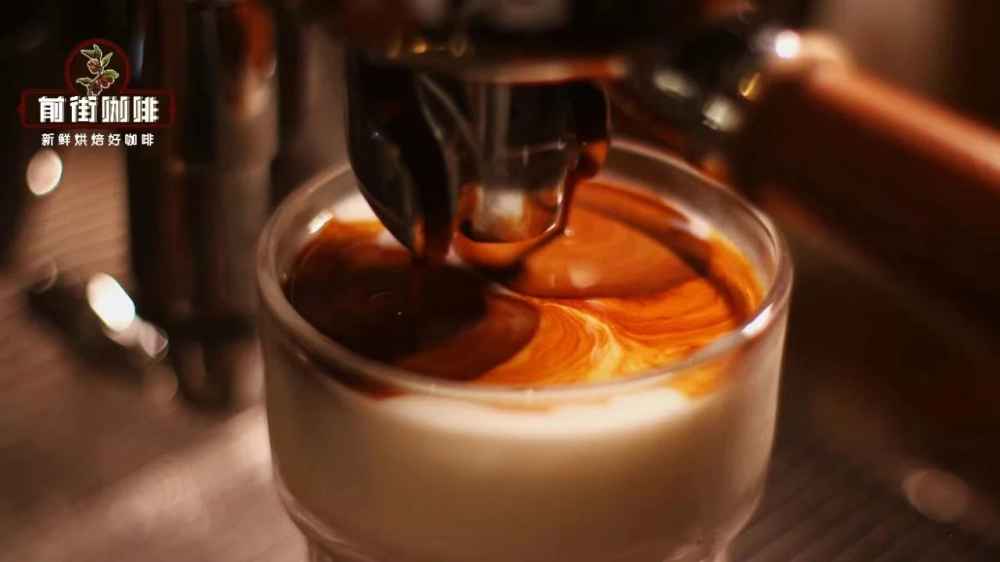

Regarding the choice of coffee base,the quality of the espresso directly determines the longevity of the layering.While store-bought moka pot coffee is convenient, it often falls short in concentration and crema compared to professional machines, which noticeably affects both the visual appeal and flavor complexity of Dirty coffee. For optimal results, it’s recommended to use espresso extracted from a professional espresso machine—the rich crema it produces creates a more distinct boundary line.
Milk selection is equally important.It’s best to use fresh whole milk,which has the right viscosity and fat content to better support the coffee and maintain clear layering. Popular brands like Vitasoy and Wei Chuan offer good options. For even better layering, consider using skimmed or concentrated milk (commonly referred to in the coffee industry as “iceberg milk”), a specially processed high-density milk that offers more stable and long-lasting visual effects, and may even bring a unique savory note.

In summary, successfully making Dirty coffee requires balancing multiple factors: from pre-chilling the container and precise pouring control, to high-quality espresso and the right milk. Every detail can influence the final visual and drinking experience. A helpful tip for beginners: start with a basic version, gradually adjust each parameter, and eventually, you’ll be able to recreate a café-quality Dirty coffee at home.
The above content is compiled by CoffeeHunters, a coffee news website.


