








Introduction:Are you confused by the different names for Flat White? From "Flat White" to "Aurora Bianco," "Flat White" (Starbucks), or "Original Flat White," they all actually refer to the same coffee drink. This in-depth analysis reveals the origin disputes of Flat White, whether its base is espresso, the correct milk ratio, and the key differences from latte and cappuccino, helping you grasp this globally popular coffee beverage more accurately.

Flat White, also known as Aurora Bianco, Flat White (Starbucks), or Original Flat White, is a coffee drink that has garnered significant attention in the global coffee market in recent years. With the promotion by international chain brands, more and more consumers are shifting from latte or cappuccino to this beverage, which places greater emphasis on the ratio of coffee to milk. However, many still don’t understand its true origins or how it differs from other milk-based coffees.

Flat White originally comes from either Australia or New Zealand, and to this day, both countries continue to debate its birthplace. According to records, the name even appeared in a British film as early as 1962, where it referred to a low-quality coffee, vastly different from its current definition. In 2015, a certain international chain brand launched "Flat White" (branded as "Fureibai") in the Chinese market to seize the initiative, preventing competitors from establishing it as a mainstream offering.

Regarding the origin of Flat White, records in Australia trace back to the 1980s. In 1983, Miller's Treat café in Sydney first mentioned the name on its menu; in 1984, local media even confused Flat White with latte as a joking term. It wasn’t until 1985 that barista Alan Preston at Moors Espresso Bar officially added it to the permanent menu, claiming inspiration from his hometown in Queensland. Additionally, some records suggest that due to insufficient milk foam, certain restaurants could only offer what was called "flat white only," becoming an alternative origin story.

On the other hand, New Zealand also claims to be the birthplace of Flat White. It is said that Derek Townsend and Darrell Ahlers, founders of DKD Café in Auckland, designed this drink as an alternative to traditional Italian-style latte. Another account states that in 1989, a barista in Wellington, unable to create enough foam with low-fat milk, named the resulting drink Flat White, symbolizing its “flatter” foam layer compared to cappuccino.

So, how exactly is an authentic Flat White made? Beyond the quality of the coffee beans and milk, the key lies in the ratio of coffee base to milk, as well as the fineness of the milk foam. In Australia, a single shot of espresso is commonly used; in New Zealand, a double shot is more typical. Notably, regardless of the method, the milk must be steamed to a microfoam with a thickness of about 3mm, and the coarser bubbles on the surface should be removed, leaving only the smooth, fine middle layer.
Regarding the coffee base, many mistakenly believe that Flat White uses "Ristretto." In reality, the more common practice is still based on traditional espresso. Ristretto is a shot of espresso extracted for a shorter time (about 20 seconds) with a slower flow rate, yielding less liquid. It offers brighter acidity and sweetness with lower bitterness. Practical data shows that using 20 grams of coffee grounds, extracted at 9bar pressure and 90.5–96°C water temperature within 20 seconds to produce 27 grams of liquid, constitutes a standard Ristretto—suitable for those who prefer a lighter flavor. Traditional espresso, meanwhile, is extracted over 25–30 seconds to yield 35 grams of liquid, offering a richer, more robust flavor with lingering notes of dark chocolate and caramel.


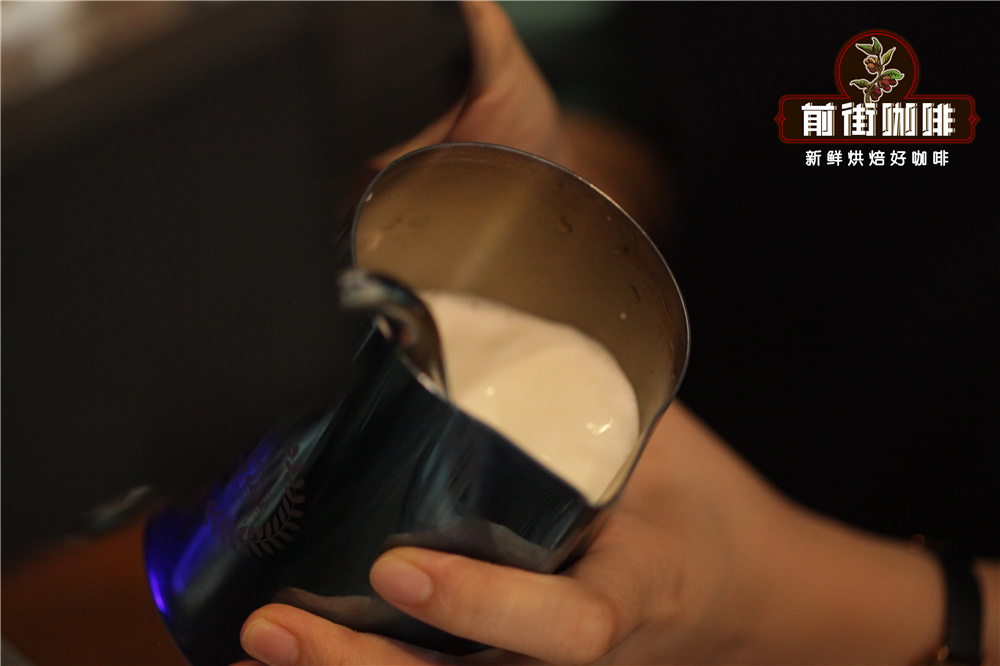
For milk, it is recommended to use fresh whole milk, steamed to a temperature between 50–60°C. Too low a temperature fails to fully bring out the sweetness of lactose, while too high a temperature can damage the protein structure, resulting in a coarse, grainy mouthfeel. A successful Flat White requires fine, uniform microfoam, and the overall ratio of milk to coffee in the drink is typically around 3:1 to 4:1, highlighting the coffee flavor while retaining the smoothness and aroma of the milk.
Overall, the difference between Flat White, latte, and cappuccino lies not only in the thickness of the milk foam but more critically in the ratio of coffee to milk. Flat White boasts the most intense coffee aroma, the finest and thinnest milk foam (about 3mm), making it ideal for those who want to savor the essence of coffee paired with smooth milk. Cappuccino has the thickest foam and the most milk, with clearly defined layers of foam, while latte contains the most milk, with a milder coffee aroma—making it the best choice for beginners.



Whether you call it Aurora Bianco, Flat White (Starbucks), Original Flat White, or simply Flat White, the core charm of this coffee lies in the precise balance of coffee and milk, along with its smooth, velvety texture. If you're tired of overly sweet or milk-heavy coffee, give this classic milk coffee a try—distinct in flavor yet balanced, and a true embodiment of the nuanced coffee culture of Australia and New Zealand.

The above content is compiled by CoffeeHunters, a coffee news website.


