








Introduction:Want to recreate a café-quality Flat White at home? This article explains this iconic milk coffee originating from New Zealand and Australia in detail — from standard cup size, milk foam thickness, to home espresso-making methods. It compares the foam differences between a latte and a flat white, and analyzes why the iced version is rare. At the end, there's a flavor guide to three espresso blends suitable for home roasting, helping you precisely control extraction parameters.
Flat White (also known as Flat White or Australian White) is a representative of the popular espresso milk coffee in New Zealand and Australia, and in recent years it has also occupied an important place on the menus of cafés around the world. Although it is often referred to as "Australian White" in Chinese, its country of origin — whether Australia or New Zealand — remains debated to this day. The coffee cultures of both places have been influenced by Italian immigrants. In the 1980s, with the popularization of espresso, local baristas sought a smoother taste and gradually developed this style that sits between a latte and a cappuccino.

Different from the thick layer of foam in a cappuccino (about 1–2 cm) and the dense foam in a latte (around 1 cm), the core characteristic of a Flat White is its micro-foam, which is only about 0.5 cm thick. This finely textured foam, created through professional steaming techniques, evenly covers the surface of the espresso, delivering a silky mouthfeel while preserving the aroma of the coffee's crema.The standard cup size is 200 ml, typically using a double shot of espresso (about 40 g of coffee grounds yielding 40 ml of liquid).The foam needs to be skimmed of any large bubbles on the surface with a spoon before being fully integrated with the milk and poured in.

In comparison, the latte preparation process involves: a larger cup size of 300 ml, the same double shot of espresso, but the foam thickness is increased to 1 cm, and it is additionally decorated with latte art. It’s worth noting that commercial espresso machines, using 9–10 bar high pressure extraction, can achieve a 1:2 coffee-to-water ratio in 94°C hot water. While home equipment may not fully replicate this, you can adjust parameters to get close to the ideal state.

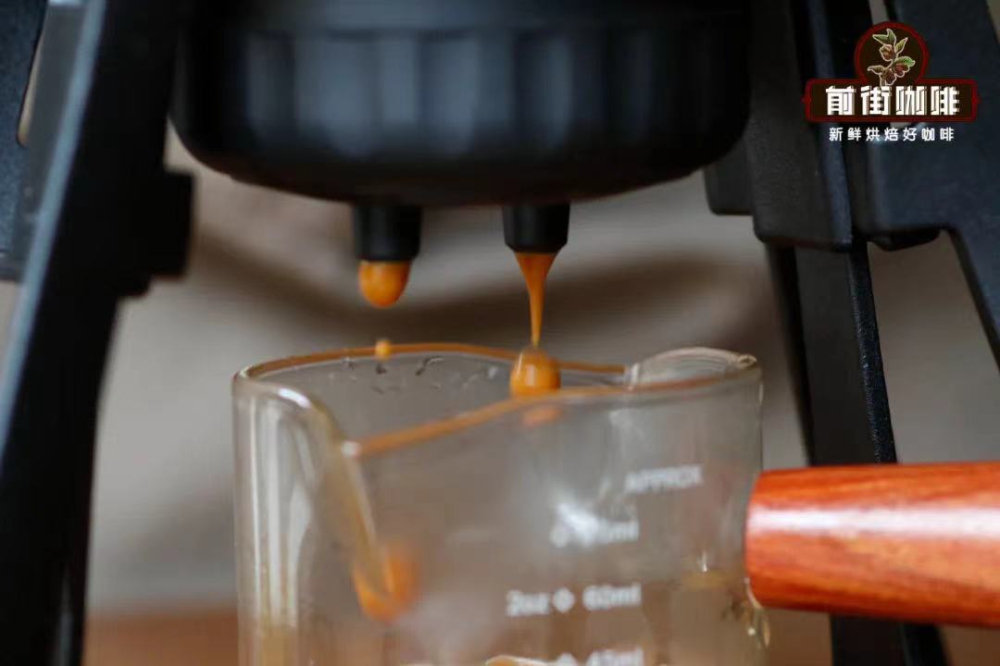
For making Flat White at home, it is recommended to use a portable hand-operated espresso maker or a home espresso machine:Take 18 g of finely ground coffee, for example, inject 120 ml of 95°C hot water and press to extract 40 ml of espresso.The milk should be heated to between 55–65°C, then frothed with a milk frother. First, use a spoon to remove the coarse bubbles on the surface to reduce the overall foam thickness to 0.5 cm. Then gently shake the milk pitcher to mix the bubbles with the milk evenly. Finally, slowly pour from the center of the espresso until the total volume reaches about 200 ml.
Why is the iced version of Flat White usually not offered? The key lies in its essence — the smooth, thin layer of foam needs to enter the mouth together with the hot coffee. Ice cubes will dilute the liquid and disrupt the foam structure, causing layer separation or a broken mouthfeel. If you prefer a cold drink, you can try a “Dirty”: pour the espresso directly into chilled fresh milk, using the temperature contrast to present a unique layered effect.

The choice of coffee beans directly affects the final flavor:It is recommended to prioritize using stable espresso blends.For instance, the Warm Sunshine Blend (30% Colombia + 70% Brazil) offers notes of dark chocolate and caramel, paired with hot milk it resembles the rich taste of sugar-free Ovaltine; the Commercial Blend (10% Robusta + 30% Colombia + 60% Brazil) features full-bodied nutty aromas and golden crema, with a mild aftertaste of bitterness; the Dark Cocoa Blend (30% Yunnan + 70% Brazil) balances the slight acidity of Yunnan beans with the nutty notes of Brazilian beans, suitable for those seeking a smoother taste.

Additional tips for home preparation:The thickness of the espresso crema is closely related to its freshness.It is recommended to use coffee beans roasted within 5 days; milk foam temperatures exceeding 65°C can cause protein denaturation, affecting its smoothness; if using a fully automatic coffee machine, you can appropriately extend the pre-infusion time to improve extraction uniformity. Mastering these details will allow even beginner coffee enthusiasts to recreate a Flat White at home that approaches café-level quality.


The above content is compiled by CoffeeHunters, a coffee news website.


