







Introduction:Mandheling coffee is beloved by coffee enthusiasts worldwide for its rich and bold flavor profile, yet its name origin and regional definitions are shrouded in some fascinating misconceptions. This article delves into the historical legends behind the Mandheling name, analyzes the distinctive characteristics of the two core producing regions—Lintong and Aceh in North Sumatra—introduces the stringent selection criteria of PWN Golden Mandheling, and offers expert pour over brewing advice along with a three-stage pouring technique to help you easily brew a balanced and sweet Mandheling.
Mandheling coffee beans have long been a favorite among many coffee drinkers. This Arabica variety from Indonesia, the "Land of a Thousand Islands," has won widespread acclaim among coffee aficionados for its unique flavor profile and strong character. However, you might not know that the name "Mandheling" actually stems from a wartime misunderstanding.
Legend has it that during World War II, a Japanese soldier drank an unforgettable cup of coffee at a café in Indonesia. When he asked the shop owner what kind of coffee it was, the owner mistakenly thought he was being asked about his background and replied, "Mandailing." But the Japanese soldier heard it as "Mandheling" and later introduced this coffee to the Japanese market after the war, where it became a hit. The soldier’s business partner at the time was none other than the now-renowned PWN Coffee Company. Though it's just a legend, Mandheling has indeed gained global popularity thanks to its captivating flavor.
It’s worth noting that not all Indonesian coffee can be called Mandheling. Strictly speaking, only Arabica beans produced in northern Sumatra qualify to bear the name "Mandheling." Robusta beans from southern Sumatra or coffees from other islands such as Java or Sulawesi cannot be labeled as Mandheling.
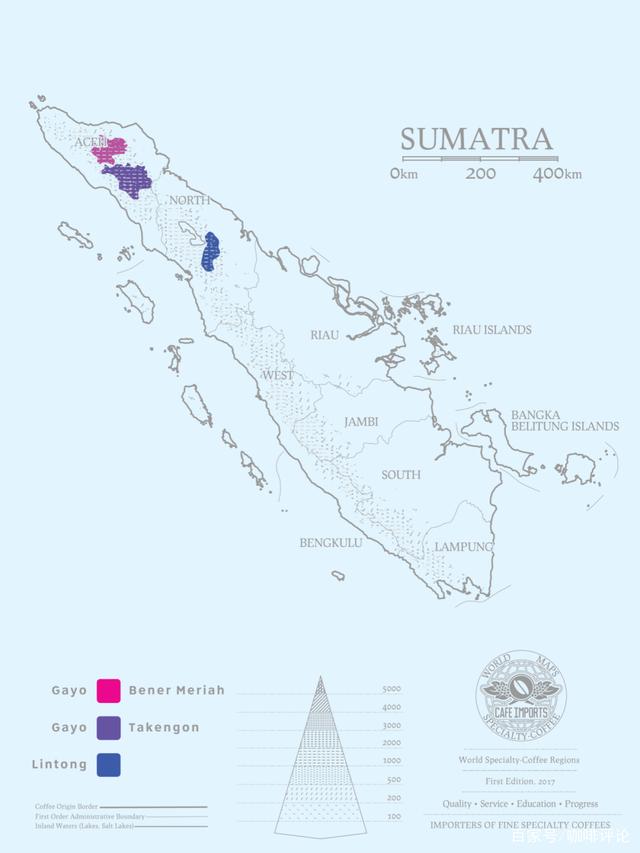
Among the many producing regions in northern Sumatra, Lintong and Aceh are the two most important Mandheling origins. Lintong is located near Lake Toba, at an altitude of about 1000 to 1500 meters, and is a historically significant coffee-growing area. The region’s volcanic soil is fertile, and it has long produced Mandheling coffee with intense and stable flavors. Based on extensive cupping experiences, Lintong Mandheling often exhibits prominent notes of chocolate and nuts, accompanied by subtle herbal aromas, making it a classic representation of Mandheling flavor.
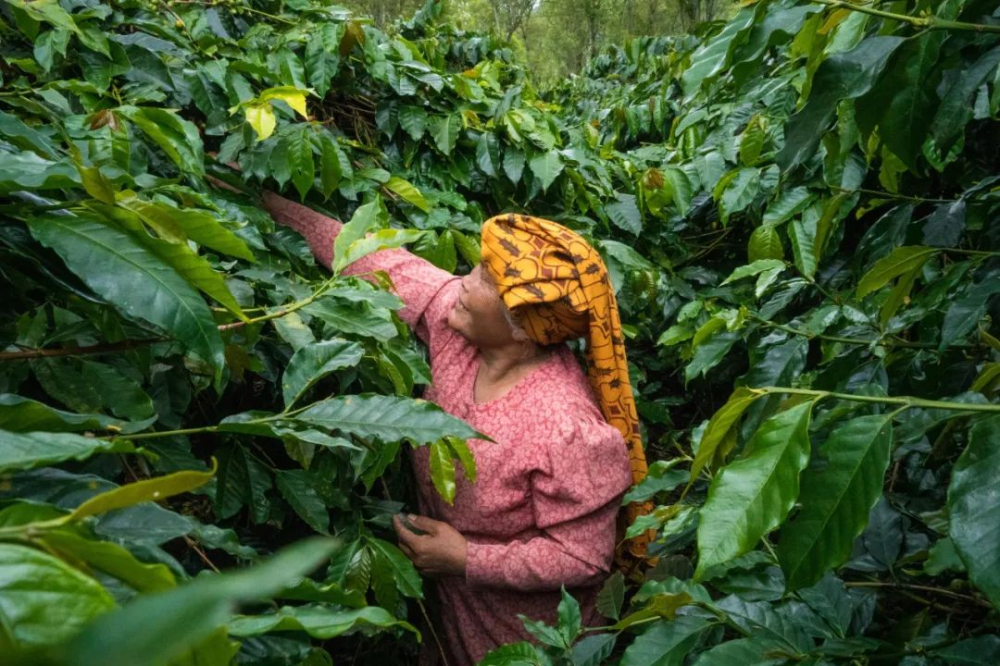
Another key producing region is the Gayo Mountains in Aceh, located at the northernmost tip of Sumatra, surrounded by Lake Tawar and surrounding hills, at an altitude between 1100 and 1600 meters.This area was previously difficult to export coffee due to political instability, and it only gradually returned to the market’s attention after 2005.The coffee varieties grown in Aceh are commonly referred to as "Ateng," which is actually the local Indonesian term for Catimor. They are highly adaptable to the local environment and can express distinct regional characteristics.
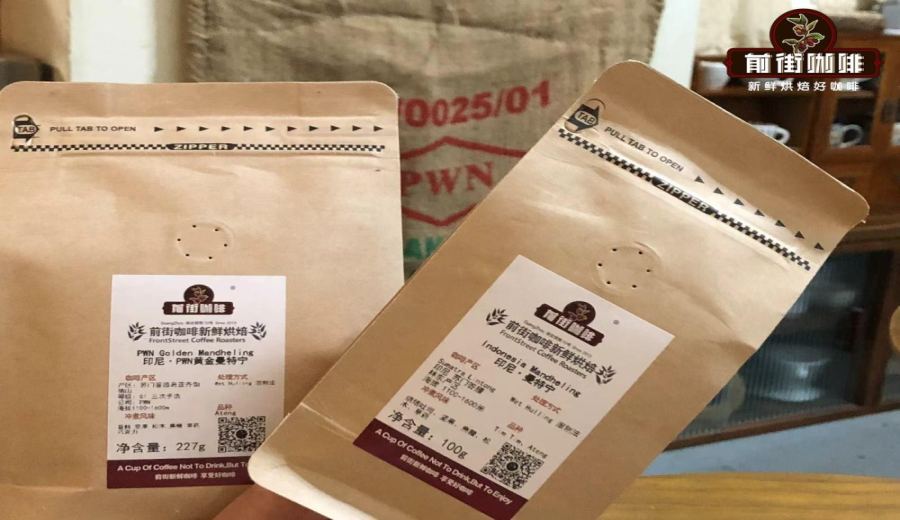
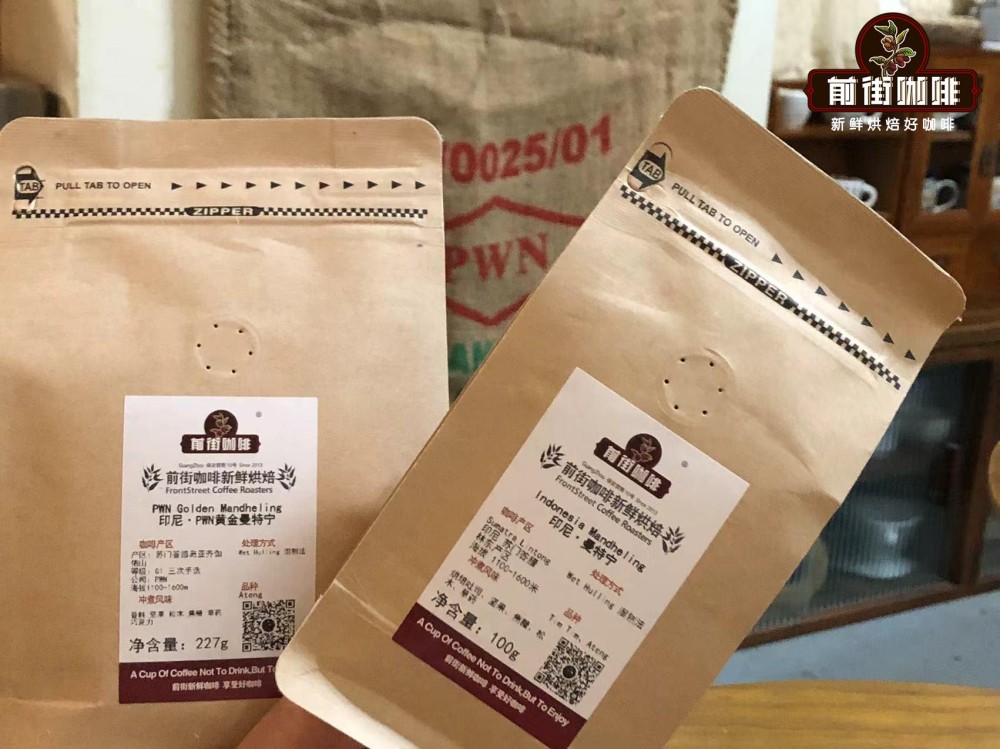
Among the high-quality Mandheling produced in Aceh, PWN’s Golden Mandheling is the most representative. This product undergoes three rounds of manual sorting to remove defective beans, ensuring that each green bean is uniform in size and plump in appearance. In sunlight, these beans shine with a golden luster, and their quality is noticeably superior to that of regular Mandheling. It is precisely because of the strict selection process and outstanding flavor performance that Golden Mandheling commands a relatively higher price.
However, some merchants on the market may sell ordinary G1-grade Mandheling as Golden Mandheling. To distinguish authenticity, the most reliable method is to ask the seller to provide the jute sack containing the green beans and the corresponding official PWN certificate. The serial number on the sack can be used to verify the source.
When brewing Mandheling, improper methods can easily amplify its bitterness and off-flavors, undermining its otherwise rich flavor layers. Below are practical pour over brewing recommendations tailored for dark-roasted Mandheling, suitable for home use, which can fully showcase its body and sweetness.
First, it is recommended to use a Kono filter cone for pour over, as its design helps enhance extraction stability and body. If a Kono is not available, a V60 is also a good alternative. The suggested coffee dosage is15 grams, ideal for a single serving. The coffee beans are best usedon the 4th to 7th dayafter roasting, which is the golden period for flavor development.
In terms of grind size, since Mandheling is typically dark roasted and the beans are relatively porous, a coarser grind setting is recommended, with a20-mesh sieve passing rate of about 70%. Grinding too fine can lead to over-extraction and burnt bitterness, while grinding too coarse may result in under-extraction, making the coffee taste watery.
The recommended water temperature is87 to 88°C. Water that is too hot can extract excessive bitterness and impurities, while water that is too cool may render the flavor flat. The suggested brew ratio is1:15, striking a good balance between intensity and complexity. Although some brewing methods suggest a 1:13 ratio or even more concentrated proportions, they may sacrifice the continuity of the aftertaste.
For brewing technique, it is recommended to usea three-stage pouring method: start with 30 milliliters of blooming water to evenly wet the coffee grounds and facilitate degassing, preparing for subsequent extraction; then pour 100 milliliters, primarily extracting the mid-palate flavors and helping to bring out the golden coffee oils; finally, complete the brew with 95 milliliters of center pour, which enhances sweetness and body, rounding out the overall flavor and bringing out caramel, chocolate, and nutty aftertastes.
The above content is compiled by CoffeeHunters, a coffee news website.


