







Introduction:The French press is the go-to brewing tool for many coffee beginners—not only is it easy to use, but it also consistently produces coffee with balanced flavors. This article takes an in-depth look at the four core elements of French press brewing: grind size, coffee-to-water ratio, water temperature control, and steeping time. It also provides practical examples demonstrating how to brew a rich yet detailed cup using medium-dark roasted beans. Whether you're just starting with pour over or looking for a simpler brewing method, you'll find useful parameter guidance and techniques here.
Compared to pour over coffee, which emphasizes technique and flow rate, the French press has a much lower barrier to entry. By mastering just a few key parameters, even novice coffee enthusiasts can consistently brew a well-balanced cup. This article will break down the brewing logic of the French press step by step, focusing on the four core variables that determine coffee performance—grind size, coffee-to-water ratio, water temperature, and steeping time—and includes practical brewing demonstrations to help you find your optimal extraction recipe.
Many coffee beginners often report that pour over is too detail-oriented, and even with repeated practice, it's hard to consistently produce satisfying flavors. If you've hit a similar bottleneck, consider switching to the French press. Its biggest advantage is that it relies far less on brewing technique—as long as you accurately control the basic parameters, it can adapt to almost all coffee beans and significantly lowers the learning curve.
The biggest difference between the French press and pour over lies in its immersion brewing characteristic, which is more forgiving in terms of brewing actions and involves fewer uncertainties. As long as you adjust the basic parameters according to the bean characteristics, you can achieve stable results with minimal hassle—making it ideal for users who want to enjoy great coffee in a different way.
1. Grind Size: The Key Is a Coarse Sugar-Like Grind
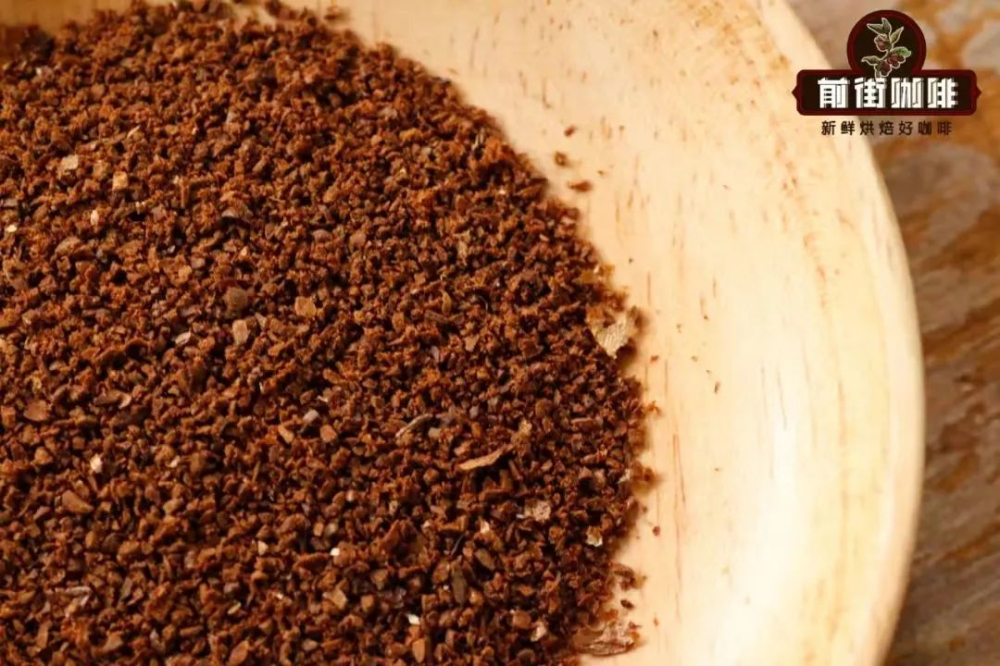
In French press brewing, grind size is one of the most fundamental and important variables. Compared to pour over, the coffee grounds used in a French press need to be coarser. It’s recommended to aim for about 70% extraction through a #20 sieve, which feels similar to coarse sugar. Many users often wonder whether grind size should be adjusted based on roast level—for example, finer for light roasts and coarser for dark roasts. In reality, due to the immersion brewing nature of the French press, it has much higher tolerance for grind size. Whether it's medium-light or medium-dark roasts, using the same coarse grind mentioned above is sufficient—you don’t need to frequently adjust based on roast degree.
2. Coffee-to-Water Ratio: 1:16 for Ideal Strength
Practical experience suggests using a 1:16 coffee-to-water ratio—for example, 15 grams of coffee with 240 milliliters of hot water. This ratio typically yields a coffee liquid with a concentration of about 1.1% to 1.2%, offering a refreshing and layered taste. If you prefer a stronger drinking experience, you can reduce the ratio to 1:15 and adjust flexibly according to personal taste.
3. Water Temperature: Adjust Flexibly Based on Roast Level
Since the French press uses a single pour of water, the actual brewing temperature naturally decreases over time, so the initial water temperature needs to be slightly higher than with pour over. For medium-light roasted beans (with pronounced acidity), such as those with common fruity acidity profiles, it’s recommended to use a high temperature of 93–94°C. For medium-dark roasted beans (with richer, lower-acid flavors), such as classic Colombian or Mandheling types, it’s recommended to lower the temperature to 89–90°C to bring out a rich sweetness and chocolate notes.
4. Steeping Time: The Golden Window of 3 Minutes 30 Seconds to 4 Minutes
Steeping time is the most flexible parameter in French press brewing. Since there's no need for manual stirring to speed up extraction, it’s recommended to give the coffee grounds enough time to release their flavor compounds. Generally speaking, medium-light roasted beans suit a longer steeping time of up to 4 minutes, while medium-dark roasted beans are best brewed for around 3 minutes 30 seconds to avoid extracting excessive bitter and astringent impurities from over-steeping.
5. Practical Brewing Process: From Pouring to Enjoying
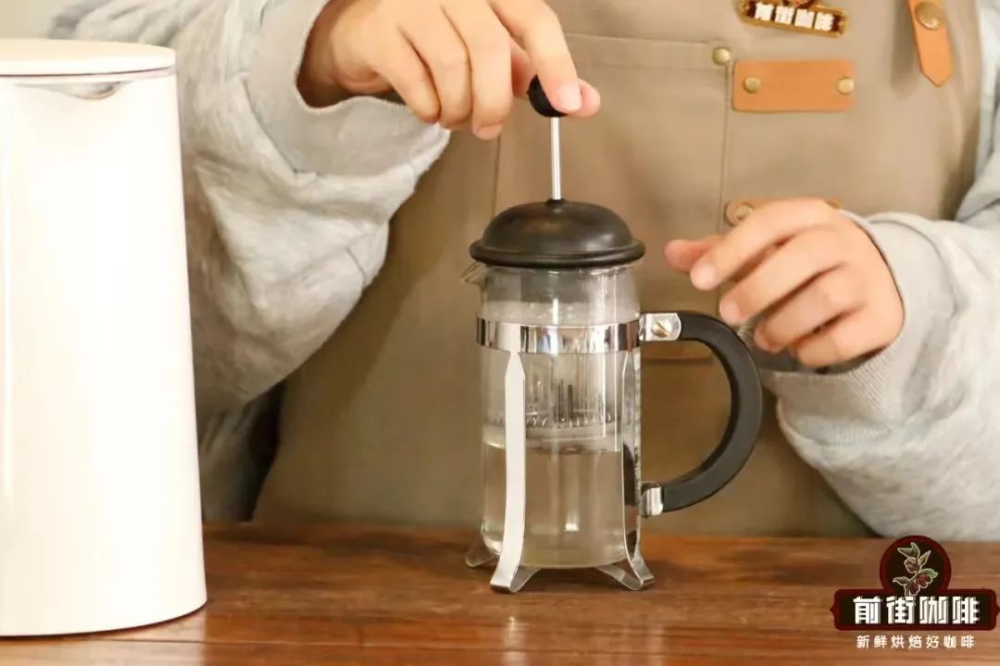
Here’s a full demonstration of the French press brewing process using Brazil Queen Estate Yellow Bourbon (medium-dark roast) as an example: Prepare 15 grams of coffee beans, grind them with an EK43s grinder set to 11, achieving a coarse sugar-like consistency with a 70% extraction rate through a #20 sieve. Place the coffee grounds into the French press, pour in 240 milliliters of 90°C hot water, stir gently to mix evenly, then cover the lid (but do not press the filter down). Let it steep for 3 minutes 30 seconds, then slowly press the filter down to push the coffee grounds to the bottom of the pot. Finally, pour out all the coffee liquid at once to avoid over-extraction caused by leftover liquid. It’s important to note that the metal filter of the French press cannot completely block fine particles or coffee oils—let the sediment settle slightly before drinking, so you can enjoy a delicate texture along with the rich aroma of coffee oils.
The above content is compiled by CoffeeHunters, a coffee news website.


