







Introduction:Jamaica Blue Mountain coffee is hailed as the pinnacle of the coffee world, but the "Blue Mountain flavor" commonly found in the market often falls short of its reputation. This article delves into the origin, official grading system, and authentic certification standards of Jamaica Blue Mountain No. 1, guiding you to identify authenticity through appearance, aroma, and flavor, while also detailing the characteristics of both washed and natural processing methods. It further provides expert-level pour over recommendations, including filter choice, water temperature control, and precise coffee-to-water ratios, helping you master the essence of Blue Mountain flavor.
Blue Mountain coffee has long been known as the "Rolls-Royce of coffee," but many products labeled as "Blue Mountain" on the market are mostly commercial hype. Many consumers spend a fortune only to find they may not have tasted a single genuine Blue Mountain bean. So what exactly constitutes authentic Blue Mountain No. 1? Where is it produced? How is it graded? And how can you tell if it’s real? This article will explore the cultivation history and rigorous grading system of Jamaica Blue Mountain coffee, analyze the official certification system of Blue Mountain No. 1, and share the actual flavor profiles of both the washed and natural versions of Blue Mountain No. 1. Finally, it offers expert pour over suggestions to help you make the right choices from bean selection to brewing.
 Looking back at the 1980s and 1990s, Hong Kong TV dramas were all the rage in Guangdong, with characters frequently mentioning Blue Mountain coffee, which greatly boosted the fame of this Caribbean-origin coffee. As a result, many people came to view Blue Mountain as a status symbol, even eager to try it. However, faced with vastly different prices for various "Blue Mountain" products, consumers couldn’t help but wonder: which one is the real Blue Mountain coffee?
The reason Blue Mountain coffee is famous worldwide lies in its rich body and the perfect balance among acidity, sweetness, and bitterness. Because of this, the market is flooded with various blends labeled as having a "Blue Mountain flavor." These products are usually a mix of beans with similar flavor profiles, and they may not contain a single genuine Blue Mountain bean. To understand the true nature of Blue Mountain coffee, we must start with its origin and grading system.
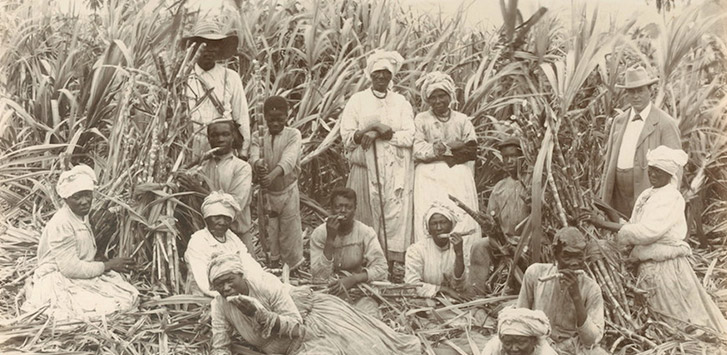
The connection between Jamaica and Blue Mountain coffee began in the 18th century. In 1723, King Louis XV of France sent three coffee trees to Martinique, an island about 1,900 kilometers from Jamaica. Five years later, the governor of that island gifted an Arabica coffee tree to Sir Nicholas Lawes, the Governor of Jamaica. By the period of 1800 to 1840, Jamaica's coffee production once reached 70,000 tons, making it the world leader.
The so-called Blue Mountain coffee specifically refers to coffee grown in certain areas of the Blue Mountains in Jamaica. This mountain range is located in the eastern part of Jamaica, north of Kingston, and surrounded by the Caribbean Sea. When sunlight shines on the blue sea, the mountain peaks reflect a captivating blue hue, hence the name "Blue Mountain." However, not all parts of the Blue Mountains are suitable for coffee cultivation—altitudes above 1,700 meters are designated forest reserves where coffee planting is strictly prohibited.
Jamaican coffee is divided into three main categories based on planting altitude:Blue Mountain coffee (910–1,700 meters), High Mountain coffee (460–910 meters), and Prime coffee (below 460 meters). Among these, Blue Mountain and High Mountain coffees are further subdivided into four grades: No. 1 to No. 3 and PB (peaberry). Therefore,Blue Mountain No. 1 refers to top-tier coffee beans grown at altitudes above 910 meters, with green bean size reaching 17 mesh or larger and a defect rate below 3%.
In the past, the Jamaican government mandated that all Blue Mountain coffee be roasted locally to ensure consistent quality. But considering the technical barriers of roasting and consumer demand for freshness, Blue Mountain green beans can now be exported. Exported products must come with three official certificates: a quality certificate from the Jamaica Coffee Industry Board, an authorized sales certificate from the producing factory, and a certificate of origin.
To distinguish real Blue Mountain No. 1, you can observe it from three aspects: in appearance, the green beans are greenish in color, medium to small in size, with slightly upturned ends; after roasting, they expand and become plump. In terms of aroma, authentic Blue Mountain coffee exudes a rich and robust fragrance, while imitations are noticeably lacking. In flavor, Blue Mountain No. 1 achieves an excellent balance of acidity, sweetness, and bitterness, with none of the flavors being overly dominant—an attribute that is most difficult to replicate.
The imported Blue Mountain No. 1 comes from the Clifton Estate in Jamaica—a historic estate located at the heart of the Blue Mountains, which is not only a Rainforest Alliance-certified farm but also a renowned growing region for Typica that has been cultivating coffee since the late 18th century. After establishing its own processing facility in 2004, the estate began marketing its own branded Blue Mountain coffee products.
Currently, there are two processing options for Blue Mountain No. 1 available on the market: washed and natural. The washed process involves fermenting with flowing water (12–18 hours), then cleaning the bean surface through water flow and friction, finally reducing the moisture content to 12–14% and storing it properly. This method highlights the origin-specific flavor characteristics of Blue Mountain coffee. The natural process is a recent addition, offering a different layer of flavor complexity.
For brewing Blue Mountain No. 1, it is recommended to use a KONO filter, with a water temperature of 86°C and a coffee-to-water ratio of 1:15 (15 grams of coffee to 225 milliliters of water). The grind size is suggested to have a 75% passing rate through a Chinese standard No. 20 sieve (approximately EK43s #10.5). A three-stage pouring method is advised: first, pour 30 grams of water for a 30-second bloom; second, circle-pour up to 125 grams and then stop; after the liquid level drops, continue pouring to 225 grams, with total extraction time around 2 minutes. These parameters fully showcase the delicate flavors of Blue Mountain coffee.
The washed version of Blue Mountain No. 1 exhibits pronounced dark chocolate and nutty notes, with a silky-smooth mouthfeel and a perfectly balanced acidity, sweetness, and bitterness. The natural version features elegant berry-like acidity, overall good harmony, and in addition to chocolate and nutty aromas, it also carries a hint of unique fermentation flavor, offering a different interpretation of classic Blue Mountain.
The above content is compiled by CoffeeHunters, a coffee news website.


