








Introduction:Renowned for its exceptional flavor and rarity, Jamaican Blue Mountain coffee is hailed as one of the finest coffees in the world. This article delves into the growing environment, rigorous grading system, classic Typica variety, and traditional washed processing method of Jamaican Blue Mountain coffee, taking you from the source to understand how its unique flavors are formed. Additionally, it offers practical pour-over brewing tips, including filter choice, grind size, water temperature, and a three-stage pouring technique, helping you fully showcase the coffee’s rich body and nutty sweetness.
As a globally recognized representative of specialty coffee, Jamaican Blue Mountain coffee is famed for its distinctive flavor and extremely high quality standards. From the growing environment and grade classification to the processing methods and pour-over techniques, every step contributes to the irreplaceable status of Blue Mountain coffee. This article will thoroughly break down all aspects of Blue Mountain coffee, giving you a comprehensive grasp of the charm of this classic brew from origin to cup.
Jamaica is located in the northwest of the Caribbean region and has a tropical rainforest climate, with an average annual temperature ranging between 22 and 32 degrees Celsius. Coupled with abundant rainfall throughout the year, it provides ideal natural conditions for coffee cultivation. As early as 1728, then-Governor Sir Nicholas Lawes introduced the first batch of coffee seeds from Martinique and began trial planting in the Saint Andrew area, which was later expanded to the Blue Mountains. As production increased, the Jamaica Coffee Industry Board (CIB), established in 1950, took charge of setting and regulating coffee quality standards to ensure high export quality—all exported coffee must carry CIB certification.
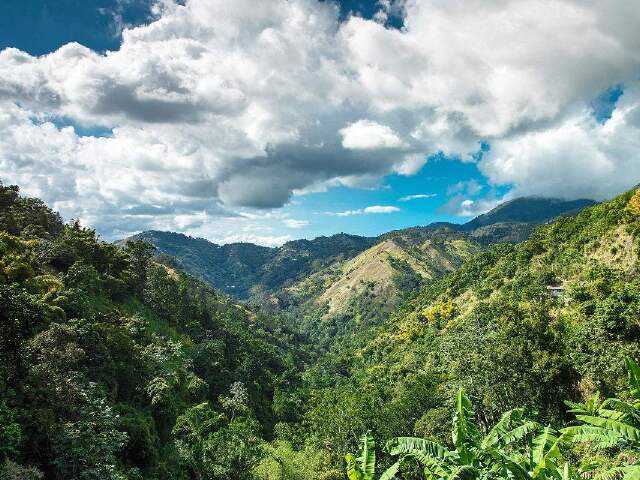
The cultivation of Blue Mountain coffee is strictly limited to altitudes below 1700 meters, with areas above 1700 meters designated as protected zones where farming is prohibited. Truly high-quality Blue Mountain coffee only grows on the mountain slopes at elevations between 910 and 1700 meters. The Blue Mountains boast the highest peak in the Caribbean, reaching 2256 meters in elevation. Not only are the views spectacular, but the area also benefits from clean air, minimal pollution, and optimal conditions for coffee growth. The local volcanic soil is rich in nitrogen and phosphorus, and the year-round cloud cover along with regular rainfall allows coffee trees to thrive healthily without excessive shading. They are often intercropped with banana trees, forming a unique agricultural ecosystem.
Based on altitude and flavor profile, Blue Mountain coffee is divided into three main categories: Blue Mountain coffee, High Mountain coffee, and Jamaican coffee. Each category is further subdivided into two grades, ranked from highest to lowest as Blue Mountain No. 1, Blue Mountain No. 2, High Mountain No. 1, High Mountain No. 2, and regular Jamaican coffee.Among them, Blue Mountain No. 1 is the highest grade, produced exclusively in four regions: Saint Andrew, Saint Mary, Saint Thomas, and Portland, covering a total area of just 6,000 hectares, with an annual output accounting for only 15% of the total Blue Mountain production.
The original variety introduced to Jamaica for Blue Mountain coffee was Typica, an historic Arabica variety known for its elegant aroma, bright acidity, and rich sweetness. Unlike other regions that switched to high-yield hybrid varieties in pursuit of volume, the Blue Mountain region has long adhered to planting Typica. Coupled with the pollution-free environment and unique microclimate, the Typica here has evolved more distinctive flavor characteristics and also shows relatively stronger disease resistance.
Blue Mountain coffee generally employs the washed processing method to ensure clean and balanced flavors. After harvest, the coffee cherries are depulped, then placed in fermentation tanks for 12 to 18 hours. They are subsequently rinsed with clean water and manually agitated to remove residual mucilage. The washed parchment beans are then sun-dried until their moisture content is controlled between 12% and 14%. This processing method effectively reduces excessive fermentation acidity, resulting in purer aromas and smoother, richer mouthfeel.
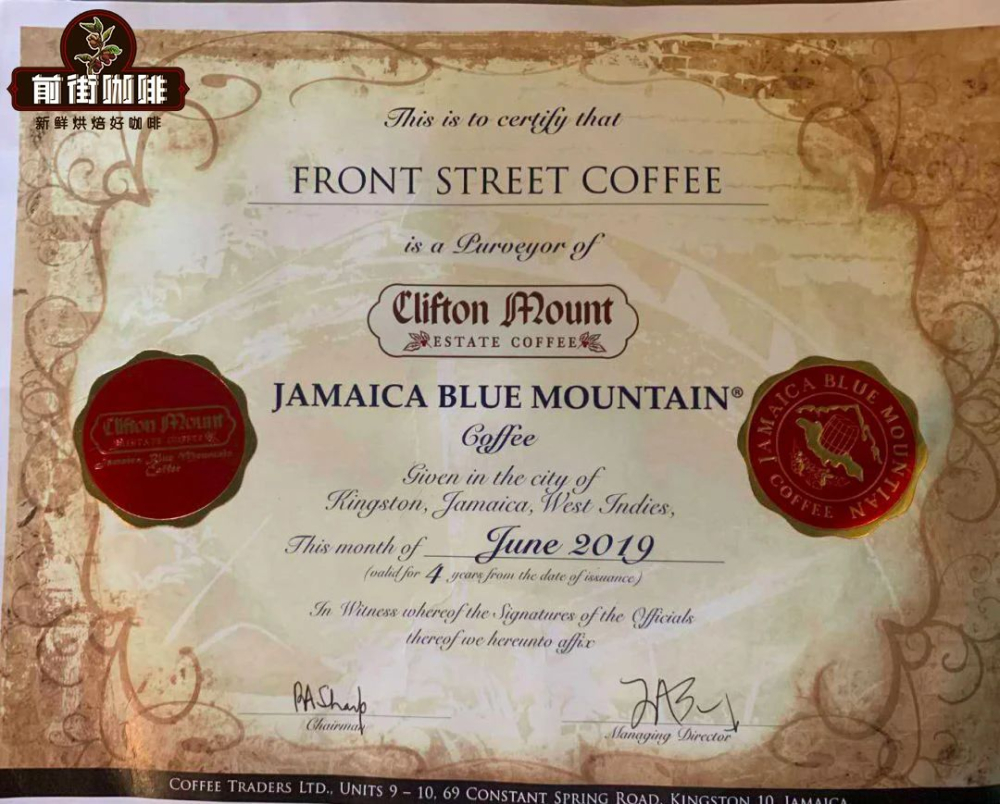
A certain coffee brand has long supplied Blue Mountain No. 1 coffee beans from the Clifton Estate in Jamaica. This estate maintains high standards in its coffee production processes, striving for excellence in harvesting, processing, and environmental practices. These green beans come with a Jamaican Blue Mountain Coffee Origin Certificate, and the transport barrels bear the “Rainforest” tree frog logo, indicating Rainforest Alliance certification. The estate limits pesticide use during cultivation and emphasizes waste sorting and ecological conservation.
These Blue Mountain No. 1 green beans have a screen size of 17 or above, with uniform and shiny beans, a defect rate below 3%, and a moisture content of around 13%, ensuring highly stable quality. To fully highlight the classic flavors of Blue Mountain coffee, the roaster conducted multiple cuppings and ultimately chose a medium-to-dark roast level. This preserves the nutty and caramel sweetness while bringing out a gentle acidity, achieving an excellent balance of flavors.
To fully experience the delicate flavors of Blue Mountain coffee, pour-over is one of the brewing methods that best highlights its characteristics. It is recommended to use a KONO filter, whose smooth curved upper design allows the filter paper to adhere better, paired with immersion extraction, which helps enhance the overall richness and body of the coffee, bringing out the fuller flavors of Blue Mountain more distinctly than a V60. Alternatively, slower-flowing devices such as a Kalita wave dripper or a flannel filter are also good choices.
For grind size, a medium-coarse grind with a 20-mesh standard sieve passing rate of 75% is advised, balancing flavor release while avoiding over-extraction. Set the water temperature to 88°C, with a 1:15 coffee-to-water ratio. Using 15 grams of coffee as a base, this is suitable for 1 to 2 servings. Use the three-stage pouring method: start with 30 grams of water for a 30-second bloom, then pour in small circles from the center outward until reaching 125 grams for the first pour. After the coffee bed settles, continue pouring to 225 grams, then wait for the dripping to finish before removing the filter.
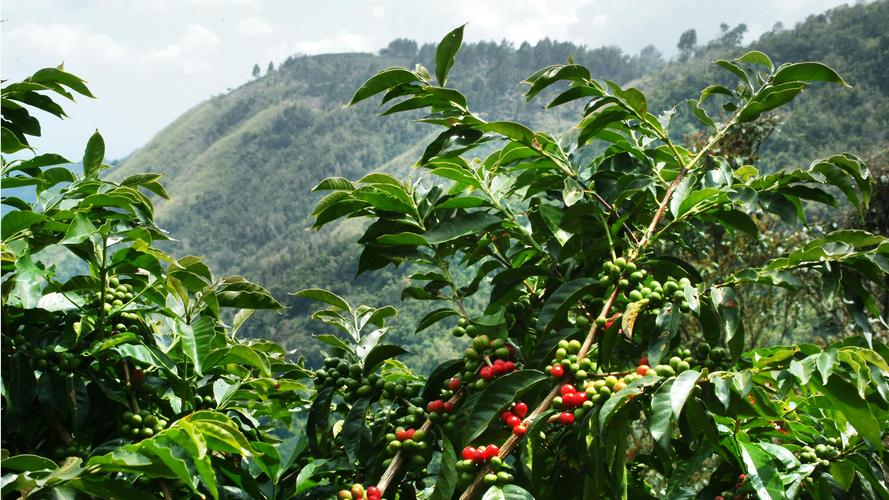
Blue Mountain No. 1 coffee exudes a rich aroma from the grinding stage. Upon tasting, you can perceive distinct roasted nut, chocolate, and caramel sweetness, with a soft and layered acidity. The overall mouthfeel is smooth and full-bodied, perfectly showcasing the classic balanced flavors of Blue Mountain coffee—an unmissable tasting experience for coffee enthusiasts.
The above content is compiled by CoffeeHunters, a coffee news website.


