







Introduction:Jamaican Blue Mountain No. 1 is regarded as one of the world’s top-tier coffee beans. Its prestige stems not only from its restricted production area and grade classification, but also from its unique flavor profile that has captivated coffee enthusiasts worldwide. This article delves into the regional distribution, altitude system, bean grading, and authenticity identification of Blue Mountain No. 1, while also providing practical pour over brewing recommendations to help you gain a comprehensive understanding of this classic bean variety and master both tasting and brewing techniques.
Jamaican Blue Mountain No. 1 is not only the highest-grade offering among Jamaican Blue Mountain coffees, but also a highly coveted gem in the global coffee market. However, despite its fame, many people know little about its origin, grade classification, or how to authenticate it. This article will take you from the historical origins of Blue Mountain coffee, exploring in depth its regional distribution and grading standards, and introducing a specific Blue Mountain No. 1 from the Clifton Estate, paired with medium-dark roast parameters and flavor profiles for pour over brewing. This will allow you to grasp everything from bean selection to brewing in one go.
With the rise of the specialty coffee trend, many consumers have begun seeking premium beans with distinct regional characteristics and unique flavors. Some are drawn to the citrusy and fruity notes of Panamanian Geisha, while others prefer the rich, sweet-and-acid balanced classic taste of Blue Mountain No. 1. However, compared to Geisha, Blue Mountain coffee has enjoyed decades of renown and even holds a cherished place in the hearts of many seasoned coffee drinkers. Even if you’ve never heard of Geisha, the name “Blue Mountain” is likely already very familiar to you.
The reason Blue Mountain coffee is so expensive lies not only in its scarce production region and strict grading system, but also in the abundance of misleading products in the market. Some merchants offer so-called “Blue Mountain-flavored” or “Blue Mountain-blended” products that may contain no actual beans from the Blue Mountain region at all. Therefore, understanding authentic Blue Mountain coffee and its regional characteristics is essential knowledge for every coffee enthusiast.
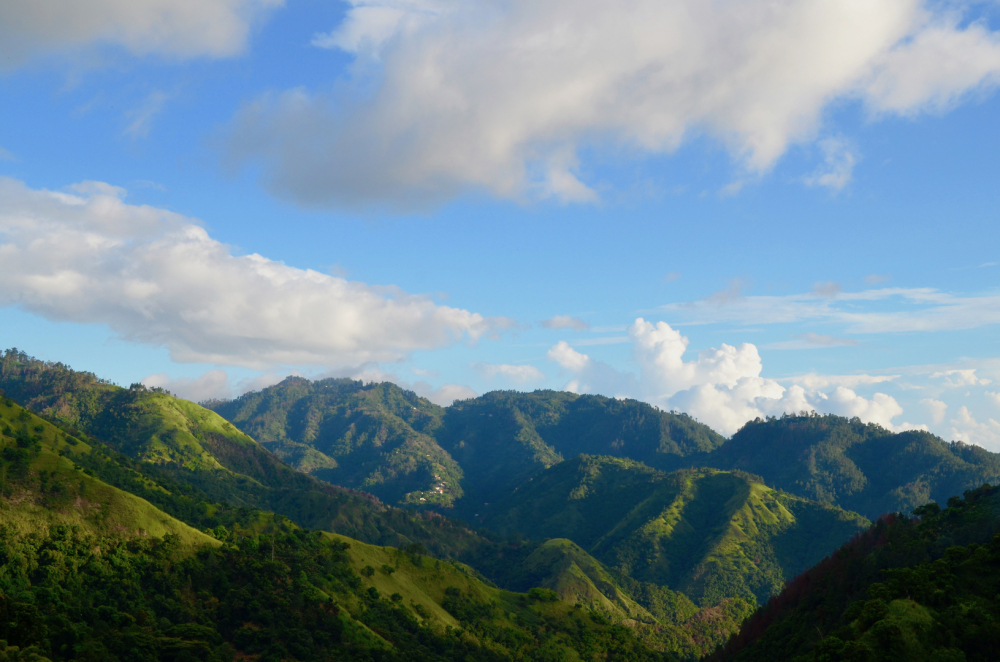
The production area of Blue Mountain coffee is located in the Blue Mountains of Jamaica. This mountainous region, with its unique geographical location and climatic conditions, gives rise to a highly distinctive coffee flavor. The Blue Mountains lie on the northeastern side of Jamaica, with the southeastern face bordering the Caribbean Sea. When sunlight hits the sea and reflects onto the mountains, the range often takes on a bluish hue, hence the name “Blue Mountain.” The area enjoys a cool climate with year-round cloud cover, which not only reduces intense sunlight damage to coffee trees but also brings ample moisture and rainfall through sea breezes—creating an ideal growing environment for the Typica variety.
Jamaica itself is not native to coffee, but since the introduction of coffee trees from French colonies in 1728, it has gradually developed a unique coffee culture. Initially, these coffee trees were gifted by the French governor to the then-Jamaican governor, where they took root and flourished. Due to the lower temperatures at high altitudes—which are generally unfavorable for most crops—coffee trees grow more slowly here, allowing for better accumulation of flavor compounds and resulting in the well-balanced sweet, sour, and bitter taste that defines Blue Mountain coffee.
The Jamaican government classifies its domestic coffee-growing regions into three categories based on altitude: Blue Mountain coffee (1000–1700 meters), High Mountain coffee (500–1000 meters), and Prime coffee (below 500 meters, non-Blue Mountain areas). Among these, only coffee beans grown at altitudes above 1000 meters and within the officially recognized Blue Mountain region can be called “Blue Mountain coffee.” And Blue Mountain No. 1 is the highest grade within Blue Mountain coffee.
Based on bean size and defect rate, Blue Mountain coffee is further divided into four grades: No. 1, No. 2, No. 3, and Peaberry. Among them, Blue Mountain No. 1 beans must be 17/18 mesh size with a defect rate not exceeding 2%, making it the highest quality grade. For this reason, its production is extremely limited and its price relatively high, making it a dream bean for many coffee collectors and enthusiasts.
To identify authentic Blue Mountain No. 1 coffee beans, you can consider multiple aspects.First, its green beans usually exhibit a bluish-green color, with uniform particle size and a fresh, delicate aroma.. After water processing, roasted Blue Mountain No. 1 beans may still show traces of silver skin, which is a characteristic of its processing method. In addition,consumers can request the origin certification documents and information related to barrel shipment from the seller.This is because Jamaican Blue Mountain coffee still maintains the traditional practice of exporting in wooden barrels, unlike most regions that use jute sacks.
The Blue Mountain No. 1 introduced in this article comes from the Clifton Estate, which holds Rainforest Alliance certification, signifying its focus on environmental sustainability and biodiversity in cultivation and management. In the showroom, besides seeing the wooden barrels used exclusively for Jamaican Blue Mountain coffee, you can also view its origin certification documents—all important indicators for identifying genuine products.
To recreate the classic rich and balanced flavors of Blue Mountain No. 1, we recommend using a medium-dark roast paired with the following pour over suggestions:Use a KONO filter, control the water temperature at 88°C, use 15 grams of coffee, with a 1:15 coffee-to-water ratio, and aim for a grind size where about 75% of the particles pass through a Chinese standard No. 20 sieve.Since the beans are freshly roasted, it’s recommended to pre-wet (bloom) for 30 seconds by pouring 30 grams of hot water first, then continue pouring with a thin stream in a circular motion from the center outward until you reach 125 grams, and then proceed to pour up to 225 grams total. Keep the total extraction time around 2 minutes.
The Blue Mountain No. 1 brewed with these parameters delivers a distinct nutty flavor on the palate, with a rich dark chocolate aftertaste. The balance among acidity, sweetness, and bitterness is clear and layered, and the mouthfeel is smooth and refined—making it an excellent choice for experiencing the classic flavors of Blue Mountain.
The above content is compiled by CoffeeHunters, a coffee news website.


