








Introduction:The coffee-to-water ratio in pour over brewing is one of the key parameters that determine flavor expression. Many beginners often wonder: how much water should be used to brew a certain amount of coffee grounds? Is 1:15 a universal formula? This article will delve into how the coffee-to-water ratio affects coffee concentration and extraction yield, helping you find your ideal golden ratio based on personal taste, while debunking common misconceptions.
In the world of pour over coffee, the coffee-to-water ratio is arguably one of the most important variables. Simply put, it’s about finding the optimal amount of water to pour over a fixed amount of coffee grounds, allowing the aroma and flavors of the coffee to be fully expressed. Mastering the correct coffee-to-water ratio is a fundamental skill every pour over enthusiast must learn.

The so-called coffee-to-water ratio refers to the proportion between the amount of coffee grounds and the total volume of water used. This ratio directly determines the final concentration of the coffee, no matter which brewing method you use—determining the coffee-to-water ratio in advance is a crucial step. For example, many professional shops typically use 15 grams of coffee grounds for a single serving of pour over coffee, paired with a 1:15 coffee-to-water ratio, which equals approximately 225 milliliters of hot water.
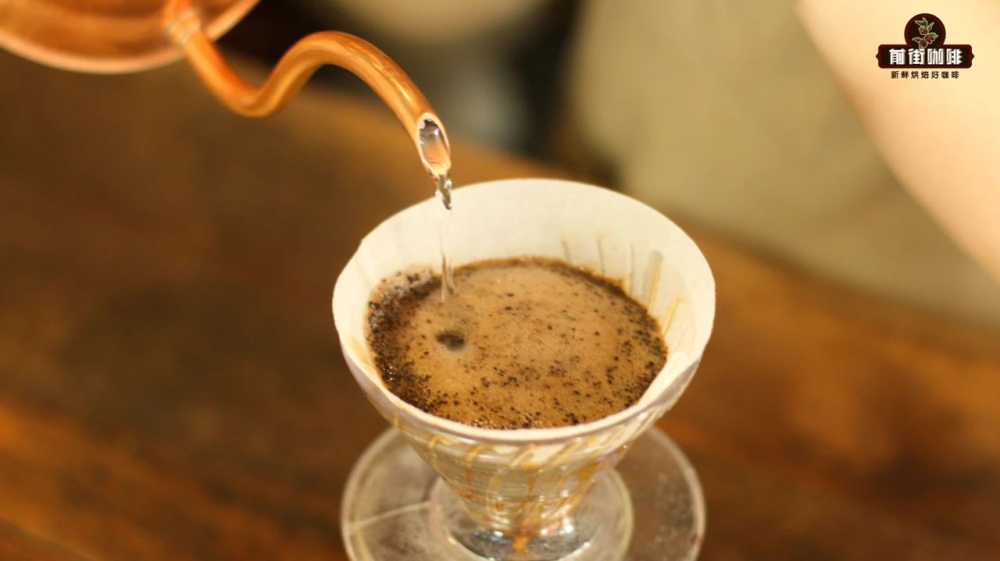
Under other unchanged conditions, the more water you pour, the lower the coffee concentration becomes, and the more dispersed the flavors will be; conversely, the less water you use, the higher the concentration, and the more concentrated and intense the flavors will be. Additionally, increasing the water volume also raises the extraction yield, releasing more soluble substances. However, as pouring continues, extraction efficiency gradually declines, and over-extraction may lead to the emergence of bitter or astringent tastes. Therefore, finding the most suitable coffee-to-water ratio is essential to balancing concentration and extraction.
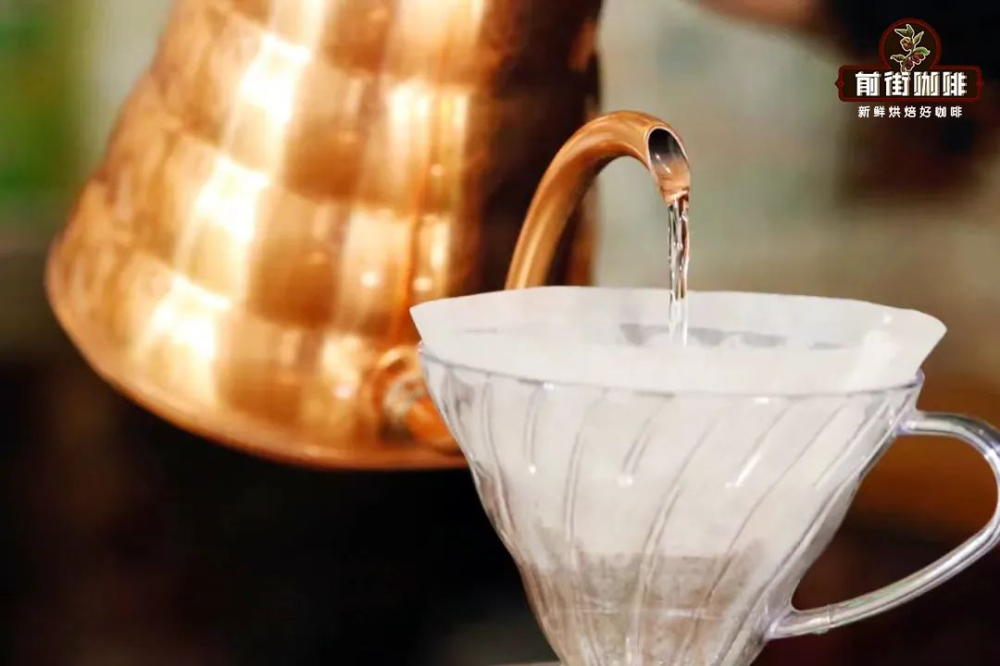
To more intuitively understand the impact of the coffee-to-water ratio, we conducted a set of experiments: under completely identical conditions, we brewed the same medium-light roasted Kenyan · Assaria coffee beans using coffee-to-water ratios of 1:10, 1:15, and 1:20. The amount of coffee grounds was uniformly 15 grams, with corresponding water volumes of 150 milliliters, 225 milliliters, and 300 milliliters respectively. The grind size was 80% through a #20 sieve (close to the coarseness of granulated sugar), water temperature was controlled at 91°C, and a consistent three-pour technique was applied.
The experimental results showed that the coffee concentration for 1:10 was 1.93%, for 1:15 it was 1.35%, and for 1:20 it was 1.04%. The data clearly indicates that the less water used, the higher the coffee concentration; the more water used, the lower the concentration.
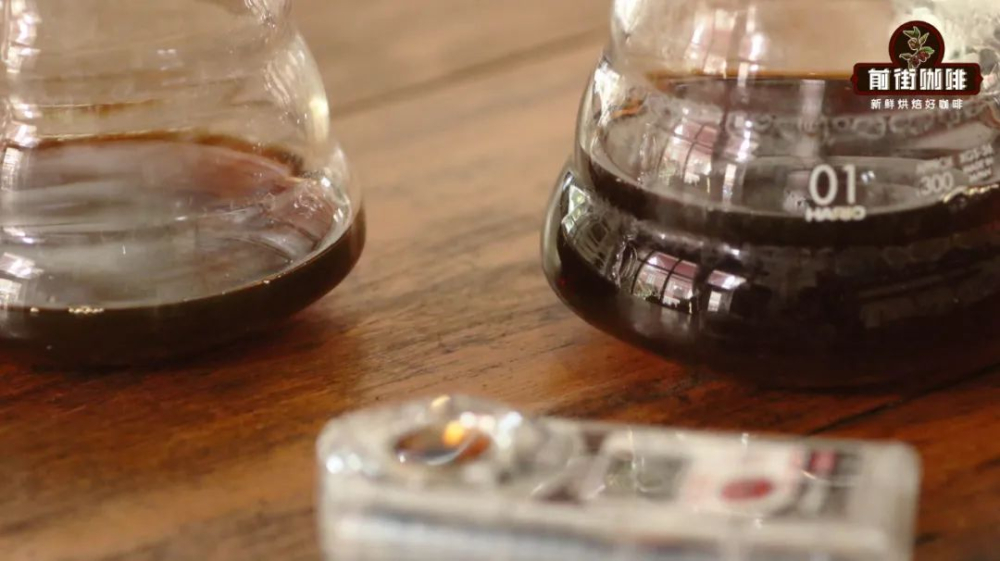
But higher concentration isn’t always better. In addition to concentration, the amount of water poured also affects another key metric—extraction yield. Calculations reveal that the extraction yield for 1:10 was 16.43%, for 1:15 it was 18.55%, and for 1:20 it reached 19.72%. This means that the more water you pour, the higher the extraction yield, but the efficiency of extraction in the later stages significantly declines. In fact, the first 150 milliliters of water achieved an extraction yield of 16.43%, and the subsequent 150 milliliters only increased the extraction yield by 3.29%.
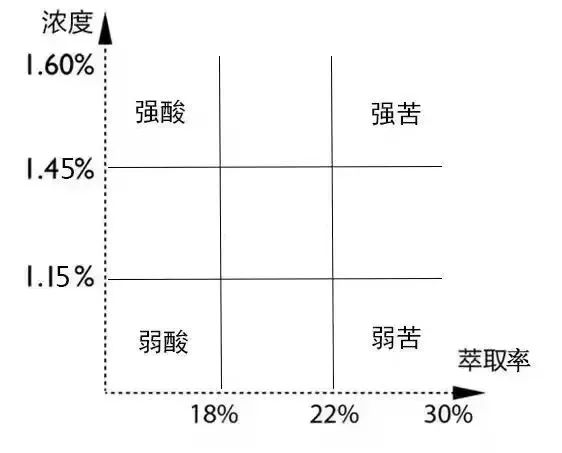
This also explains why coffee brewed at a 1:10 ratio, although high in concentration, often tastes overly sour or astringent—because the excessively high concentration combined with low extraction yield leads to an imbalanced flavor. On the contrary, coffee brewed at a 1:20 ratio may be light in body, but due to insufficient extracted substances, it can taste thin and slightly bitter. Therefore, the ideal coffee-to-water ratio should strike the best balance between concentration and extraction yield.

Many beginners often hear that “1:15 is a universal coffee-to-water ratio,” which is actually a relatively safe and beginner-friendly reference value. This ratio is suitable for most coffee beans and brewing situations, especially for newcomers just starting out with pour over brewing, as it can effectively reduce the risk of failure. However, as you gain experience, you’ll find that the coffee-to-water ratio can actually be flexibly adjusted according to personal taste preferences and the characteristics of the beans.
In fact, a difference of just 5 milliliters of water has a negligible impact on the final flavor—the concentration difference measured by instruments is usually only about 0.02%, which is almost negligible. Sometimes, just adding 5 milliliters more water may enhance the layering of the coffee’s flavors, making it taste smoother.

In summary, here are some suggestions for beginners when choosing a coffee-to-water ratio:
1. Although 1:15 is a commonly recommended value, it is not the only standard. Depending on the coffee variety and personal preference, ratios such as 1:14, 1:16, or others might suit you better.
2. The general range for pour over coffee-to-water ratios is around 1:13 to 1:18. Within this range, you can usually find the flavor profile that suits you.
3. If you’re using light roasted beans from high-altitude regions or with harder water, consider extending the coffee-to-water ratio to 1:16 to 1:17 to fully showcase their complex flavors.
4. Dark roasted coffee usually has a richer and bolder flavor. It’s recommended to choose a ratio between 1:13 and 1:15 based on personal taste, to balance body and complexity.

Remember, the charm of pour over coffee lies in flexible adjustments and personalized experiences. Through continuous experimentation, you’ll surely find your own perfect coffee-to-water ratio.
The above content is compiled by CoffeeHunters, a coffee news website.


