








Introduction:Do you know how much the flavor of pour over coffee can vary at different temperatures? From the high temperature right after brewing to gradual cooling, and even whether it’s suitable to reheat once cooled—all these factors affect the taste and aroma of your coffee. This article delves into how coffee temperature influences the expression of acidity, sweetness, and bitterness, explores the optimal drinking temperature range, and answers the practical question of whether “coffee can be reheated once it cools,” helping you savor each cup of pour over coffee more precisely.
The saying “coffee is best enjoyed hot” is absolutely not baseless. Many coffee enthusiasts have had similar experiences: a cup of pour over coffee that has gone cold often develops noticeable bitterness and woody flavors, sometimes even becoming unpleasant to drink. This dramatic shift is closely related to how various flavor compounds in coffee change with temperature.

When coffee is at different temperatures, its taste and aroma profiles can vary greatly. In professional cupping sessions, evaluators taste the same coffee at the “high temperature,” “medium temperature,” and “low temperature” stages—precisely to capture its flavor evolution throughout the cooling process. This involves two main factors: first, the release of different chemical components in coffee changes with temperature; second, our taste and smell receptors are highly sensitive to temperature, which affects how we perceive flavors.

Let’s start with “bitterness.” Bitterness is one of the most easily detected tastes by humans, especially at higher temperatures, where it’s often masked by the heat and less obvious. However, as the coffee cools, bitter molecules become more active—particularly the high-molecular-weight bitter compounds in dark roast beans, which become more pronounced at lower temperatures. Additionally, high temperatures temporarily numb the taste buds, making it harder to perceive the intensity of bitterness, but once the temperature drops, these bitter characteristics become much more apparent.

As for “sweetness,” it is actually most noticeable around human body temperature, roughly between 30°C and 50°C. The sweet sensations derived from coffee’s sugar compounds and caramelization are fully released and perceptible to the taste buds within this temperature range. Therefore, when the coffee cools down to around 50°C, the sweetness and aftertaste often peak. To carefully appreciate the honey, caramel, or fruity finish in your coffee, it’s best to enjoy it within this golden temperature window.
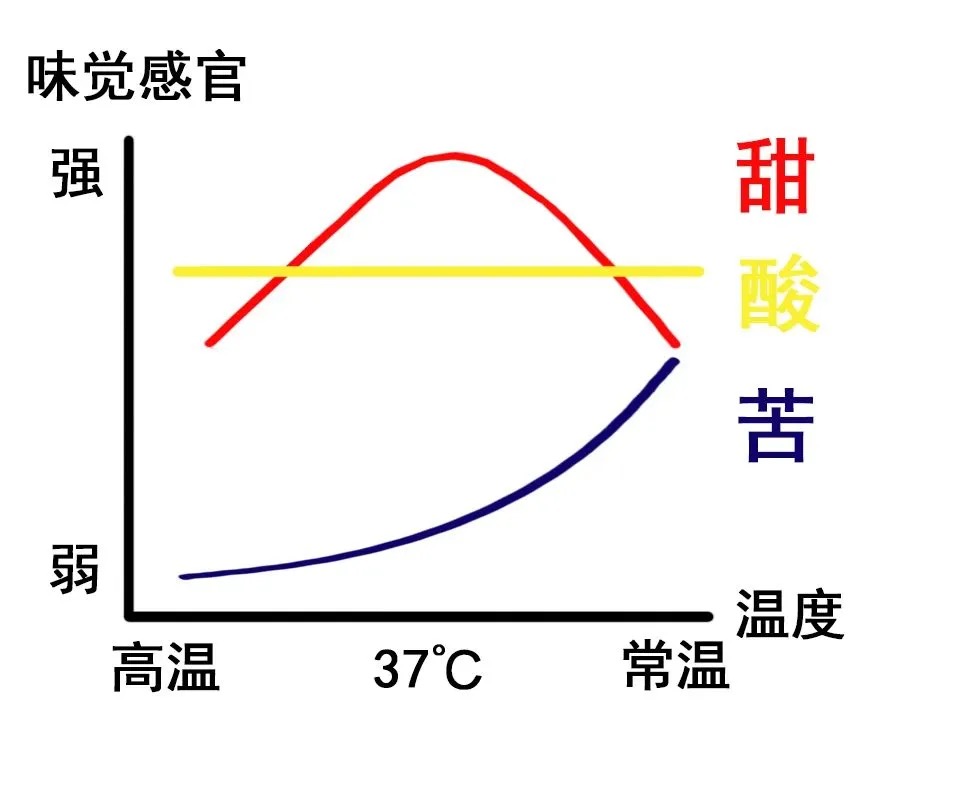
“Acidity,” on the other hand, is relatively stable and doesn’t fluctuate drastically with temperature changes. However, light roast coffees, which inherently have lower bitterness and feature more fruit acids and floral notes, may show amplified acidity once the temperature drops below 30°C, as the sweetness fades. Moreover, oxidation of the coffee’s surface oils upon exposure to air can intensify an unpleasant sharp acidity, especially noticeable after the coffee has been left to cool for a while.

So why does coffee develop unpleasant flavors once it cools? First, coffee oils play a key role. Although most oils are filtered out by the paper during pour over brewing, trace amounts still mix into the coffee liquid. These oils gradually solidify and rise to the surface as the coffee cools, and upon contact with oxygen in the air, they can oxidize, producing rancid and sharp sour off-notes—especially problematic in dark roasts where polymerized oils are more prone to causing such issues.
Secondly, the caramelized pigments produced during coffee roasting can also oxidize and polymerize over time, transforming originally sweet chocolatey or caramel-like compounds into disagreeable burnt, bitter tastes. This is also why coffee that has been left out too long, aside from turning sour and astringent, might also develop a distinct “burnt” aftertaste.
Now that we understand the reasons behind flavor changes, let’s discuss the “optimal tasting temperature” for pour over coffee. Freshly brewed coffee usually reaches above 70°C, which is too hot for most people to drink directly, but it’s the ideal moment for releasing volatile aromas. At this stage, you can prioritize “smelling” the coffee to capture its floral, fruity, or nutty notes.
When the temperature drops to 60°C, the coffee’s richness and body reach their ideal expression, making it a good time to start taking small sips. At 50°C, acidic and sweet compounds such as citric acid, malic acid, and caramel sweetness become more active—this is also a crucial stage where many specialty coffees showcase their layered flavors. As it further cools to 37°C (close to human body temperature), sweetness becomes most pronounced, making it ideal for experiencing the coffee’s soft finish. Finally, when the coffee reaches room temperature, acidity takes center stage—but if the flavors have already begun to fade, the acidity may turn harsh.

Different roast levels of coffee beans also come with recommended drinking temperature ranges. For light roasts with prominent acidity, it’s best to enjoy them between 30°C and 50°C to fully appreciate their fruity and fresh notes; whereas medium to dark roasts, which are richer and offer a balanced bitterness and sweetness, are better tasted between 40°C and 60°C, highlighting their bold texture and chocolatey or nutty finishes.
Finally, a common question: “Can I reheat coffee once it has gone cold?” The answer is no—it’s not recommended. Reheating not only fails to restore the lost volatile aromatic compounds, but may even worsen the release of undesirable flavors, making the coffee taste even more bitter, burnt, or noticeably rancid. If you really want to drink warm coffee, it’s best to enjoy it immediately after brewing and use tools like insulated cups to maintain the optimal temperature range, rather than trying to reheat it afterward.
The above content is compiled by CoffeeHunters, a coffee news website.


