








Introduction:In recent years, decaf coffee has become a popular choice among many coffee enthusiasts, especially for those who are sensitive to caffeine or wish to reduce their intake without sacrificing the flavor of coffee. This article delves into the origins of decaf coffee, its production principles, the four mainstream decaffeination methods, and compares it with regular coffee—helping you understand the benefits, potential flavor limitations, and practical selection tips for decaf coffee.
The Origin Story of Decaf Coffee
When it comes to the birth of decaf coffee, one must mention the German celebrity Goethe. This renowned literary figure was also a devoted coffee lover, but he often suffered from sleep disturbances due to coffee. It is said that he consulted his friend Runge to analyze the components of coffee beans in hopes of identifying the culprit behind his sleep issues. Around the year 1820, Runge successfully identified the key substance—caffeine—and developed a preliminary method for its separation, marking the beginning of decaf coffee research.

However, even after caffeine was identified, the technology at the time still couldn’t produce decaf coffee on a large scale. It wasn’t until 1903 that German importer Ludwig Roselius discovered that soaking coffee beans in seawater significantly reduced their caffeine content. He promptly organized a chemistry team to conduct in-depth research and successfully developed a process to extract caffeine, gradually paving the way for decaf coffee to enter mass production.
What Is Decaf Coffee?
Decaf coffee, also known as decaffeinated coffee, refers to coffee that has been processed to greatly reduce its caffeine content. Generally speaking,decaf coffee must have at least 97% of its caffeine removed,though it may still contain trace amounts and is not entirely caffeine-free.
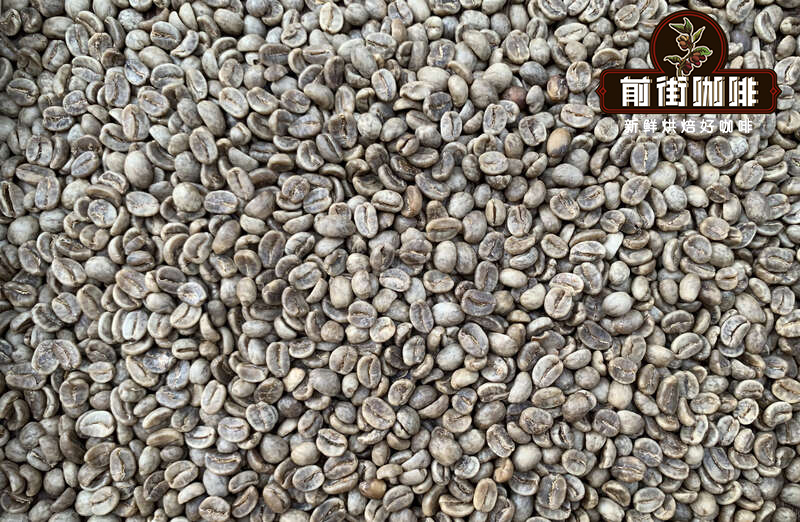
Taking the commonly used Arabica coffee beans as an example, their caffeine content is approximately 0.9%–1.4% (averaging 1.2%), while Robusta beans have even higher levels, around 1.8%–4% (averaging 2.2%). Measurement is usually based on the proportion of caffeine relative to the weight of the beans.
In addition, decaf coffee can be divided into two main categories: naturally decaffeinated and artificially decaffeinated. According to EU standards, artificially processed decaf coffee must have a final caffeine content no higher than 0.1% of the original beans; whereas the U.S. FDA stipulates that it must be below 3% of the original content. Therefore, “decaf ≠ completely caffeine-free,” and dosage should still be monitored when consuming.
What Are the Methods for Processing Decaf Coffee?
Currently, the mainstream decaf coffee processing techniques mainly use water, organic solvents, or carbon dioxide to remove caffeine while preserving as much of the other components and flavors of the coffee as possible. Below are the four common decaf processing methods and their characteristics.
1. Swiss Water Process
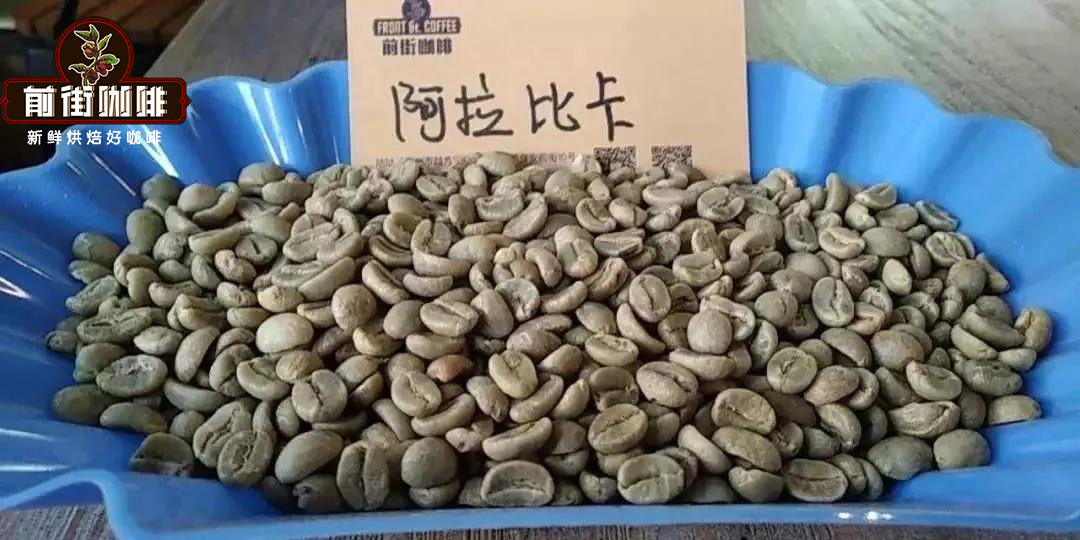
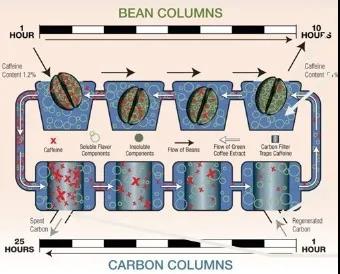
This method involves first soaking the green beans in hot water to partially dissolve caffeine and other water-soluble substances. Then, an activated carbon filter is used to remove the caffeine, after which the treated solution is poured back onto the beans so that other flavor compounds can be reabsorbed. This method does not require the use of chemical agents, and the solution can be reused, though some delicate flavors may be lost during the filtration process. Nonetheless, it achieves a caffeine removal rate of up to 99.9% and is one of the most common decaf processing methods on the market.
2. Direct Solvent Process
This approach uses organic solvents such as dichloromethane or ethyl acetate to directly contact the coffee beans and dissolve the caffeine. The process starts by steaming the beans to open their surface, then adding the solvent to extract the caffeine, followed by removing the solvent. Although there have been concerns about the safety of dichloromethane, its boiling point is only 39.8°C, meaning it almost completely evaporates during roasting or brewing, posing minimal actual risk.
3. Indirect Solvent Process
This method first soaks the coffee beans in hot water to extract both caffeine and other flavor components, then separates this “flavor liquid” from the beans. Next, solvents such as dichloromethane or ethyl acetate are used to specifically break down the caffeine, after which the remaining flavor liquid is returned to the beans to reabsorb the aroma and oils. However, this method can also lead to greater flavor loss.
4. Supercritical Carbon Dioxide High-Pressure Extraction Method
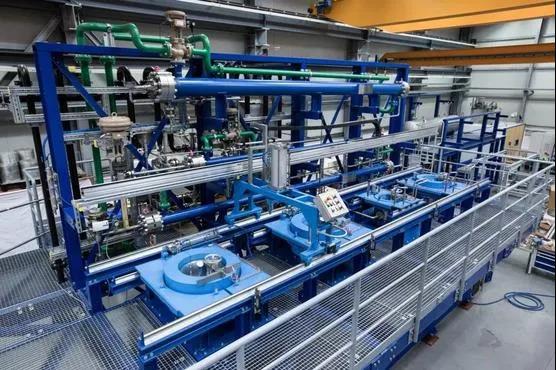
This technique utilizes supercritical carbon dioxide under high-pressure conditions. Due to its high permeability and low surface tension, it can penetrate deep into the coffee bean cells and selectively extract only the caffeine without affecting other compounds. This method helps preserve the original flavor and color of the coffee, but it requires expensive equipment and specialized techniques, making it relatively costly.
Is Decaf Coffee Tasty?
Many people assume that decaf coffee has a more bland flavor, but the key actually lies in the beans chosen. If lower-quality commercial beans, such as high-caffeine Robusta, are used—even without decaffeination—the flavor may still be poor. Conversely, if high-quality Arabica beans are processed, even with reduced caffeine, they can still retain rich aromas and layers of flavor.
The Pros and Minor Cons of Decaf Coffee
The biggest advantage of decaf coffee is that it allows you to enjoy the aroma and taste of coffee without consuming excessive caffeine, helping to avoid issues like sleep disruption or heart palpitations. Additionally, although the decaffeination process may lead to the loss of some antioxidants such as hydroxycinnamic acids and polyphenols, their content remains similar to that of regular coffee, with only about a 15% reduction. Antioxidants help combat free radicals and play a certain role in preventing chronic diseases such as heart disease and cancer.
Decaf coffee also contains trace amounts of nutrients, such as magnesium, potassium, and niacin (vitamin B3). While the amount per cup may not be high, drinking several cups a day can still contribute cumulatively.
In summary, the advantages of decaf coffee include aiding sleep, reducing caffeine-related side effects, and still retaining antioxidant functions and some nutrients. The only minor drawback might be that its flavor is slightly inferior to that of regular coffee, but as long as you choose the right beans and processing method, you can still enjoy a high-quality coffee experience.


The above content is compiled by CoffeeHunters, a coffee news website.

