








Introduction:The key to choosing single-origin coffee beans suitable for a moka pot lies in understanding your own drinking habits and budget. This article will introduce several single-origin beans with clear flavor profiles and versatility for various brewing methods, based on everyday brewing needs. It will also share how to adjust grind size and extraction according to the characteristics of the beans, so you can brew balanced and flavorful coffee from your very first use of a moka pot.
When it comes to selecting single-origin coffee beans for a moka pot, the first thing to consider is your daily brewing routine. Do you prefer a quick black coffee every day, or do you often pair it with milk? If you prefer black coffee, focus on aroma and aftertaste complexity; if you frequently make lattes or cappuccinos, choose beans with higher body that can retain their flavor even when diluted with milk. Additionally, the purchase quantity should be adjusted based on frequency of use and sharing. For shared use, it’s recommended to opt for beans with balanced acidity and sweetness, and good adaptability.

For most home or office environments, rather than chasing niche or extremely unique processing methods, a more practical approach is to prioritize bean freshness, consistent roasting quality, and appropriate packaging. If you occasionally want to try beans with strong fruity notes or dark roast profiles, it’s advisable to wait until you’re familiar with basic flavor profiles before taking on the challenge—this way, you can more objectively perceive the differences. When selecting beans, investing your budget in ensuring a stable source of quality is often more practical than blindly chasing brand names.
For example, a certain brand's Brazilian Queen Estate is a representative medium-dark roast bean. Produced in Brazil’s Minas Gerais region, this bean has a clear flavor profile, featuring distinct notes of nuts, cocoa, and caramel, along with a soft sweetness. It has a smooth mouthfeel, low acidity, and is suitable for various brewing methods, including moka pot, pour over, and Americano. When milk is added, the sweetness becomes even more pronounced, making it a reliable choice for beginners using a moka pot. For daily use, it’s recommended to fix a set of basic parameters and then gradually fine-tune to suit personal taste.
Another commonly recommended option is a certain brand's PWN Indonesian Golden Mandheling, a dark roast bean from Sumatra, Indonesia. This bean features herbal, dark chocolate, and spice notes as its main characteristics, with low acidity, a full body, and a long aftertaste. Due to its intense profile, it performs consistently well in moka pots, espresso machines, and milk-based coffee preparations. Even for first-time users, there’s no need to set overly strong extraction parameters—it’s suitable for coffee enthusiasts looking to steadily advance their skills.
If you’d like to further compare different flavor directions, a certain brand’s premium blend also offers an interesting reference. This medium-dark roast blend combines beans from Brazil’s Cerrado and Colombia’s Huila regions, delivering a combined profile of nuts, cocoa, and soft caramel. It has a balanced flavor and wide adaptability, whether served hot or cold, and performs consistently across different drinks. Commonly used for making Americanos, lattes, flat whites, or even in semi-automatic home coffee machines, it delivers a uniform and rich taste.
Comparing the Brazilian Queen Estate with the Indonesian Golden Mandheling, you’ll find that the former emphasizes nutty and caramel notes, while the latter excels in spicy and dark chocolate aromas. Both are classic choices for a moka pot—the point isn’t to compare which is better, but to understand which flavor profile you prefer. By actually brewing and observing details such as aroma, sweetness, and mouthfeel, you can develop a clearer sense of your taste preferences.
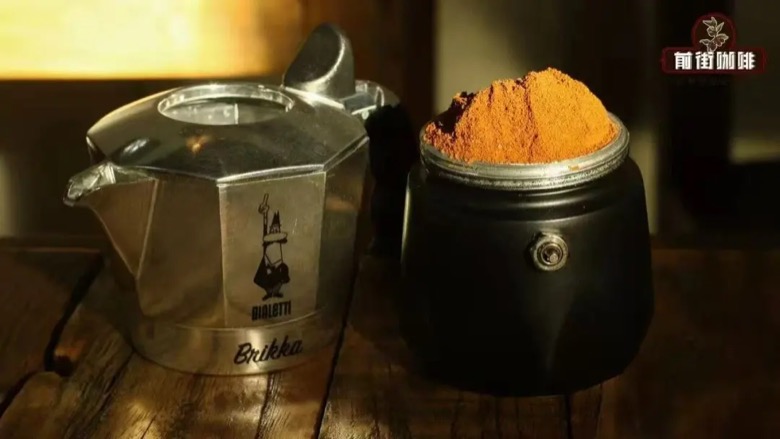
In practical operation, when using a moka pot, it’s recommended to choose a grind size slightly finer than pour over but not as fine as espresso—about the texture of fine sugar. When filling the coffee basket, gently level the grounds without pressing them down hard to avoid excessive resistance, which could lead to over-extraction. Use medium or low heat when brewing, and once the coffee starts flowing steadily, pay attention to the color and flow rate. Turn off the heat just before any noticeable spraying occurs to avoid burnt, bitter flavors from overheating in the final stages. These techniques apply to most single-origin beans and help ensure stable extraction and optimal flavor retention.
Beginners don’t need to grasp all variables at once. When using single-origin coffee beans suitable for a moka pot, it’s recommended to first fix the brew ratio and grind coarseness, and simply record each brew’s parameters and sensations, such as “today I slightly fine-tuned the grind, distribution was more even, and sweetness was more pronounced.” Such records can help you make more accurate choices during your next purchase, without having to start from scratch each time.
In summary, choosing single-origin coffee beans suitable for a moka pot isn’t about mastering every origin at once, but rather selecting beans that are fresh, stable, and have clear flavors based on your own drinking habits, budget, and frequency. Starting with the Brazilian Queen Estate or the Indonesian Golden Mandheling, and gradually building your own brewing data, will make every use of your moka pot more intuitive and enjoyable.
The above content is compiled by CoffeeHunters, a coffee news website.

