Introduction:Although often overshadowed by the prominence of Kenya and Ethiopia, Tanzania is a significant coffee-producing country in Africa with unique geographical advantages and varietal potential. This article delves into the two major growing regions of Kilimanjaro and Mount Meru, analyzing their altitude, soil, varieties, and processing characteristics to help you understand how these underappreciated specialty coffee beans exhibit bright acidity and rich body. Practical pour over parameters are also provided.
Tanzania’s coffee cultivation history dates back to the late 19th century when German colonists first introduced coffee seedlings from Kenya and Bourbon Island. The earliest trials were conducted on the moderately elevated slopes of Mount Kilimanjaro, and the first wave of commercial exports began in 1898. Today, Tanzania ranks as the world’s 16th largest coffee producer, with an annual output of approximately 50,000 to 80,000 metric tons. Around 10% of this is classified as specialty-grade coffee, giving it considerable international competitiveness.
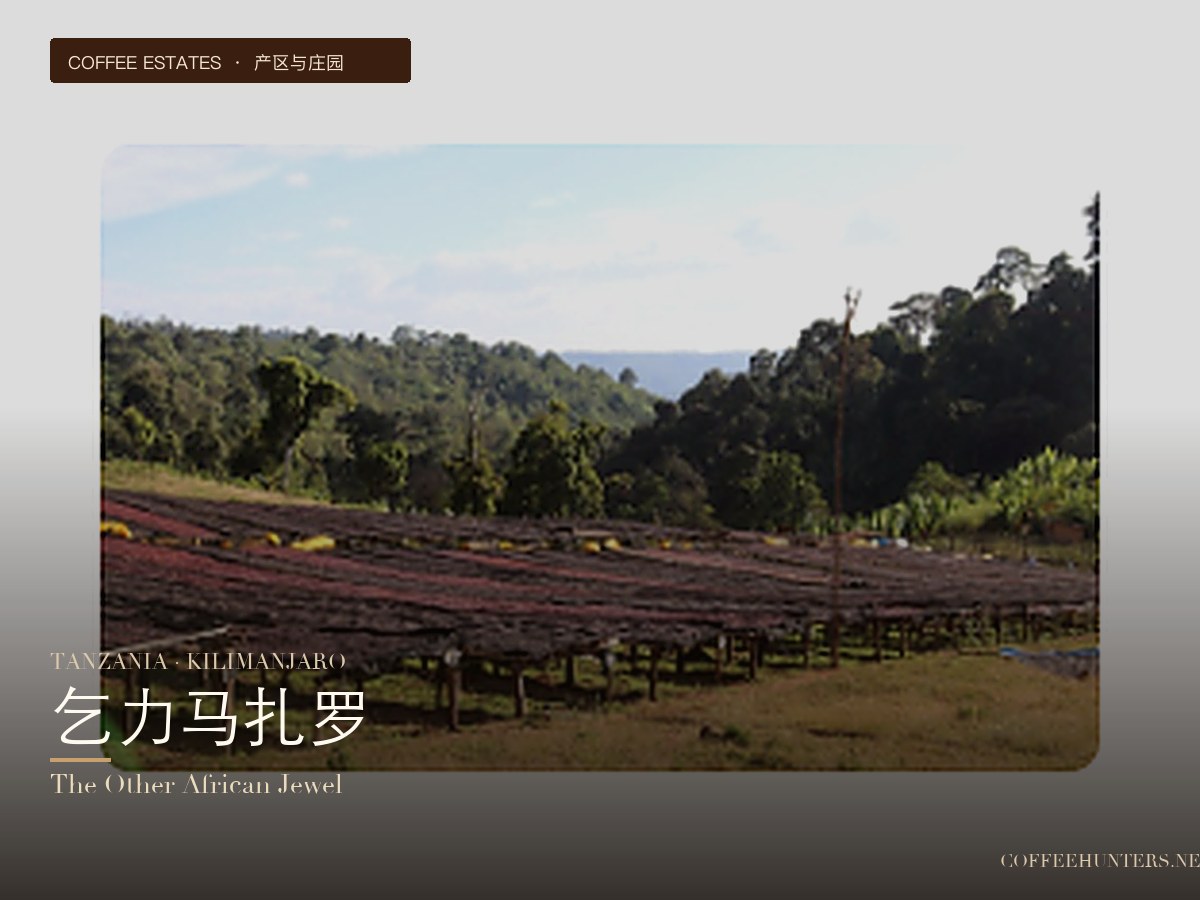
Located in northern Tanzania near the Kenyan border, Mount Kilimanjaro, standing at 5,895 meters, is Africa’s highest peak. Coffee farms in this region are primarily distributed on the southern slopes of the mountain, at altitudes ranging from 1,000 to 2,000 meters, encompassing well-known sub-regions such as Moshi, Arusha, and Machame. The area benefits from fertile volcanic soils, annual rainfall of 1,500 to 2,000 millimeters, and abundant sunshine, providing ideal growing conditions for coffee trees. Interestingly, "Kilimanjaro" means "Mountain of Whiteness" in the Maasai language, reflecting the perennial snowcap atop the peak.
Southeast of Kilimanjaro lies Mount Meru, which stands at 4,566 meters and is Tanzania’s second-highest peak. Coffee plantations in this region are found at elevations between 1,400 and 1,900 meters. While also featuring volcanic soil properties, its microclimate is distinctly different — compared to Kilimanjaro, Mount Meru is moister and cooler. This environmental variation is directly reflected in the coffee’s flavor profile, often presenting a more “bright” and layered taste. In recent years, the number of specialty coffee lots from Mount Meru has rapidly increased, making it an emerging focal point for Tanzania’s specialty coffee scene.
The main coffee varieties grown in Tanzania include Bourbon, Kent, and KP423. Among them, Kent and KP423 are disease-resistant strains that perform decently in cupping but slightly fall short of pure Bourbon. In high-end specialty lots, rarer varieties such as N39 and the Blue Mountain variety (introduced from Jamaica in the 1930s) can be found, adding more diversity to the flavor profiles.
In terms of processing methods, Tanzania almost exclusively employs the washed process. Local processing stations follow standard procedures: first removing the pulp, then fermenting (typically for 24 to 48 hours), washing, and finally evenly spreading the beans out to dry. This technique allows Tanzanian washed coffee to exhibit a bright acidity reminiscent of Kenyan coffees, but with a gentler acidity level and a more “soft” flavor profile, making it suitable for consumers who prefer balanced taste.
In terms of flavor profiles, coffee from the Kilimanjaro region often exhibits “medium acidity paired with solid sweetness.” On the palate, one can identify bright acidic notes of lemon and green apple, accompanied by natural sweetness of caramel and brown sugar, with a finish that lingers with the rich tones of milk chocolate and almonds. In contrast, coffee from the Mount Meru region is known for its “bright acidity and pronounced floral aromas.” The acidity is lively, akin to lemon and grapefruit, while the aroma layers feature fragrances of jasmine and orange blossom. The sweetness presents as honey and peach-like gentleness. Both are generally softer than Kenyan coffees but still perfectly retain the distinctive crisp acidity characteristic of African coffees.
The structure of Tanzania’s coffee industry is primarily cooperative-based. Among them, the Kilimanjaro Native Cooperative Union (KNCU), founded in 1925, is not only one of Africa’s oldest coffee cooperatives but also integrates over 70 grassroots cooperatives under its umbrella. It strictly unifies planting and processing standards to ensure quality stability. Other cooperatives, such as Kagera Cooperative and Mara Cooperative, also play important roles in the producing regions.
Regarding specific estates, representative ones in the Kilimanjaro region include Burka Estate, Mondul Estate, and Kilimanjaro Plantation, while the Mount Meru region is home to notable estates such as Meru Plantation and Usa River Estate. Specialty lots produced by these estates have received professional acclaim in the international market and are key sources for finding high-quality Tanzanian coffee.
For brewing recommendations, Tanzanian coffee is particularly well-suited to pour over devices like the V60 or Origami that can highlight acidity and layering. The recommended water temperature is set between 90–92°C, with a brew ratio maintained at 1:15 to 1:16, and a medium-fine grind size. To enhance the full body of Kilimanjaro coffee, the Kalita Wave with a three-pour method can be chosen; to emphasize the bright acidity and floral notes of Mount Meru coffee, the single-pour V60 method better showcases its refined flavors.
In summary, within the global landscape of specialty coffee, although Tanzania is often overshadowed by the dazzling presence of Kenya and Ethiopia, it possesses planting conditions comparable to Kenya and a varietal richness that rivals Ethiopia’s. Delving into Tanzania’s coffee story is nothing less than exploring a hidden gem in the world of African specialty coffee.
The above content is compiled by CoffeeHunters, a coffee news website.