Introduction:Jamaican Blue Mountain coffee is hailed as one of the world’s most prestigious classic coffees, not only because of its rarity and high price, but also due to its unique flavor profile and strict quality control system. This article will delve into the growing environment, varietal characteristics, processing methods, grading standards, and how to brew it to bring out its optimal flavors, giving you a comprehensive understanding of what makes this specialty coffee so iconic.
The history of Jamaican Blue Mountain coffee dates back to 1728, when then-Governor Nicholas Lawes introduced coffee seedlings from Martinique. By the mid-19th century, Jamaica had become one of the world’s major coffee-producing regions. However, it was in the 1840s that “Blue Mountain” truly became a branded name, when the British colonial government registered the trademark, making Blue Mountain coffee one of Jamaica’s most representative export commodities. To this day, the majority of Blue Mountain coffee is exported to Japan, accounting for over 80% of its total production.
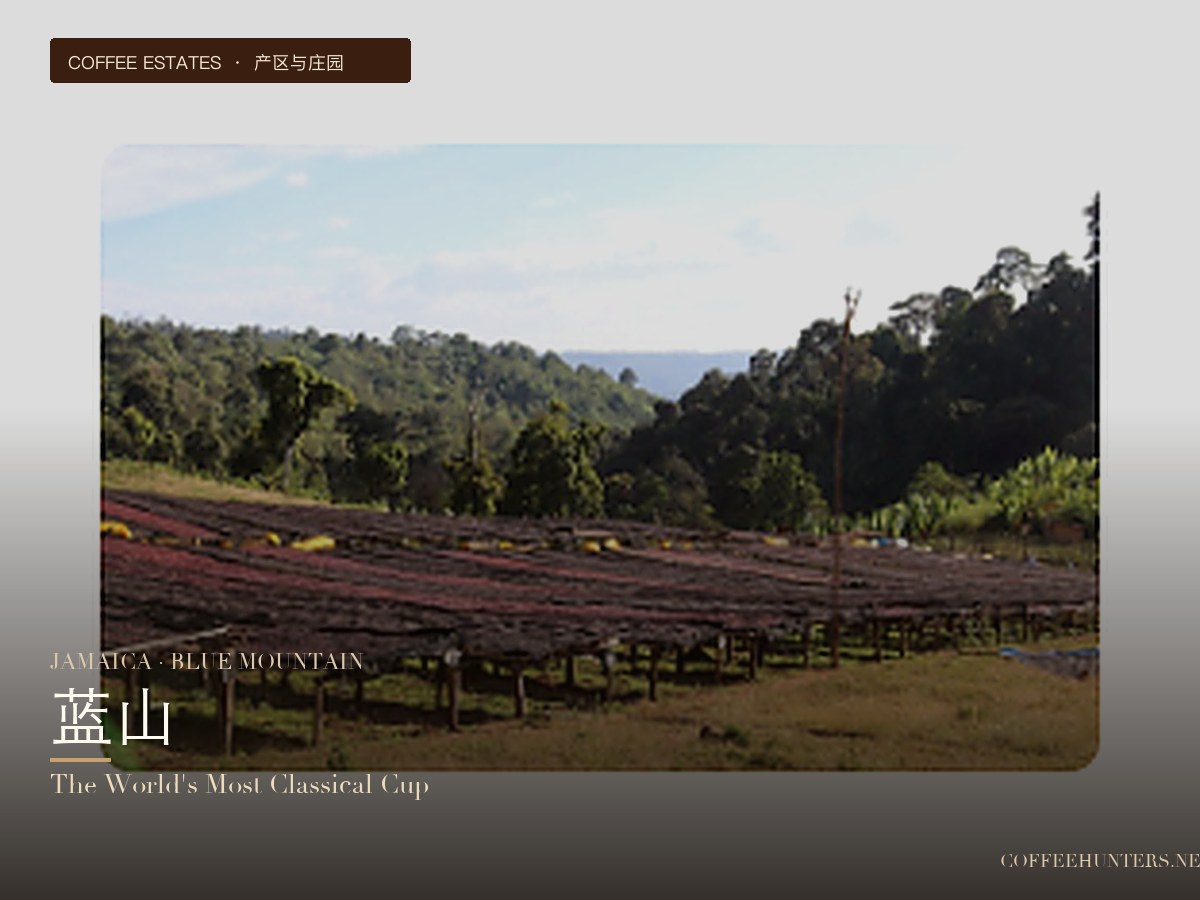
The Blue Mountains are located in eastern Jamaica, with the main peak reaching an elevation of 2,256 meters, making it one of the few high-altitude mountainous areas in the Caribbean. The area that can genuinely be called “Blue Mountain coffee” is limited to a narrow zone between 900 and 1,700 meters above sea level along the Blue Mountain range. The volcanic soil, consistently mild and humid climate, along with the daily interplay of cloud cover in this range, provide nearly perfect growing conditions for coffee trees — and are the key to the unique flavors of Blue Mountain coffee.
The primary variety grown in the Blue Mountains is Typica (also known as Ironica), one of the oldest Arabica varieties, known for its balanced flavor and elegant acidity. Unlike other producing regions, coffee farms in the Blue Mountains are mostly small family-run operations, with an average planting area of just 2 to 3 hectares per household. This small-scale farming approach not only allows for meticulous management but also helps maintain consistent coffee quality.
In terms of processing, Blue Mountain coffee is almost exclusively processed using the washed method. Local processing facilities follow traditional steps: first removing the pulp, followed by fermentation, washing, and finally drying in the sun. The fermentation stage typically lasts between 18 to 30 hours, which is longer than in many other regions, contributing to the distinctive fine effervescence and gentle acidity that define Blue Mountain coffee.
The grading system for Blue Mountain coffee is recognized as one of the most rigorous in the world. It is primarily divided into grades No.1, No.2, No.3, and PB (peaberry), with No.1 being the highest grade, requiring large, uniform beans with extremely low defect rates. All authentic Blue Mountain coffee must be packed in wooden barrels authorized by the Jamaica Coffee Industry Board (CIB), with official embossed stamps and unique serial numbers on the barrels to ensure traceability and quality assurance.
In terms of flavor, a high-quality cup of Blue Mountain coffee demonstrates exceptional balance. During cupping, the first notes to emerge are soft aromas of nuts, roasted malt, and light chocolate; upon tasting, the acidity is mild, reminiscent of the freshness of lemon and green apple; the mid-palate reveals sweet notes of almond candy, brown sugar, and honey; the finish leaves a subtle floral hint and a tea-like smoothness. This non-intense, non-aggressive yet layered expression is the essence of the “gentle” flavor profile of Blue Mountain.
Due to limited production, the annual output of Blue Mountain coffee is only about 200 to 400 tons, which is why its price remains consistently high. The price of green beans ranges from approximately $30 to $50 per pound, while the retail price after roasting is even more expensive. Factors behind the high price include regional limitations, strict grading, exclusive packaging requirements, and the long-term stable demand from the Japanese market — all of which together have shaped the premium positioning of Blue Mountain coffee.
If you wish to brew Blue Mountain coffee at home, it is recommended to use a V60 or Chemex dripper, with water temperature controlled at 88 to 90°C (slightly lower than typical pour over temperatures). A brew ratio of 1:16 to 1:18 is suggested, and a medium-fine grind is ideal. A three-stage pouring technique is advised: start with a 30-second bloom, followed by multiple pours, and finish with a fine stream. If you want to highlight the tea-like qualities and effervescence of Blue Mountain even more, try using an Origami filter, which can enhance mouthfeel smoothness and flavor layering.
In summary, Blue Mountain coffee may not be the most avant-garde in flavor, the most diverse in variety, or the most abundant in yield, but it is undoubtedly one of the most brand-valued, strictly managed, and representative classic coffees. Understanding Blue Mountain is not just about savoring a cup of coffee — it’s about deeply appreciating the profound meaning behind the word “classic” in specialty coffee.
The above content is compiled by CoffeeHunters, a coffee news website.