Introduction:As a specialty coffee bean that has garnered significant attention in recent years, Huakui is frequently discussed regarding whether it’s worth purchasing, how it differs from Yirgacheffe, and why many find the flavor off when brewing at home. This article will delve into the unique flavor profile of Huakui, clearly explain how it stands apart from other popular beans, and provide practical pour over parameters along with tips to avoid common brewing mistakes—so you can capture its fruity aroma and sweetness right from your first brew.
For a long time, Huakui has been one of the most frequently asked-about beans among coffee enthusiasts. The three most common questions people ask are: Is it really worth buying? How is it different from the classic Yirgacheffe? And why does it never taste quite right when I brew it? If you’ve had these questions too, this article will help you get it all straight in one go—reading it before buying can save you from plenty of unnecessary brewing mishaps.
Let’s start with the question everyone cares about: Is Huakui really worth getting? Simply put, if you prefer coffee with rich fruitiness, low bitterness, and pronounced sweetness, then Huakui definitely falls into the “once you try it, you’ll want more” category. The flavor profile of this bean is highly distinctive, with especially prominent tropical fruit aromas. Common descriptors include layers of strawberry, passionfruit, jackfruit, and lychee. Moreover, the sweetness hits right away upon tasting, with almost no noticeable astringency, resulting in a smooth mouthfeel full of juice-like vibrancy—so much so that some consumers even joke that it’s “the coffee that least tastes like traditional coffee.”
Next, many beginners also wonder: How do I choose between Huakui and Yirgacheffe? These two popular beans from Ethiopia actually take very different flavor directions. Yirgacheffe leans toward a bright, clean profile, highlighted by citrus, berries, and delicate floral notes, with a green-tea-like aftertaste, gentle and vibrant acidity—making it ideal for those who enjoy a refreshing cup. In contrast, Huakui takes a bolder route, with more intense fruitiness and a stronger sense of sweetness. For those wary of bitterness or seeking a richer, layered flavor experience, Huakui is the safer bet. To sum it up in one line: go for Yirgacheffe if you want something light and elegant; choose Huakui if you’re after bold fruitiness and clear sweetness.
However, many users report that they often mess up when brewing Huakui at home, with the result not living up to expectations. In fact, over 90% of these “brewing fails” stem mainly from three common mistakes: improper water temperature, incorrect grind size, and unsuitable water quality.
First up is the water temperature issue. As a light-roasted coffee bean, Huakui can easily release off-flavors and unpleasant astringency if brewed with water hotter than 95°C. It’s recommended to control the water temperature within 90 to 93°C . The ideal choice is 92℃, as this temperature can fully highlight Huakui’s fruitiness and sweetness while avoiding over-extraction.
The second common mistake is grinding too fine. Grinding too finely can lead to over-extraction, making the coffee bitter and thin, and often resulting in a flat, unround mouthfeel. It’s recommended to use a medium-fine grind—roughly slightly coarser than granulated white sugar—which helps ensure stable flow rate and effectively keeps the extraction time around 2 minutesfor optimal balance.
The third common pitfall is water quality. Many households have hard tap water, meaning it contains high levels of minerals, which can amplify any astringency or undesirable flavors in the coffee. It’s recommended to use filtered water, soft water, or even regular cooled boiled water—all of which can significantly enhance the purity and clarity of Huakui’s flavors.
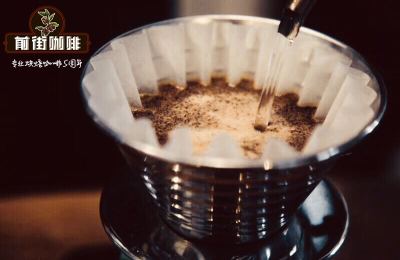
Below is a set of pour over parametersthat have proven to perform reliably in testing, which you can directly reference: use about 15 gramsof coffee, set the water temperature to 92℃, with a 1:15brew ratio, maintaining a medium-fine grind. The overall process should begin with a 30-second bloom, followed by a two-stage pour, keeping the total extraction time around 2 minutes. If you’re brewing in summer, you can also try replacing half of the hot water with ice cubes to make an iced pour over—this helps concentrate and refresh the fruitiness of Huakui.
Finally, a quick reminder: if you usually only drink dark-roasted, bold and bitter coffees, and you can’t tolerate any fruity acidity at all, then Huakui may not be your first choice. Though its acidity isn’t particularly high, it still mainly presents a style centered on floral-fruity aromas and sweetness. If you prefer a richer, fuller-bodied, and lower-acidity cup, you might want to consider beans like Mandheling, which offer a more subdued profile.
In summary, Huakui is a specialty coffee bean with distinct flavor characteristics and relatively high forgiveness for brewing errors. As long as you steer clear of the three common pitfalls—high water temperature, overly fine grind, and hard water—even beginners can easily brew a juicy, satisfying cup. If you’re just stepping into the world of specialty coffee, Huakui is definitely a top-quality option worthy of a spot on your shopping list.
The above content is compiled by CoffeeHunters, a coffee news website.