








Introduction:Flat White, also known as "Fu Rui Bai" in Chinese, is an Australian-style milk coffee that has gained immense popularity among coffee enthusiasts in recent years. But where did it originate? Why is it also called "Australian White"? How does it differ from a latte? Can it be served cold? This article delves into the history, preparation parameters, steaming techniques, and key differences between Flat White and latte to help you better understand the essence of this delicate milk coffee.
What is Flat White? Why is it also called Fu Rui Bai or Australian White?
Flat White, transliterated as Fu Rui Bai in Chinese, is often referred to as Australian White Coffee by many cafés. It’s a milk coffee renowned for its intense coffee flavor and fine microfoam. Positioned between a latte and a cappuccino, it offers the smooth texture of a latte but with more pronounced coffee aroma and thinner foam, allowing each sip to highlight the essence of the espresso.
The origin debate: Australia or New Zealand?
There’s still much discussion about where Flat White originated. Although Starbucks officially states that it was first created in Australia in the 1980s and sold in Australian Starbucks stores starting in 2009, before later expanding to markets in the UK, USA, and China,New Zealand claims that the drink should be credited to locals. According to a report by the New Zealand Herald, Flat White is regarded as a “New Zealand classic coffee,” especiallywith Wellington believed to be its birthplace. Although the exact origin remains undecided, there is a general consensus: Flat White features a stronger coffee flavor and thinner layer of foam compared to a latte.

Flat White vs Latte: Differences in Flavor and Structure
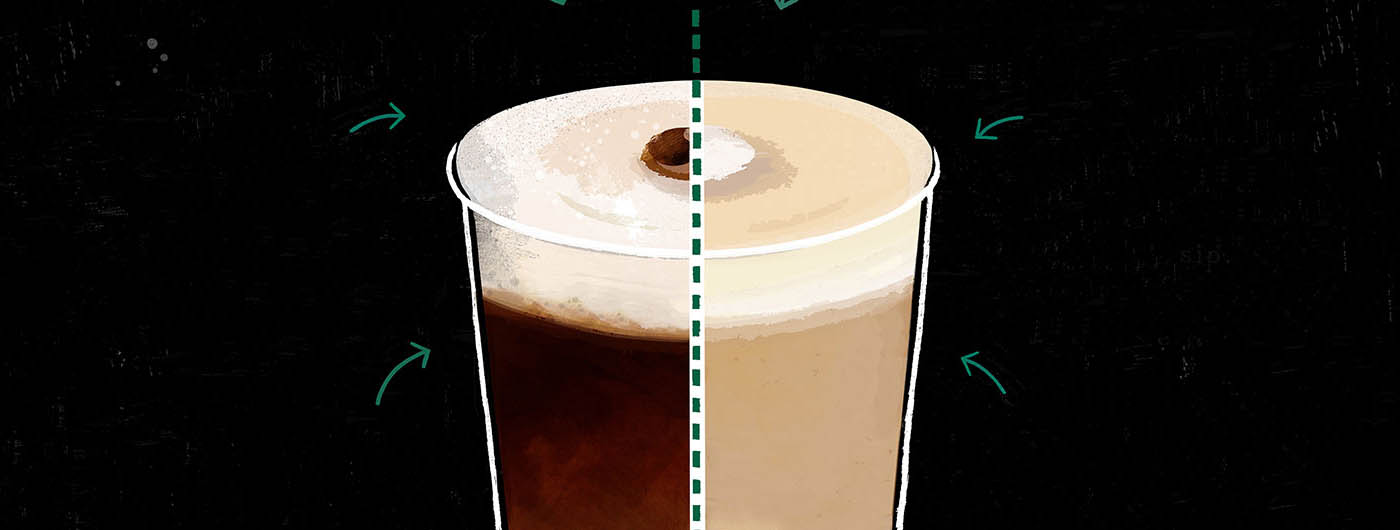
Both Flat White and Latte (Caffe Latte) are based on espresso and milk, but they differ significantly in ratio and texture. Lattes aim for a balance between coffee and milk, with more milk and a foam layer typically around 0.5–0.7 cm, making them suitable for those who prefer a smoother coffee experience. In contrast,Flat White uses less milk and thinner foam (about 0.3–0.5 cm), allowing the coffee’s aroma and acidity to shine more prominently, making it the preferred choice for those who enjoy a bolder coffee flavor.

Should Flat White be hot or iced?
Traditionally, Flat White refers to the hot version. Its refined microfoam, when combined with hot milk, achieves the best layered texture. Although chains like Starbucks offer an iced option, for the most authentic Flat White experience, the hot version is recommended. The hot version allows the coffee crema and fine microfoam to blend perfectly, delivering a smooth and rich drinking experience.

How to make an authentic Flat White at home?
To replicate a café-quality Flat White at home, the key lies in using high-quality espresso, especially a ristretto (or refined espresso). It is recommended to use a medium-dark roasted blend, such as a combination of Brazilian, Indonesian, and Vietnamese beans, which helps create a rich and balanced coffee base. For extraction, it is suggested to use 20 grams of coffee grounds to yield 30 grams of coffee liquid, with a brewing time controlled between 23 to 28 seconds to ensure a rich crema and smooth taste.
Next, use about 150 ml of chilled fresh milk, steam and froth it with the coffee machine’s steam wand to produce fine microfoam about 0.5 cm thick, then combine the milk and espresso evenly to complete the drink. Be careful not to make the foam too thick, as it can affect the overall layering and the “flat” texture.

Foam thickness is key: Why must Flat White be “flat”?
The “Flat” in Flat White means “level” or “flat,” meaning the foam layer should align with the rim of the cup without any noticeable rise. This is also why it is sometimes called “Flat White Coffee.” Ideally, the foam should be maintained at a thickness of0.3–0.5 cm. Excessively thick foam can interfere with the expression of the coffee’s inherent flavors and diminish the delicate and smooth characteristics of Flat White. In comparison, lattes usually have thicker foam, around 0.5–0.7 cm, making it easier to achieve a fluffy top layer visually.

Presentation of Flat White varies slightly by region
In different countries or cafés, the preparation of Flat White may vary depending on local tastes and barista styles. For example, in New Zealand, many baristas opt to use double shots of espresso and serve it in a smaller cup of about 150 ml, increasing the coffee ratio to enhance its intensity. Some cafés in Melbourne even use double ristretto (a more concentrated early-stage extraction) to boost aroma and complexity, though this demands higher-quality coffee beans.
Meanwhile, in Australia, it generally maintains a similar cup size to a latte but emphasizes thinner foam to highlight the clarity and fine texture of the coffee.

Summary: How to choose and enjoy your Flat White?
Whether you prefer a bold coffee flavor or a balanced taste with milk, Flat White offers a unique choice. Remember, a good Flat White hinges on refined espresso, the right amount of milk, thin and even microfoam, and a hot serving style. Next time you visit a café, try ordering a Flat White to experience that rich yet silky coffee profile.


The above content is compiled by CoffeeHunters, a coffee news website.


