







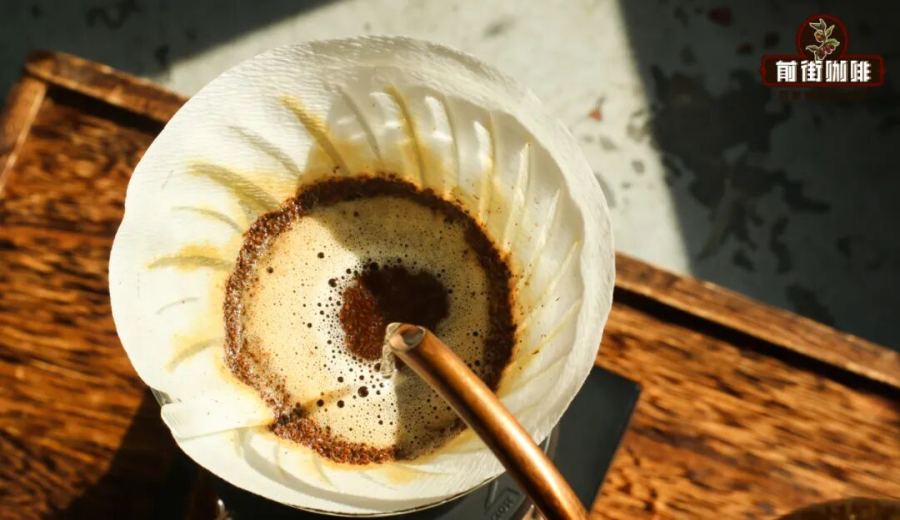
Introduction:When brewing pour over coffee, it’s common to encounter uneven distribution of coffee grounds in the filter bed. Many people’s first instinct is to flatten the coffee bed to ensure even extraction. However, improper tapping can trigger the “Brazil nut effect,” which negatively impacts coffee flavor and extraction efficiency. This article delves into the correct way to flatten the coffee bed, teaching you how to avoid common mistakes and improve the quality and consistency of your pour over coffee.
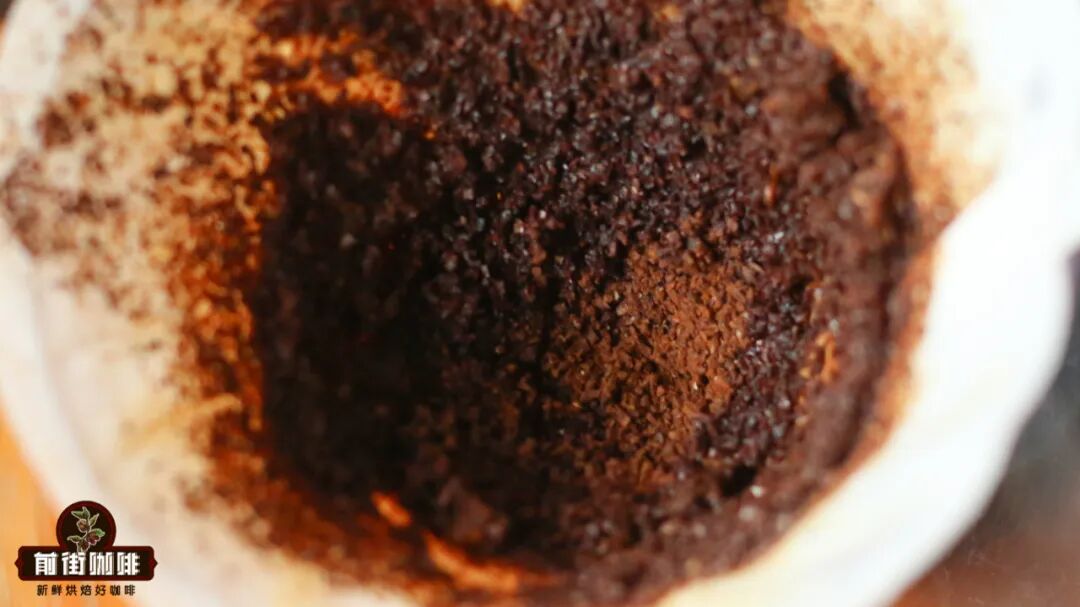
During the pour over process, it’s not unusual to find that after pouring coffee grounds into the filter, the bed appears uneven—just like the situation shown in the image below. How would you handle it?

Most people’s immediate reaction is to flatten the coffee bed. Whether you choose option A, B, or C, most tend to gently tap the filter to make the coffee bed level. This isn’t just about aesthetics; it’s widely believed that a flat coffee bed allows water to pass through evenly, contributing to stable and consistent extraction.
Indeed, compared to an uneven coffee bed, a flat one does help water contact each coffee particle more uniformly, improving overall extraction balance and yielding a smoother, more consistent final cup.

However, the seemingly simple act of flattening the coffee bed actually involves some technique. If done improperly—such as tapping too frequently or too hard—it may negatively affect extraction quality due to a phenomenon known as the “Brazil nut effect.”

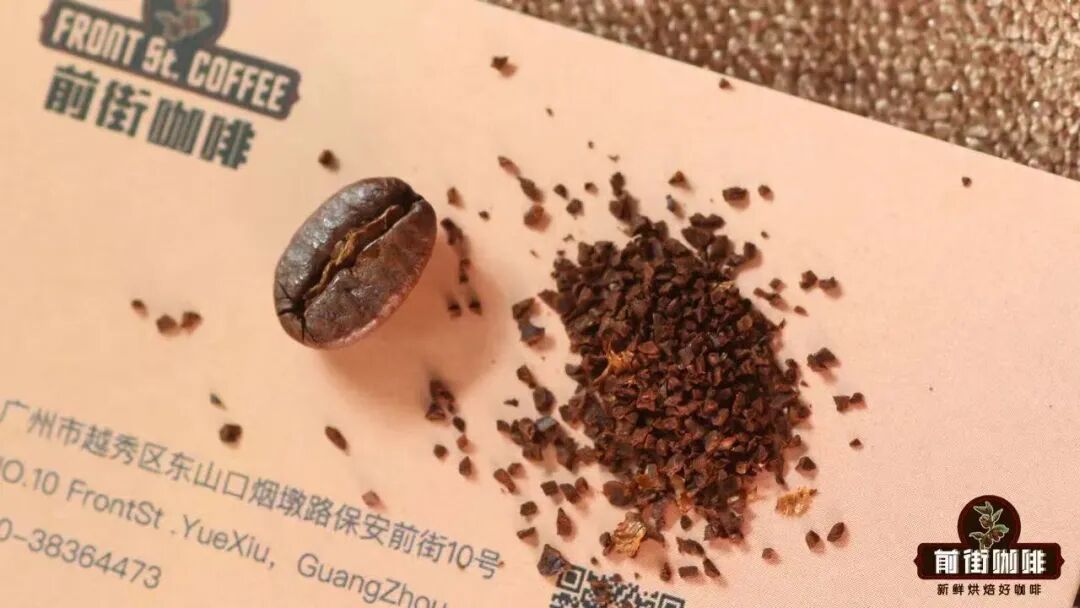
The so-called “Brazil nut effect” refers to what happens when you shake or tap a container filled with particles of varying sizes: the larger particles gradually rise to the top, while the smaller ones settle at the bottom. This doesn’t just occur with Brazil nuts mixed with other snacks—it applies to coffee grounds as well.

Ground coffee is inherently inconsistent in particle size—some coarse, some fine. When we tap the filter, this size disparity causes the finer particles to sink and the coarser ones to rise, leading to two major extraction issues: uneven extraction and over-extraction.
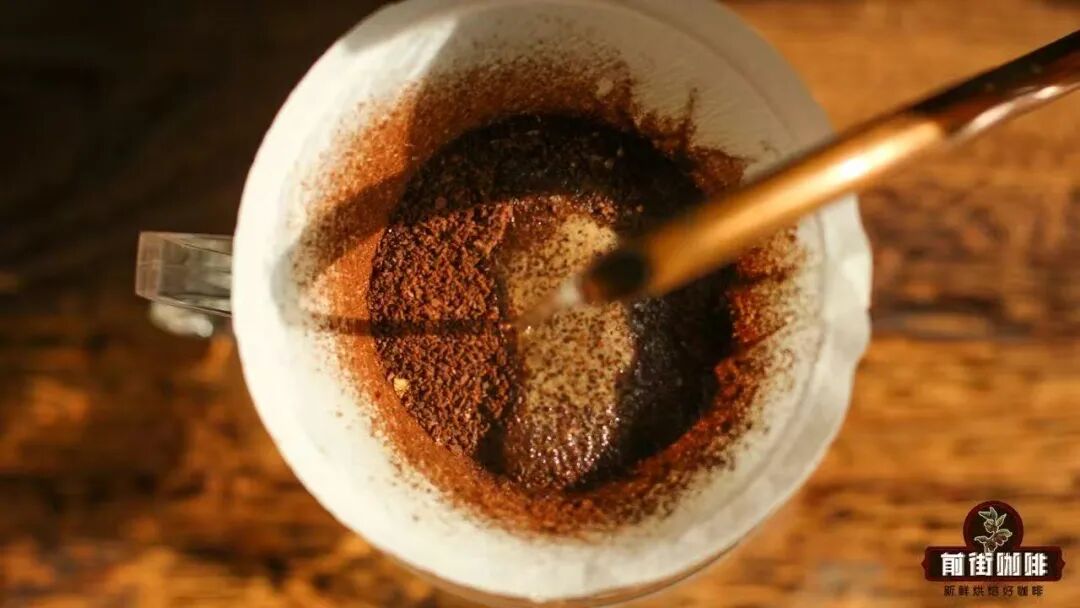
First, when fine particles accumulate and settle at the bottom of the filter, the lower part of the coffee bed becomes overly dense. During the bloom phase, where the water volume is typically only twice that of the coffee grounds—a relatively small amount—this compact bed makes it difficult for water to penetrate evenly. As a result, some coffee particles fail to fully absorb water, expand, and release gases. This not only hinders the release of coffee aromas but may also reduce the overall extraction yield.
In practice, it can be observed that when using high-density coffee grounds and a tall, cone-shaped filter, excessive tapping can easily cause the bottom layer to become too compact. This leads water to flow preferentially to the looser areas near the edge of the filter, bypassing the dense center. This is especially noticeable during blooming—sometimes, even when scooping the coffee bed, you’ll find dry, untouched grounds at the bottom.
When coffee grounds can’t fully expand during blooming, it affects the subsequent main extraction phase, diminishing flavor release. The resulting cup may taste weak, lack aroma, and fall short overall.
The second potential issue is that excessive tapping may cause very fine particles to settle at the bottom and clog the filter paper pores. This slows down water flow, prolongs total extraction time, increases extraction yield, and can easily lead to over-extraction—resulting in bitter or unbalanced flavors.
Thus, although the intention behind flattening the coffee bed is good, improper technique can backfire. So, when faced with an uneven coffee bed, is it completely off-limits to flatten it? Of course not.

The key lies in controlling the “force” and “frequency” of tapping. It’s recommended to primarily use gentle, minimal taps when leveling the coffee bed to avoid disturbing the internal particle distribution too much. This reduces the migration between fine and coarse particles, lowers the chance of the Brazil nut effect, and maintains both extraction consistency and flavor integrity.
Besides gentle tapping, you can also choose to lightly press the coffee bed with the back of a spoon or use your fingers to smooth it out in a circular motion. As long as the movements are soft and not forceful, they can still achieve a level coffee bed while avoiding the issue of particle re-layering.
In summary, flattening the coffee bed isn’t inherently wrong, but it’s all about finding the right balance. By using appropriate leveling techniques, you can ensure the coffee bed is both uniform and stable, allowing you to fully draw out the layers and essence of the coffee—enjoying a pour over that’s flavorful, balanced, and smooth.


The above content is compiled by CoffeeHunters, a coffee news website.


