







Introduction:Jamaican Blue Mountain coffee is renowned worldwide, but much of what is marketed as “Blue Mountain flavor” is merely a commercial gimmick. This article delves into the true origins and development of Blue Mountain coffee, tracing its rise and fall from the introduction of Typica in the 18th century, and focuses on two representative estates—Wallenford and Clifton—to help you understand what constitutes genuine Blue Mountain coffee and why it is so rare. We’ll also break down the grading criteria for the NO.1 grade and its key flavor characteristics.
Mention “Blue Mountain coffee,” and almost everyone has heard of it—but many products circulating in the market are little more than ordinary coffee labeled with the Blue Mountain name, or even beverages blended to mimic its flavor. So, what exactly is authentic Jamaican Blue Mountain coffee? Taking the industry-provided Blue Mountain No.1 washed beans as a starting point, this article will take you through its historical roots, regional evolution, and top-tier estates, offering a comprehensive look at the past and present of this world-class coffee.
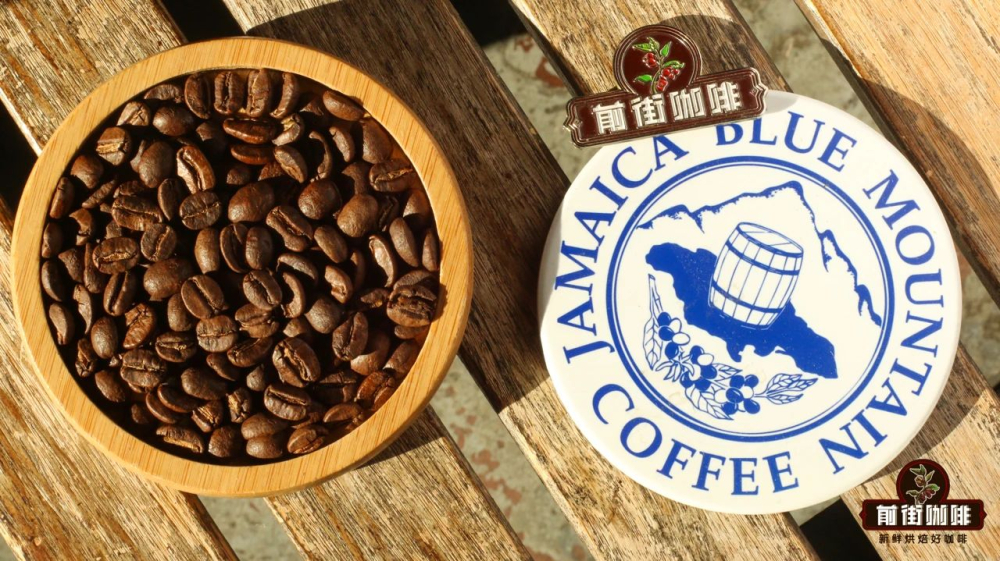
Blue Mountain coffee is grown in the Blue Mountains of Jamaica, with its cultivation history dating back to the early 18th century. At that time, British settlers introduced Typica coffee trees to the area. Thanks to the region’s unique high altitude and mild, foggy climate—especially the constant cloud cover at the mountaintops—it created an environment exceptionally well-suited for growing Arabica. The coffee produced here not only boasts delicate flavors but also gained immense favor among European royalty due to its rarity.
Historical records indicate that around the year 1800, there were as many as 686 coffee plantations in the Blue Mountain region; by 1814, coffee exports had reached 15,199 tons, establishing Jamaica as one of the major coffee-exporting countries in the Western Hemisphere. However, the abolition of the slave trade by Britain in 1807 led to a significant labor shortage, causing coffee production to decline sharply. In 1838, when slavery was completely abolished, many former plantation workers left the estates to pursue independent farming, further reducing Blue Mountain coffee output.
By 1850, the number of coffee plantations had plummeted from 686 to just 186, and exports dropped to 1,486 tons. For nearly the next century, the management model of Blue Mountain coffee shifted gradually from large-scale farms to smallholder operations. However, without unified standards or technical support, overall quality continued to deteriorate. In 1943, even Canada—a once-steady importer—announced it would no longer accept Jamaican coffee, and the United States soon followed suit, plunging Blue Mountain coffee into an unprecedented crisis.
To salvage the industry, in 1944, under the initiative of A.J. Wakefield, then Chief Agricultural Officer for the British West Indies, the Jamaican government established a centralized washing factory. It mandated that all exported coffee must be uniformly purchased, processed, and graded by this facility to ensure stable quality. In 1950, the Jamaica Coffee Industry Board (CIB) was further established to set quality standards, issue official certifications, and oversee the entire supply chain—laying the foundation for the international reputation Blue Mountain coffee enjoys today.
In 1969, Jamaica was struck by a hurricane, dealing another heavy blow to the industry. Japanese UCC Ueshima Coffee introduced advanced eco-agricultural methods to aid recovery. In return, in 1971, Jamaica signed an agreement with Japan to export 90% of its annual Blue Mountain coffee to Japan, leaving just 10% for other markets—most of which was already pre-allocated to high-end consumers or royalty. This is one of the reasons why genuine Blue Mountain coffee is so rarely seen on the market.
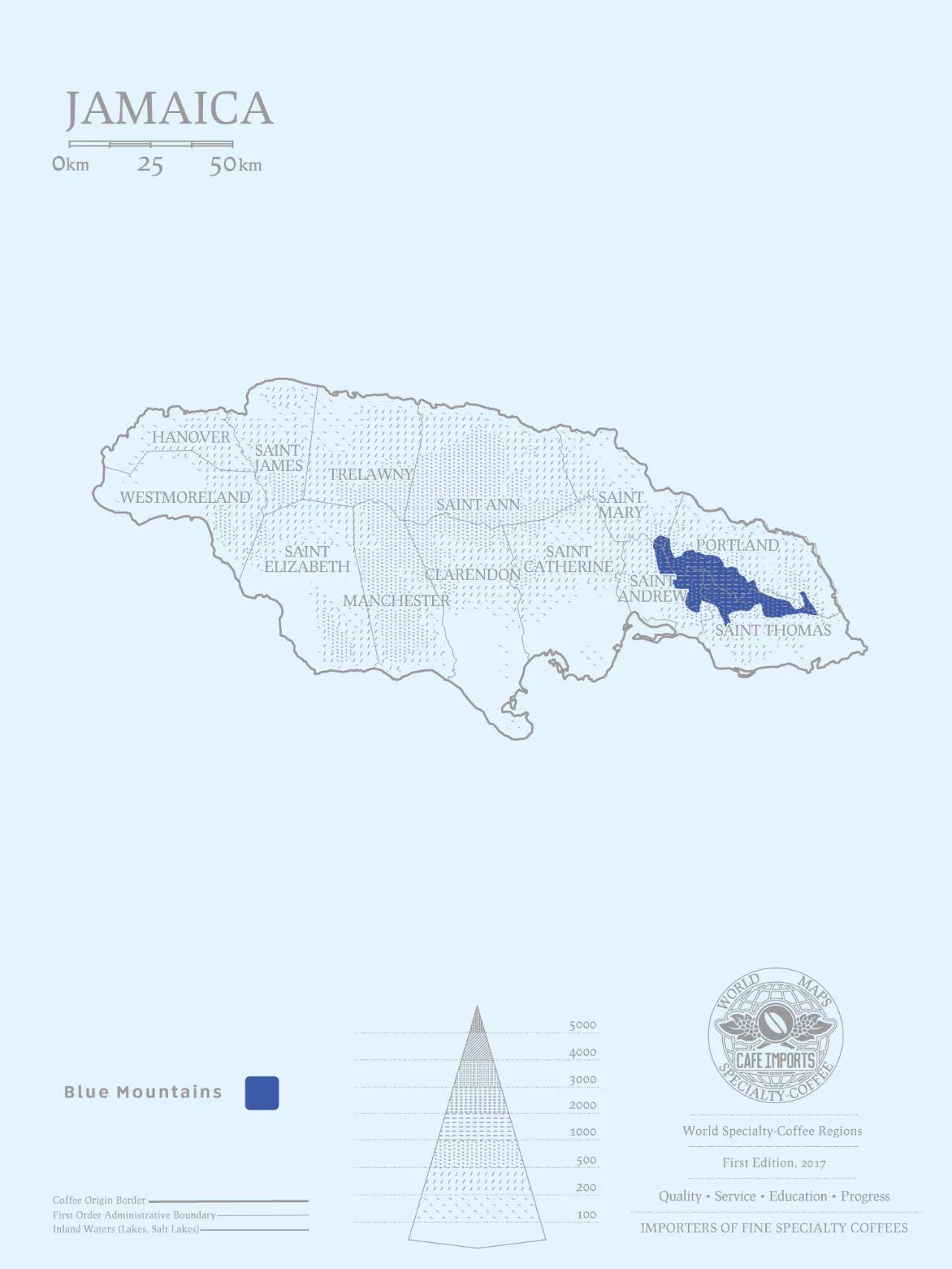
Currently, the entire Blue Mountain growing region spans only about 6,000 hectares. According to strict CIB regulations, only coffee beans grown at altitudes above 2,200 feet (approximately 670 meters) qualify to be labeled as “Jamaican Blue Mountain.” The region also includes other categories such as High Mountain Coffee and Jamaica Coffee, cultivated across roughly 12,000 hectares. Therefore, not all coffee labeled “Blue Mountain” necessarily comes from the core Blue Mountain area.
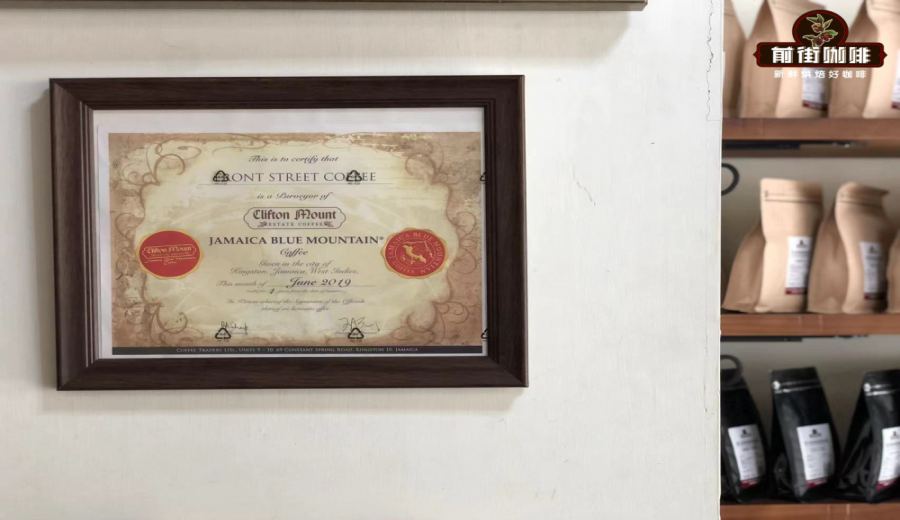
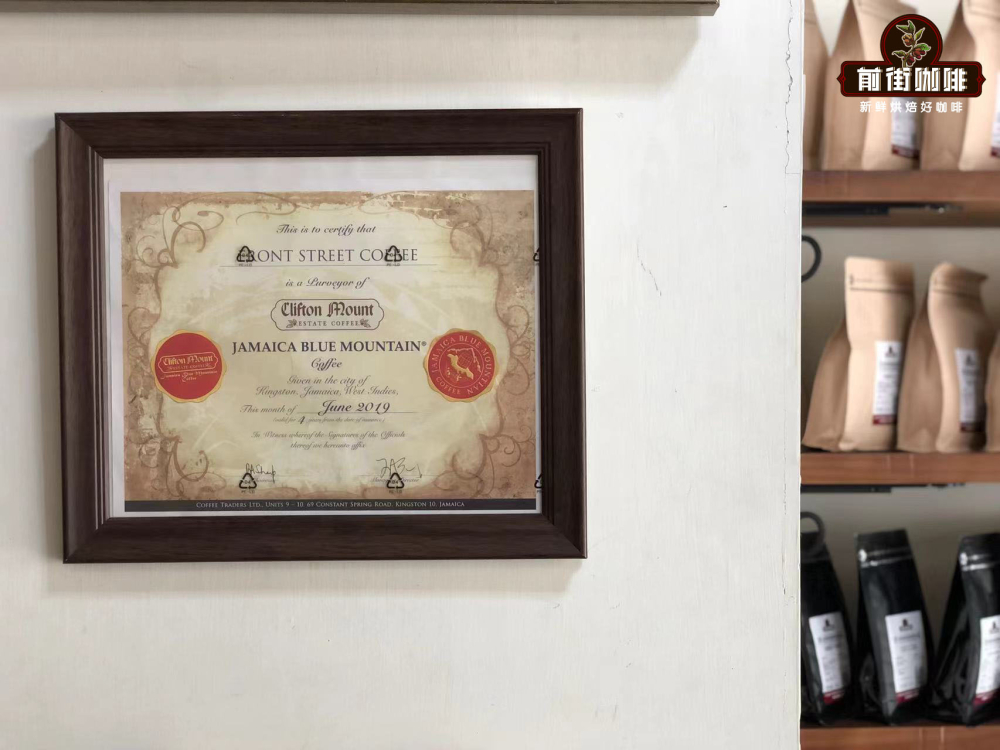
Among the many estates, Wallenford Estate and Clifton Estate are the two most representative. Wallenford is located at an altitude of about 7,000 feet and has long been nourished by the moist sea breezes and dense fog of the Caribbean, producing complex and layered flavors—it is one of the key regions for Blue Mountain coffee. The industry-sourced Blue Mountain No.1, meanwhile, comes from Clifton Estate, which is not only the oldest still-operating coffee-growing region in Jamaica but also holds “Rainforest Alliance” certification.
Clifton Estate is situated in the Newcastle area, at an elevation of approximately 4,300 feet. Its sloped terrain and stable microclimate provide ideal growing conditions for coffee. Its historic manor farm, operated by the same family for over two centuries, employs a refined washed processing method. This results in coffee that, in addition to the signature richness and sweetness of Blue Mountain No.1, also carries a unique floral aroma, offering an even richer flavor profile. The Blue Mountain No.1 beans belong to the CIB’s NO.1 grade, which requires bean size to be 17 mesh or larger, a defect rate below 3%, and moisture content controlled at around 13%—making it the most recognized grade of Blue Mountain coffee in the market.
In summary, the rarity and value of Blue Mountain coffee stem not only from its exceptional geographical conditions and stringent production management but also from its limited annual global supply. To experience the unique charm of authentic Blue Mountain coffee, it is recommended to choose NO.1 grade washed beans from authentic high-altitude estates with CIB certification—only then can you savor the purity and elegance from the misty peaks of Jamaica.
The above content is compiled by CoffeeHunters, a coffee news website.


