







Introduction:Ethiopia is the birthplace of Arabica coffee globally, with its diverse growing regions producing coffees of distinct characteristics. This article delves into the outstanding Guji region among Ethiopia’s nine major coffee-growing areas, analyzing its local cultivation environment, native variety traits, and the impact of washed and natural processing methods. It also provides professional pour-over brewing recommendations and parameters to help you grasp the essence of this highly acclaimed Mocha-type coffee bean.
As the birthplace of Arabica coffee, Ethiopia is not only one of Africa’s largest coffee producers but also renowned worldwide for its rich and varied coffee flavors. The coffee produced here is often bestowed with the prestigious title of "Mocha," symbolizing its unique fruity aromas and acidity. Among the many regions, Guji, which became independent from Sidamo in 2010, has quickly risen to prominence as a vital source of specialty coffee, with one of its star products originating from this area. This article will comprehensively analyze Ethiopia’s cultivation model, the flavor profiles of its major regions, the significance of native varieties, and provide a detailed guide on the pour-over brewing method for Guji coffee beans — offering coffee enthusiasts a practical origin and brewing guide.
Ethiopia is located in the highland region of northeastern Africa, with coffee cultivation primarily concentrated in the central-western part and along the East African Rift Valley. The local climate conditions are extremely conducive to coffee growth — from March to April each year, coffee trees bloom with white flowers, which gradually develop into fruits; by September to December, the bright red coffee cherries enter the harvest season, and November to December marks the golden window for new-season exports. The country’s coffee cultivation system is diverse, comprising three main types: forest coffee, garden coffee, and plantation coffee.
Forest coffee grows in undisturbed virgin forests, managed and protected by the government. After harvest, it is mostly sold by nearby residents, but due to inconsistent quality, prices are generally low. Semi-forest coffee involves some farmers entering the forest to prune and maintain the trees, reducing environmental impacts on the coffee plants. Garden coffee is the most common cultivation method, where farmers plant coffee trees alongside other crops in their backyards, harvesting small amounts of coffee cherries to sell to nearby processing facilities. Plantation coffee is operated by enterprises, utilizing specialized division of labor and modern management to enhance yield and consistency in quality.
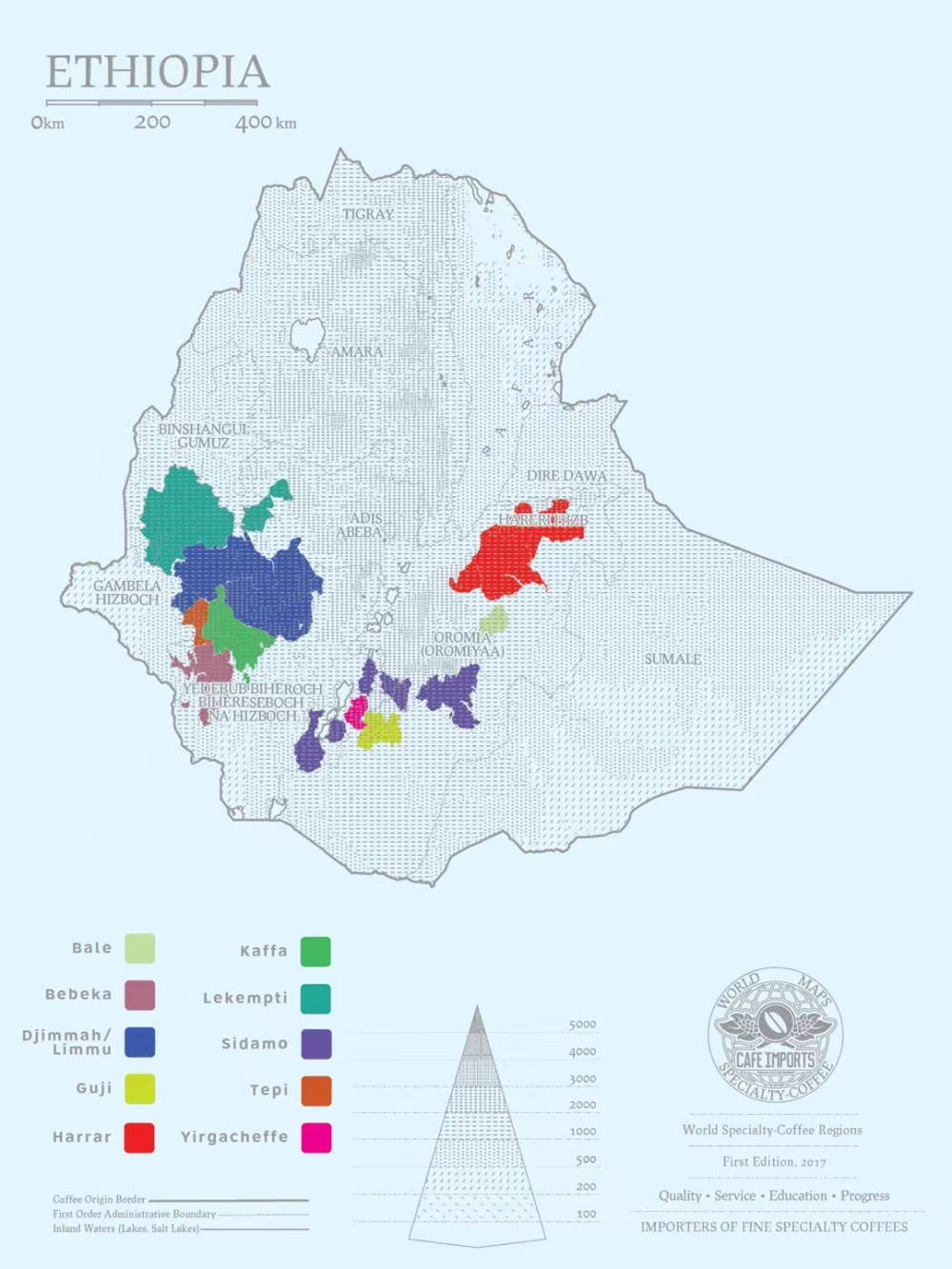
Ethiopia is divided into nine major coffee-growing regions nationwide, including Gimma, Sidamo, Yirgacheffe, Harrar, Limu, Illubabor, Genji (Lekempti), Teppi, and Bebeka, each showcasing a unique flavor profile. Western regions such as Teppi, Bebeka, and Illubabor typically produce larger coffee beans with pronounced wild notes but lower fruit acidity. Central and south-central regions such as Limu, Yirgacheffe, and Sidamo are known for their abundant fruity, floral aromas, and clear acidity. The eastern region of Harrar blends the wildness of the west with the fruity tones of the central-south. Below, we focus on several representative regions:
Yirgacheffe, situated at an altitude of 1700 to 2100 meters, enjoys a mild and humid climate with frequent fog and spring-like weather year-round, providing an ideal environment for coffee tree growth. Originally part of Sidamo, it gained independence due to its distinctive flavors. The high altitude results in significant day-night temperature differences, allowing coffee cherries to ripen slowly and accumulate richer flavor compounds. This contributes to its hallmark bright citrus acidity, intense jasmine floral notes, and honey-like sweetness. In 2007, Dutch trading company Trabocca BV launched the "Red Cherry Project," improving processing techniques, selecting 100% ripe red cherries, and providing loans and technical support, significantly enhancing both the quality and market value of Yirgacheffe coffees.
The Yirgacheffe Coffee Farmers Cooperative Union (YCFCU), composed of 28 small cooperatives, is responsible for collecting coffee cherries harvested by local farmers. After processing, these are exported under the cooperative’s name. Many coffee enthusiasts believe that washed Yirgacheffe best represents the typical flavors of African coffee, leading many brands to offer such everyday beans, allowing beginners to experience the region's characteristics at a high cost-performance ratio.
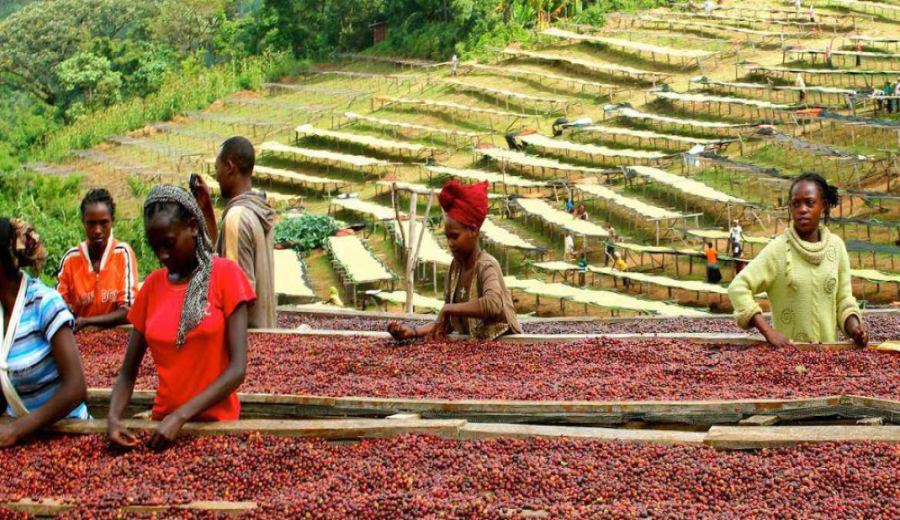
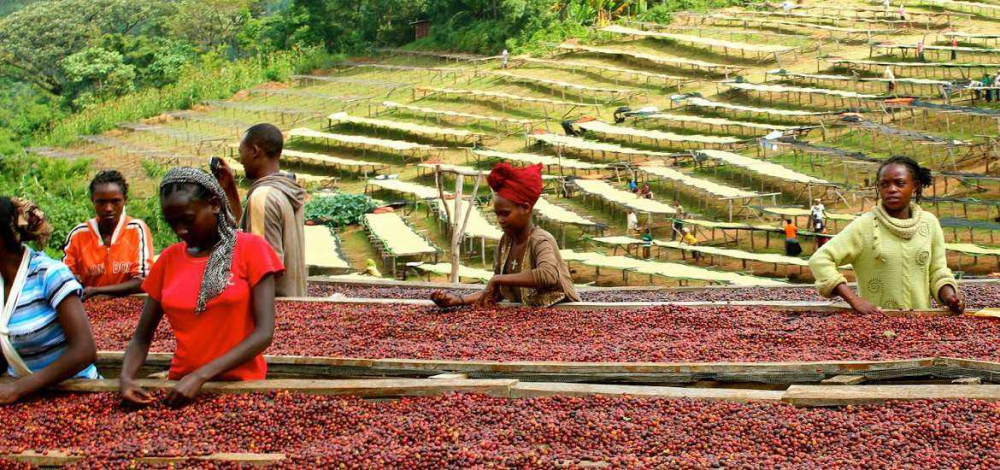
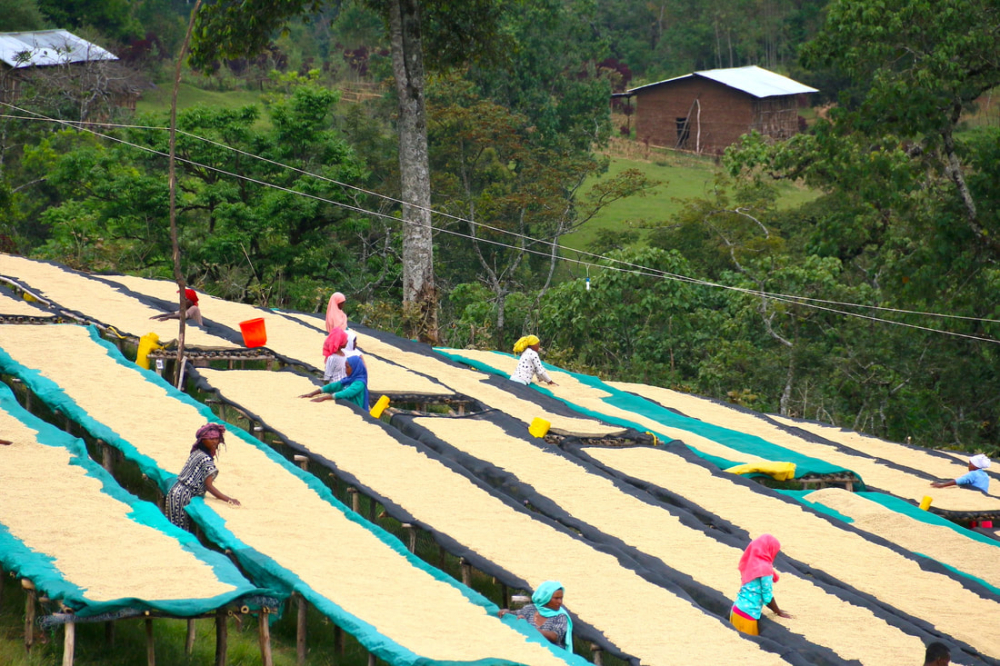
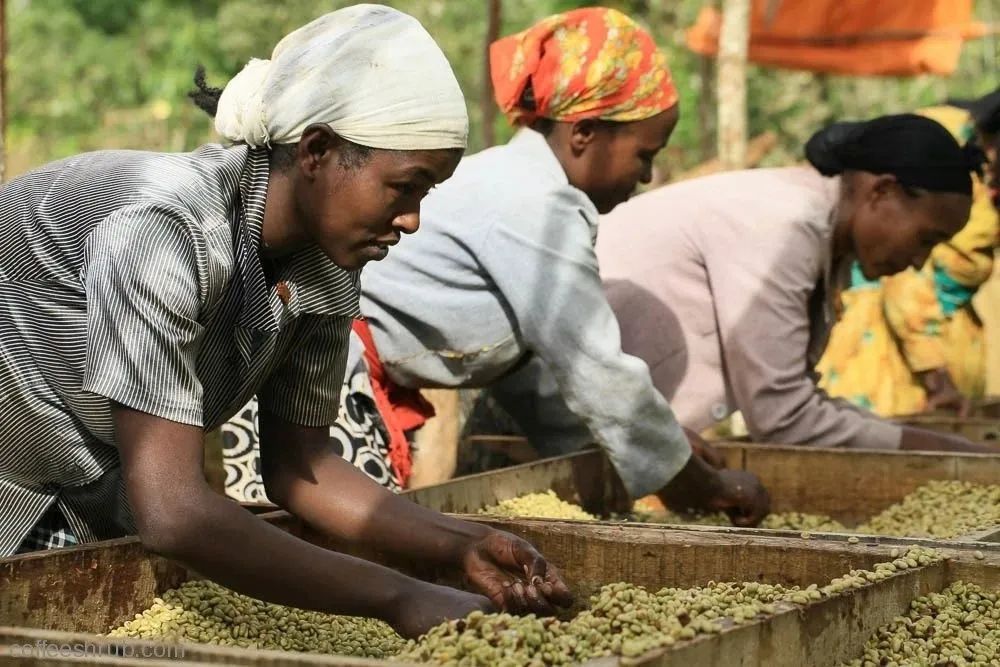
The Guji region, originally part of Sidamo, was independently designated by the Ethiopian Commodity Exchange (ECX) in 2010 due to its exceptional flavors. Adjacent to Yirgacheffe, Guji boasts fertile black soil with deep layers exceeding two meters, along with an average altitude of over 1800 meters and significant day-night temperature variations, all contributing to its outstanding coffee potential. Coffee trees in Guji mainly rely on natural leaf fall and organic matter for nutrients, requiring almost no chemical fertilizers. Among them, the natural-processed coffee "Huakui" from Buku Abel washing station in Guji’s Hankbele stands out for its rich tropical fruit aroma. This washing station meticulously selects ripe fruits and conducts approximately 18 days of sun-drying on African raised beds. During this period, they shade the cherries from direct sunlight, cover them with plastic sheets at night to prevent rain, and continually turn them to ensure even drying. The final green beans reach a moisture content of 13% before hulling. This natural coffee showcases a vibrant array of passion fruit, berry, and strawberry flavors.
Harrar, located in eastern Ethiopia, is one of the ancient trade centers, with its coffee-growing regions primarily distributed across the Hararghe Highlands. This area receives only about 1000 mm of rainfall annually but enjoys abundant sunshine, hence almost exclusively using the natural processing method. Premium Harrar coffees feature flavors reminiscent of Yemeni Mocha, emitting intense chocolate aromas during roasting, with a taste that combines dark berry acidity and a rich, wine-like body. However, in recent years, due to a chaotic grading system, premium Harrar coffees have become increasingly rare in the market.
The Limu region is situated in central Ethiopia, at an altitude of 1200 to 2000 meters. With relatively low production, its output is mainly supplied to European and American markets. Coffee here is processed using various methods, including washed, natural, and semi-washed. Flavor-wise, it features bright fruit acidity, but compared to Yirgacheffe and Sidamo, it shows less pronounced floral and citrus notes, instead offering unique undertones of grassiness and black sugar.
Ethiopia possesses the world’s richest coffee gene pool, with highly diverse varieties, most of which are mixed by smallholder farmers. Identification is difficult and fine classification is nearly impossible, so most exported beans are generically labeled as "Heirloom native varieties." This explains why Ethiopian coffee beans often vary in shape and size.
For pour-over brewing, it is recommended to choose freshly roasted coffee beans. Coffee beans require a 4 to 7 day degassing period after roasting to reach peak flavor. Beyond this period, aromas tend to dissipate and taste declines. To ensure the optimal drinking experience, it is advised to use beans roasted within five days. Since Ethiopian beans often exhibit floral and fruity profiles, roasters typically employ light roasting to preserve more floral and fruit acidity. For high-altitude coffees like Yirgacheffe, light roasting helps maintain the beans’ firm internal structure. It is recommended to use higher water temperatures and finer grind sizes, with the V60 filter cone better highlighting the sweet and acidic layers.
Suggested pour-over parameters are as follows: Use the V60 filter cone, control water temperature at 92°C, set grind size to 80% passing through a standard #20 sieve, use a 1:15 coffee-to-water ratio, and a coffee dose of 15 grams. The brewing process is divided into three stages: First, pour 30 grams of water for a 30-second bloom. Next, pour 95 grams of water. Once the coffee flow begins to slow, add another 100 grams until the dripping finishes. Total brew time is around 2 minutes, allowing a 10-second margin of error. Under these parameters, the washed coffee from the Dingding cooperative can showcase a fresh white floral aroma, with a lively acidity of lemon and berries, ongoing citrus and green tea notes, and a honeyed sweetness in the finish. Overall, the flavor is clean and bright.
The above content is compiled by CoffeeHunters, a coffee news website.


