Introduction:In early September, Indonesia's Anak Krakatau volcano (also known as the "Child of Krakatoa") erupted violently, sending ash up to 15,000 meters into the sky. This led to the closure of multiple airports and the disruption of over 2,700 flights. This article details the current state of volcanic activity, the causes of the aviation crisis, the experiences of travelers, and future trends in flight resumptions to help you stay updated and prepared.
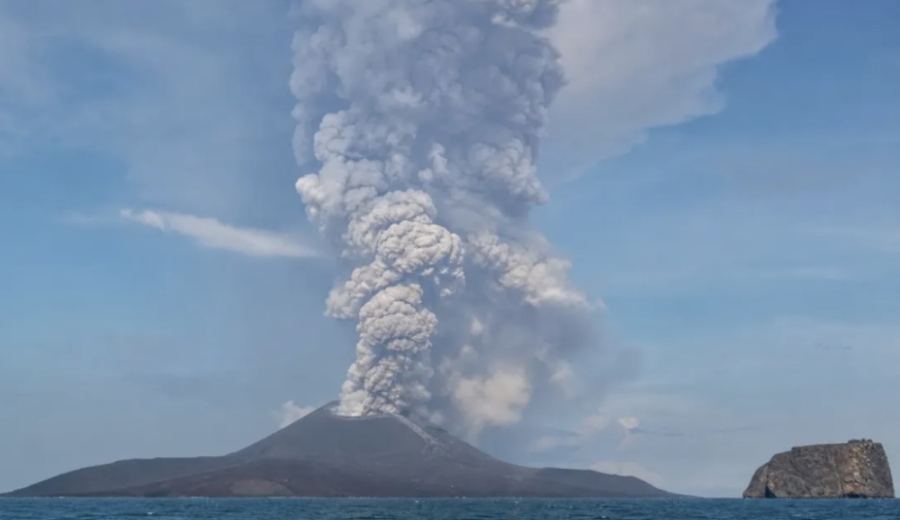
In early September, local time, Anak Krakatau volcano, located in the Sunda Strait, exhibited intense activity with an ash column that reached approximately 50,000 feet (about 15,000 meters), within the cruising altitude range of commercial airliners. Carried by upper-level winds, the ash spread southward to the southern tip of Sumatra and the western end of Java, and northward to the airspace over Singapore and the southern Malay Peninsula. This unusual weather event caused numerous airlines—including Singapore Airlines, Scoot, China Southern Airlines, and Xiamen Airlines—to cancel flights to and from major Indonesian cities such as Jakarta, Bali, Yogyakarta, and Surabaya starting on September 6. Seven airports in Indonesia, including Jakarta’s Soekarno-Hatta International Airport, were temporarily closed or suspended operations. By the afternoon of September 7, the total number of canceled flights in Southeast Asia had exceeded 2,700, affecting more than 270,000 passengers.
Known as the "Child of Krakatoa," this volcano is located in the center of the Sunda Strait between Sumatra and Java. Since its "rebirth" in 1927 from the remnants of the massive 1883 eruption, it has gradually grown to an elevation of about 400 meters. It is considered a continuation of the catastrophic 19th-century Krakatoa eruption that killed over 36,000 people and triggered tsunamis across the globe. Over the past three years, the volcano has erupted significantly almost every year and has long been listed as high-risk by Indonesia’s volcano monitoring network. On September 6 alone, two significant eruptions occurred within 24 hours, with satellite monitoring showing an eruption column reaching about 50,000 feet—an important threshold for being classified as an "aviation hazard."
Indonesia’s Geological Agency (PVMBG) issued an update on September 7, stating that although the volcano had concluded its phase of continuous high-intensity eruptions, its alert level remained at Level 3 (Siaga, just below the highest Level 4 "Awas"). Officials specifically warned that the possibility of another eruption in the near term remains relatively high, so it is currently impossible to determine when flight suspensions will be lifted. Notably, in addition to Anak Krakatau, Semeru volcano in Indonesia (also the highest peak on Java Island) showed significant activity during the same period, with five volcanoes nationwide under alert status, creating a multi-point eruption scenario that significantly increased emergency coordination pressure.
Many may wonder how volcanic ash can lead to such widespread flight cancellations. In reality, volcanic ash not only affects visibility but, more critically, contains large amounts of glassy fragments, mineral crystals, and fine rock particles. The silicate particles within can melt upon entering jet engines at temperatures as high as 1,000°C, depositing on turbine blades and potentially causing engine surge or complete flameout. Additionally, these particles can erode the nose cone windshield, clog pitot tubes leading to inaccurate airspeed readings, and adhere to the aircraft surface, impairing aerodynamic performance. For these reasons, the ICAO (International Civil Aviation Organization) and civil aviation authorities worldwide adopt a "zero tolerance" policy for volcanic ash airspace—any airspace where a certain concentration of ash is detected or predicted is immediately designated as a no-fly zone, and airports will suspend flight departures.
The volcanic ash cloud from September 6 rapidly spread with upper-level winds, covering northern Java, southern Kalimantan, and even the world’s busiest narrow-body aircraft route between Singapore, the Riau Islands, and the southern Malay Peninsula. This route sees a high volume of flights, prompting the emergency closures of Jakarta’s Soekarno-Hatta Airport, Bali’s Ngurah Rai Airport, Yogyakarta Airport, Solo Airport, Semarang Airport, Surabaya’s Juanda Airport, and Bandung Airport.
Singapore’s Changi Airport began experiencing significant passenger delays from the morning of September 7, with long queues forming. Many travelers shared experiences of waiting over 12 hours on social media, while some opted to fly to Kuala Lumpur in Malaysia and then enter Indonesia by land. Singapore Airlines (SIA) introduced contingency measures, allowing passengers originally booked for Jakarta to rebook free of charge to the Singapore–Surabaya route. The airline also added extra flights to accommodate demand. Since Surabaya’s Juanda Airport is farther from the main ash-affected area, it became a key transit hub during this airspace restriction. SIA also offered passengers the options to rebook to any flight within seven days before or after their original booking or request a full refund. Scoot provided more flexible rebooking and refund policies, allowing passengers to manage changes or refunds directly through their original booking channels without additional fees.
A large number of Chinese travelers were also affected. Social media posts mentioned canceled flights from Guangzhou, Fuzhou, and Xiamen to Jakarta and Bali operated by China Southern Airlines and Xiamen Airlines, with rebooking notices issued. Originally planned 5-to-7-day trips were cut short, with some travelers flying to Kuala Lumpur and transiting onward, while others changed routes to Bangkok or Singapore to await further arrangements. Descriptions from Changi Airport indicated "grayish-white dust adhering to luggage and clothing" in the terminals, with some passengers choosing to take trains out of Jakarta. Indonesia’s national railway (KAI) added extra high-speed and intercity train services between Jakarta–Bandung–Surabaya on September 6 and 7 to help divert some air passengers.
In response to the volcanic activity, several consular agencies have issued travel advisories. Singapore’s Ministry of Foreign Affairs (MFA) upgraded its Indonesia travel page to include “volcano risk alerts,” urging citizens in the country to remain vigilant, follow local government instructions, and stay updated with the latest information. The Singapore Embassy in Jakarta and the Consulate General in Medan advised reducing outdoor activities, staying indoors as much as possible, and contacting +62 21 5091 5400 (24-hour) or +65 6379 8800 / 6379 8855 (MFA duty line) for assistance if needed.
The Chinese Embassy in Indonesia also issued a reminder on September 6, advising Chinese citizens in Indonesia to pay attention to personal and property safety, avoid entering volcano alert zones, and published multiple consular protection and assistance contact numbers. These include the Indonesian police emergency number +62-110, medical emergency number +62-119, the Ministry of Foreign Affairs’ global consular protection and service emergency hotline +86-10-12308 / 65612308, as well as dedicated hotlines for the Chinese Embassy in Indonesia, and consulates in Surabaya, Medan, and Denpasar.
As of press time, Indonesia’s Geological Agency and Ministry of Transportation have not yet provided a clear timeline for flight resumptions, stating only that assessments will be made dynamically based on ash dispersion, satellite observations, and volcanic activity indices. Airlines generally advise passengers to check real-time flight information via the “flight status” pages on official websites or apps before traveling to avoid going to the airport unnecessarily. Industry observers note that if Anak Krakatau remains at Level 3 alert and ash continues to disperse southward and northward, the period from September 7 to 9 will be crucial for observing the progress of flight resumptions. Should another large-scale eruption similar to that of September 6 occur, further expansion of flight suspensions or extended durations cannot be ruled out.
For travelers already in Singapore planning to visit Indonesia, it is recommended to prioritize using Surabaya (Juanda Airport) as the entry or exit point and allow at least one extra day for flexibility. Traveling overland from Kuala Lumpur in Malaysia into Indonesia is also a relatively stable alternative at present. For those not yet departed, consider taking advantage of airlines’ “voluntary rebooking” services to postpone departure dates by 3 to 7 days, which can help avoid this peak period. If you are already in Indonesia, please stay away from alert zones along the Sunda Strait, western Java, and southern Sumatra. When engaging in outdoor activities, it is advisable to wear masks or appropriate protective gear, pay attention to drinking water hygiene, and stay updated with the latest bulletins from BMKG (Meteorological Agency) and PVMBG (Geological Agency).
The above content is compiled by CoffeeHunters, a coffee news website.