Introduction:The West Valley of Costa Rica is one of the country’s four major specialty coffee regions, renowned for its eco-friendly farming practices and diverse processing methods. This article delves into its altitude, climate, varietal characteristics, and how processing techniques such as washed, honey, and anaerobic fermentation influence the final cup profile. It also offers practical pour over recommendations to help you discover your own West Valley flavor experience.
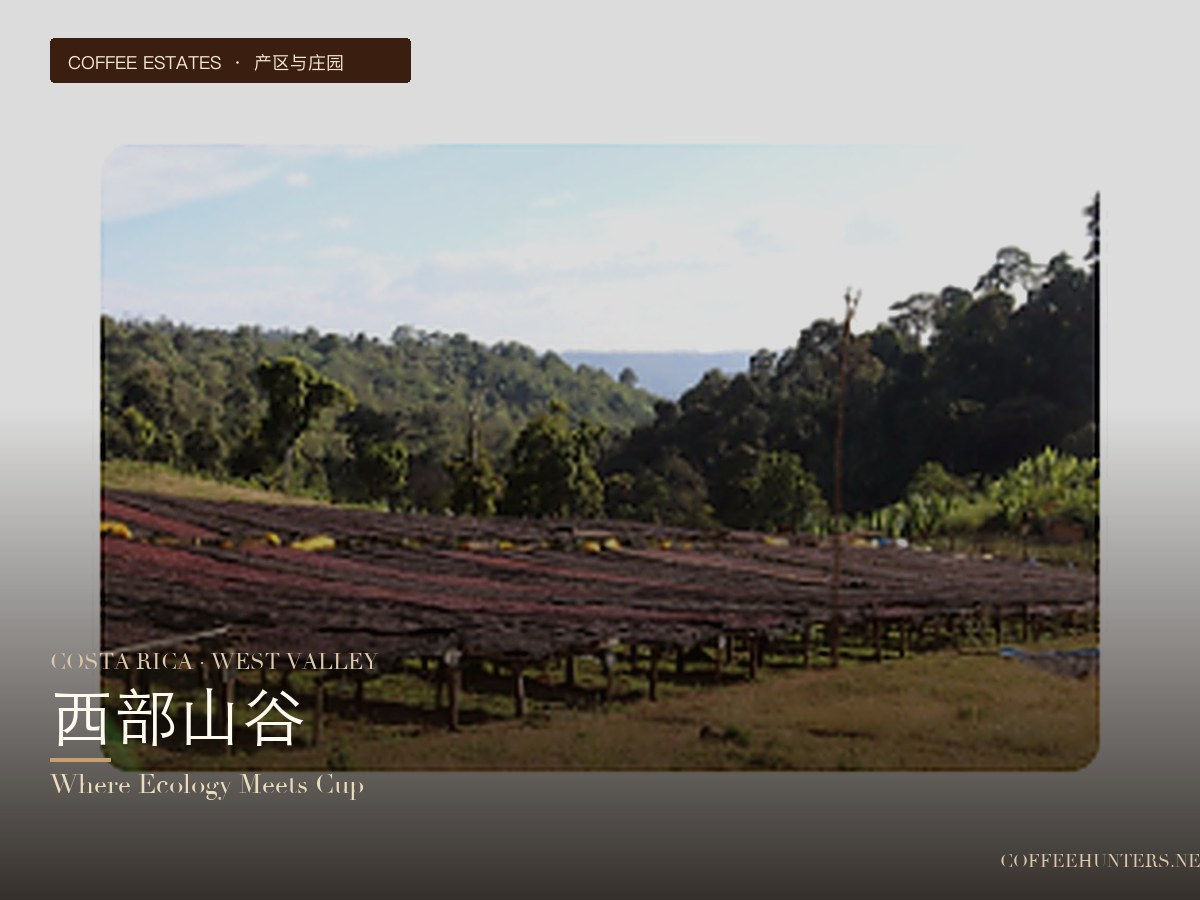
The West Valley of Costa Rica is located in the province of Alajuela, west of the capital San José, and is one of the country’s four well-known specialty coffee regions, alongside Tarrazú, Guanacaste, and Brunca. The main coffee-growing areas here sit at elevations of approximately 1200 to 1700 meters above sea level, placing it within a moderately high-altitude coffee cultivation zone in the country.
In terms of climate, the West Valley is warmer than Tarrazú, with an average annual temperature of around 19 to 22 degrees Celsius and annual rainfall between 1500 and 2000 millimeters. Due to its varied terrain, the region can be divided into multiple microclimates. For example, smaller areas such as Pérez Zeledón, San Ramón, and Naranjo each have their own unique climatic conditions, resulting in a more diverse range of coffee flavors compared to Tarrazú.
In terms of varieties, the West Valley is similar to Tarrazú, where Caturra and Catuaí dominate, but it also grows many specialty-grade cultivars such as Villa Sarchí, Yellow Bourbon, and Geisha. Among these, Villa Sarchí is a unique Bourbon variety native to Costa Rica, first discovered in the village of Villa Sarchí in the West Valley. It is favored for its refined cup profile and outstanding sweetness.
The West Valley is also one of the pioneers in Costa Rica in promoting eco-friendly coffee cultivation. Many farms practice shaded cultivation (Shade Grown), use organic compost, and are committed to maintaining biodiversity. Numerous producers have also obtained international sustainability certifications such as Rainforest Alliance or Organic Certification, showcasing their dedication to environmentally friendly practices.
When it comes to processing methods, the West Valley is arguably one of the most innovative and dynamic regions in Costa Rica. In addition to traditional washed and natural processes, local farms actively experiment with emerging techniques such as honey processing, anaerobic fermentation, and carbonic maceration. Processing stations like Don Mayo and La Pastora are pioneers in honey and anaerobic processing technologies, making significant contributions to the diversification of processing methods.
The typical flavor profile of the West Valley can be summed up as “medium acidity, full sweetness, and rounded body.” Common flavor notes include the bright acidity of lemon and green apple, as well as sweet tones reminiscent of caramel and brown sugar. The aftertaste often carries a soft sensation of almond or chocolate. For honey-processed batches, more pronounced aromas of dried apricot and peach are often present, accompanied by a black tea-like character. Anaerobic-processed batches, on the other hand, frequently showcase more complex fermentation traits, such as wine-like notes, fruity aromas, and subtle spice layers.
Among the representative farms, Don Mayo is one of the most well-known processing units in the West Valley. Its honey-processed lots have even been selected by international specialty coffee shops such as Sasa Sestic and Tim Wendelboe. Located in the Naranjo area, Finca La Pastora is renowned for its single-plot productions of Yellow Bourbon. Other noteworthy farms include Helsar de Zarcero and Coopetarrazú, all of which showcase the region’s diverse profiles.
If you’d like to brew West Valley coffee at home, here are some practical suggestions: For washed-processed lots, it is recommended to use a V60 dripper with a single pour method, keeping the water temperature between 90–92°C and using a 1:15 coffee-to-water ratio. For honey-processed coffee, a Kalita Wave dripper is a better choice, with the water temperature slightly lowered to 89–91°C and the ratio adjusted to 1:16, which helps to better highlight its sweetness and fruitiness. As for anaerobic-processed batches, the Origami dripper is recommended, maintaining a water temperature of 90°C and a 1:15 ratio, which aids in showcasing its complex fermentation layers and aromatic characteristics.
In summary, at a time when the global coffee industry is facing challenges such as climate change, ecological degradation, and varietal loss, the sustainable farming philosophy upheld in the West Valley not only offers local coffee farmers the possibility of sustainable management but also provides a valuable direction for the future of specialty coffee. Gaining a deeper understanding of the West Valley is, in essence, a key to understanding how the specialty coffee community is responding to sustainability issues.
The above content is compiled by CoffeeHunters, a coffee news website.