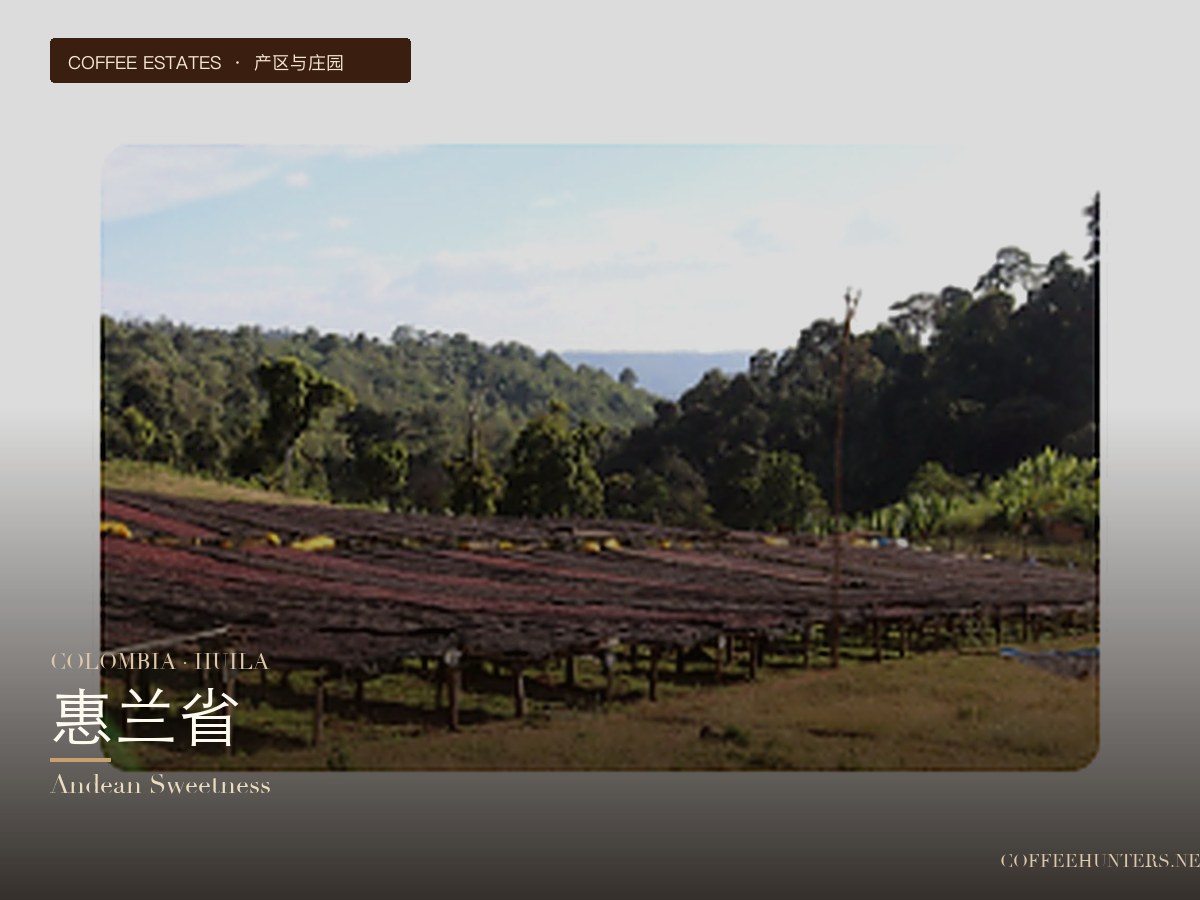
Introduction:Huila, in Colombia’s department of Huila, is one of the must-visit coffee regions for specialty coffee enthusiasts. Renowned for its washed processing method, it delivers well-balanced flavors with prominent sweetness. This article delves into the geography, major varieties, processing methods, and typical flavor profiles of Huila, while also offering practical pour over and espresso brewing tips. It serves as an entry-level guide for discovering high-quality Colombian coffee beans and mastering brewing techniques.
Colombia is the world’s third-largest coffee producer, with coffee-growing regions spread across three major branches of the Andes: the Eastern, Central, and Western Cordilleras. A total of 23 departments across the country are involved in coffee cultivation. However, within the specialty coffee market, only a few regions have established international reputations. Among them, Huila, Antioquia, Caldas, Tolima, and Nariño are recognized as the five core coffee-producing regions. Since 2007, Huila has consistently achieved top honors, even winning championships for multiple years in Colombia’s national “Land of Diversity” competition, earning it the title of “Crown Jewel of Colombian Coffee.”
Located in southern Colombia, although close to the equator, Huila enjoys a microclimate distinct from typical equatorial zones due to the high-altitude terrain of the Andes Mountains combined with moist air currents from the Pacific Ocean. The elevation in this region generally ranges between 1,500 and 2,000 meters, with average annual temperatures maintained at a cool 17 to 20 degrees Celsius and annual rainfall of approximately 1,500 to 2,000 millimeters. Thanks to fertile volcanic soils, abundant water sources in river valleys, and frequent mountain fog, coffee plants receive a stable supply of moisture and nutrients throughout the year—creating optimal conditions for producing high-quality coffee.
In terms of variety selection, Huila mainly grows Caturra and Castillo, both derived from the classic Bourbon variety. Caturra is widely favored for its bright fruit acidity and refreshing taste, while Castillo is a disease-resistant variety developed by Colombia’s national coffee research center, Cenicafé, in the 1980s. It shows excellent resistance to coffee leaf rust and is extensively cultivated on small and medium-sized farms. Additionally, in some premium lots, you can find specialty varieties such as Geisha, Tabi, and Typica. These are typically limited-production offerings from single farms and offer greater flavor complexity and collectible value.
Regarding processing methods, the vast majority of coffee in Huila is processed using the washed method, which is a local tradition. Smallholder farmers often use home-style washed processing equipment, such as the Ecomill model, where coffee cherries are depulped and then undergo 18 to 24 hours of fermentation before being thoroughly washed with clean water. Larger estates are equipped with modern, specialized washed processing facilities to ensure a more precise and stable process. The flavor characteristics of Huila washed coffee can be summarized as “clean yet full-bodied.” Compared to some natural-processed coffees, it lacks the intense fermentation profile, but compared to some Central American washed coffees, it showcases more pronounced body and sweetness.
A high-quality washed coffee from Huila typically presents the following flavor profile during cupping: the dry fragrance already reveals noticeable caramel and brown sugar sweetness; when sipped, medium-intensity citrus acidity (such as red orange and grapefruit) is released first, followed by a mid-palate blend of red apple freshness and dark chocolate richness, with the finish lingering with an almond-like nuttiness. Overall, it offers balanced mouthfeel, solid sweetness, and clear layers, making it a “textbook example” of Colombian washed coffee.
Among the many renowned farms in Huila, La Esperanza, El Mirador, and Finca El Paraiso 92 are all highly acclaimed. Among them, La Esperanza has won the Cup of Excellence international competition multiple times with its Geisha variety. In terms of production and sales cooperation, the Cooperativa de Caficultores del Huila is the most representative coffee cooperative in the region, bringing together hundreds of smallholder farmers. Their coffee is usually exported under the unified designation of the “Huila” region, which helps enhance market recognition and brand impact.
For home brewing by coffee enthusiasts, Huila washed coffee is suitable for a variety of equipment and techniques. If choosing pour over, it is recommended to use a V60 dripper, with water temperature controlled at 90 to 92 degrees Celsius. The coffee-to-water ratio is suggested at 1:16, and the grind size can be around that of white sugar, considered medium-fine. A three-pour method is advised, with total brewing time ideally between 2 minutes 30 seconds and 3 minutes. If you prefer a more prominent sweetness, you may try adjusting to a slightly lighter ratio of 1:17; if you wish to experience a fuller body, you can narrow the ratio to 1:15. In addition, when making espresso, incorporating about 30% of Huila washed beans into a blend not only enhances overall sweetness but also adds roundness and balance to the drink.
In summary, while Huila coffee may not be the flashiest or most experimental region in the global specialty market, it is a stable, balanced, and approachable choice. Its consistent acidity-sweetness balance, clean and bright mouthfeel, along with a distinctive caramel sweetness base, make it a staple item in many cafés and an ideal starting point for beginners exploring Colombian coffee flavors.
The above content is compiled by CoffeeHunters, a coffee news website.