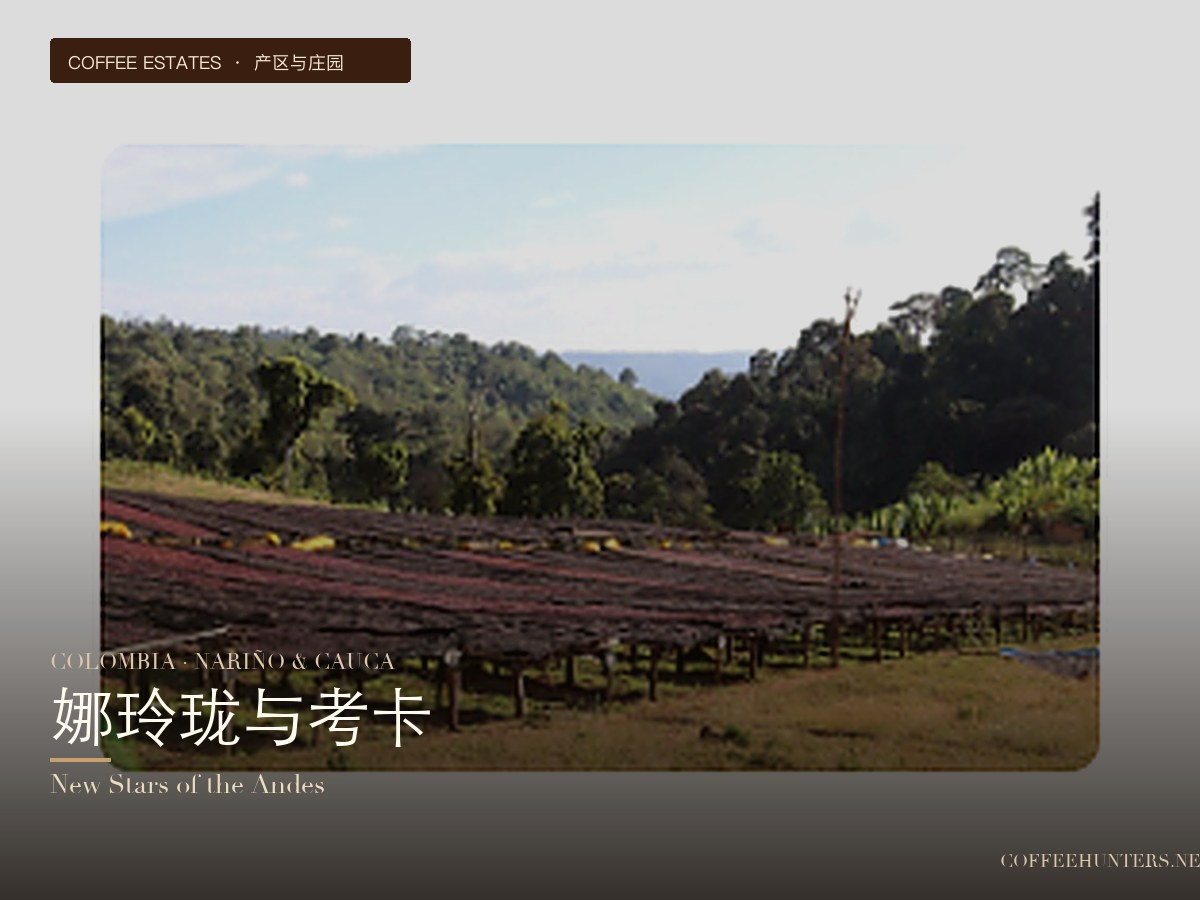
Introduction:Dive deep into the two finest specialty coffee regions at the southernmost tip of Colombia—Nariño and Cauca. Once overlooked, these areas have now emerged as rising stars capturing the attention of coffee enthusiasts worldwide. This article not only introduces their unique geographical, soil, and varietal advantages but also offers practical flavor insights and pour-over brewing recommendations to help you discover your own dream coffee beans.
In the landscape of Colombian specialty coffee, Huila, Tolima, and Antioquia have long dominated. However, Nariño and Cauca, located in the country’s far south, received little attention in the past. But since around 2010, specialty lots from these two regions have started appearing frequently in international evaluations and professional media, often outperforming traditional powerhouse regions and gradually earning the reputation as the “new highlands of Colombian coffee.”
Nariño is situated at the southern tip of Colombia, bordering Ecuador; Cauca lies to its northeast. The core growing altitudes of both regions range between1700 and 2200 metersabove sea level, making them among the highest-altitude coffee-producing areas in the country. The combination of high elevation and proximity to the equator means that while the diurnal temperature variation is not extremely pronounced, the cooler environment slows the ripening process of coffee cherries, leading to greater sugar accumulation. Coupled with the influence of moist Pacific air currents, these two regions receive annual rainfall generally exceeding2000 millimeters—more abundant than in Huila—providing excellent growing conditions for coffee.
In terms of soil, both Nariño and Cauca are located on the foothills of the Andes mountain range, near active volcanoes such as Galeras. The mineral-rich volcanic ash released by these volcanoes, especially elements like phosphorus, potassium, and magnesium, significantly contributes to the richness and complexity of coffee flavors. In addition, alpine river valleys formed by glacial meltwater provide clean and stable water sources, which are essential for washed coffee processing.
In terms of variety selection, Nariño and Cauca demonstrate greater diversity compared to Huila. In addition to common varieties like Caturra and Castillo, less commonly seen single-origin varieties such as Tabi and Typica are also cultivated here, often associated with specific plots. In recent years, the cultivation area of Geisha has expanded rapidly, and thanks to its outstanding flavor potential, it has become an important source of high-priced specialty lots in these two regions.
In processing methods, washed remains the mainstream, but anaerobic fermentation techniques are rapidly gaining popularity. Some local smallholder farms place harvested coffee cherries in sealed containers for24 to 72 hours of anaerobic fermentationbefore proceeding with traditional washed steps. This technique effectively enhances the fruitiness, wine-like notes, and fermentation characteristics of the coffee, resulting in a more layered and complex flavor profile that is highly competitive in the specialty market.
In terms of flavor profiles, Nariño coffee is known for being “highly acidic, sweet, and rich in tartaric acid,” often showcasing acidity notes of lemon, grapefruit, and green apple, paired with sweetness from caramel, honey, and apricot. Some batches even exhibit complex tones reminiscent of liquor-filled chocolate and red wine. In contrast, Cauca presents a blend of “floral and fruity notes with chocolate,” featuring aromas such as jasmine, rose, and citrus, often accompanied by a soft milk chocolate finish. Overall, its flavors are smoother and more nuanced.
Representative farms in these two regions include La Esperanza, El Mirador, and Finca El Paraiso 92 in Nariño, as well as Inza, Cauca Single Estate, and Piendamó in Cauca.Finca El Paraiso 92 It is also renowned for its “double anaerobic fermentation” process, with farm owner Diego Bermúdez having used its coffee multiple times in the WBC (World Barista Championship), showcasing its exceptional quality potential.
For pour-over enthusiasts, the high acidity and sweetness of Nariño and Cauca coffees make them ideal for brewing with tools like the V60, Kalita Wave, or Origami. It is recommended to control the water temperature between90 and 92°C, with a brew ratio of approximately1:15 to 1:16and a medium-fine grind. If you prefer to highlight acidity and floral notes, the V60 one-pour method is a great choice; if you want to enhance sweetness and body, the flat-bottom design of the Kalita Wave can more steadily extract a rounded mouthfeel.
In summary, the success of Nariño and Cauca once again confirms the critical impact of altitude on coffee flavor. The extreme high-mountain environment, slow maturation process, combined with the natural gifts of volcanic soils and glacial waters, together nurture the unique flavor profiles of these two regions, injecting fresh vitality into the global specialty coffee market.
The above content is compiled by CoffeeHunters, a coffee news website.