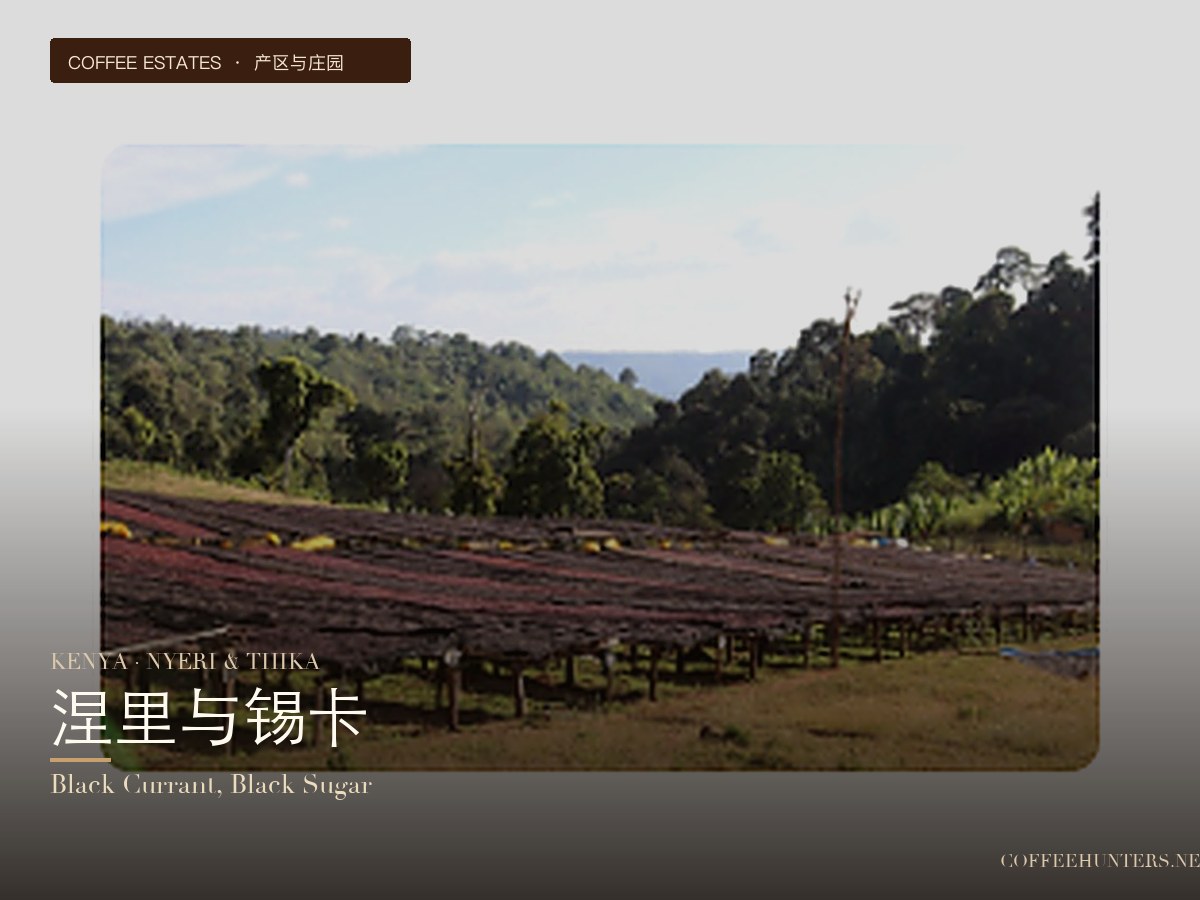
Introduction:Kenyan coffee is renowned for its intense acidity and rich fruity flavors, with the Nyeri and Thika regions being classic representatives. This article delves into the geographical characteristics, main cultivated varieties, unique double fermentation washed process, and how to use appropriate brewing techniques to bring out the bright acidity reminiscent of blackcurrant and tomato. Whether you’re a pour over beginner or an advanced enthusiast, you’ll gain key extraction parameters and flavor identification skills from this guide.
Kenya’s coffee cultivation history dates back to 1893, when French missionaries introduced the Bourbon variety. However, it was the two legendary varieties—SL28 and SL34—developed by the Scott Agricultural Laboratory in the 1930s that truly shaped Kenya’s coffee profile of “high acidity, bright flavor, full body, and rich blackberry notes.” Originally experimental crops selected for drought resistance, these two varieties unexpectedly demonstrated outstanding cupping performance, especially SL28, which remains a symbol of high-end Kenyan coffee to this day.
Nyeri is a core region in Kenya’s coffee map, located in the central highlands of the country at an altitude of approximately 1,500 to 2,000 meters. Surrounded by Mount Kenya (5,199 meters), Africa’s second-highest peak, and the Aberdare Mountains, the area also benefits from mineral-rich volcanic soil, abundant rainfall, and significant day-night temperature variations—all of which provide ideal conditions for coffee cherries to accumulate sugars and flavor compounds. Nearby towns such as Nyeri Hill, Karatina, and Tetu have long produced what is hailed as “Kenya AA” grade top-tier coffee.
Located southeast of Nyeri, Thika is not far from the capital Nairobi and is also part of the central highland extension area. The growing altitude in Thika is slightly lower, ranging approximately between 1,400 and 1,800 meters, but its volcanic soil and favorable precipitation still nurture coffee of commendable quality. Compared to the often sharp acidity of Nyeri coffee, Thika-produced coffee tends to have a rounder mouthfeel with notable sweetness, making it a recommended entry-level choice for those trying Kenyan coffee for the first time.
In terms of varieties, SL28 and SL34 remain the dominant cultivars in both Nyeri and Thika, accounting for over 70% of the total planted area. SL28, with Bourbon lineage, is known for its bright acidity and solid sweetness, while SL34 shows stronger disease resistance and occasionally carries a hint of herbal note. In the 1990s, to combat the threat of Coffee Berry Disease (CBD), Kenya introduced the disease-resistant variety Ruiru 11, but this variety generally underperforms in cupping compared to the classic SL series and is relatively conservatively rated in the specialty coffee market.
The key to Kenyan coffee’s distinctive flavor profile lies in its unique K7 double fermentation washed process (also called Kenyan Double Wash). This method involves first pulping the coffee cherries, then fermenting them for 12 to 72 hours, followed by soaking them in clean water for another 12 to 24 hours. This processing technique effectively retains tartaric acid in the green beans, resulting in a cup that exhibits intense acidity notes of blackcurrant, tomato, and lime—an acidity combination rarely seen in other regions and one of the most recognizable flavor hallmarks of Kenyan coffee.
Within the producing regions, Nyeri’s Tegu Factory and the Karatina Cooperative are long known for consistently producing high-quality Kenya AA-grade coffee, while Thika has gained attention due to the outstanding performance of processing stations such as Kiandu and Chania. Additionally, Kenya boasts one of the world’s most transparent specialty coffee trading systems—the Nairobi Coffee Exchange (NCE)—whose weekly auctions are an important channel for international buyers seeking premium green beans.
For pour over enthusiasts, Kenyan coffee is highly suitable for highlighting the balance between acidity and sweetness. It is recommended to use a V60 or Origami dripper, with water temperature controlled at 90–92°C, a coffee-to-water ratio of 1:15, and a medium-fine grind size. For brewing, a three-stage pouring method is advised: start with a 30-second bloom, then pour to 60% of the total water volume, and finish with a slow, fine stream. It’s worth noting that Kenyan coffee has a relatively narrow extraction window; over-extraction can easily lead to noticeable astringency. Therefore, the total brew time is recommended to be kept between 2 minutes 30 seconds and 3 minutes to achieve the best flavor expression.
In summary, Kenyan coffee—especially that from Nyeri and Thika—with its unique acidity profile and complex layers, has long become an important benchmark in global specialty coffee competitions and cupping training. If you wish to deeply understand the true essence of “acidity” in specialty coffee, starting with these two regions is undoubtedly the most direct and enlightening choice.
The above content is compiled by CoffeeHunters, a coffee news website.