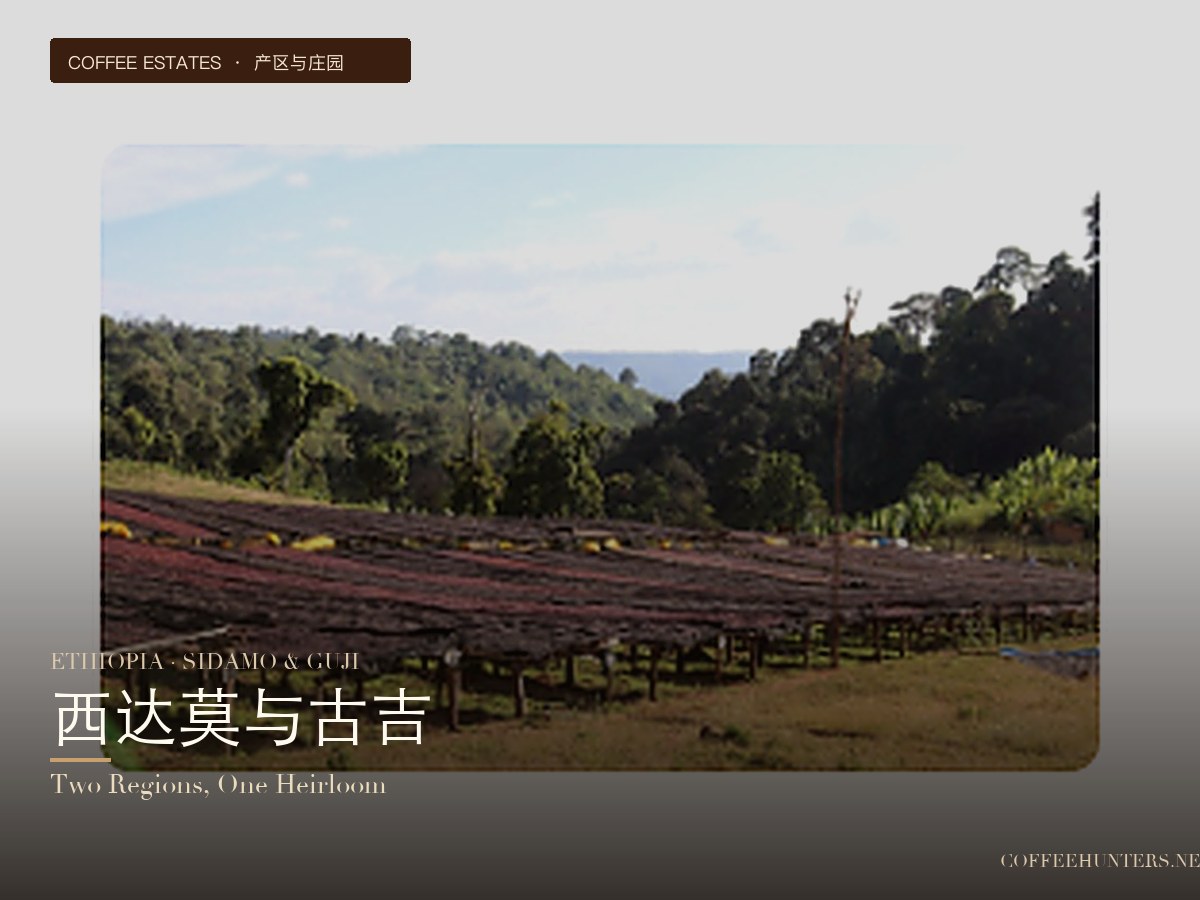
Introduction:Sidama and Guji in Ethiopia are two classic regions that every specialty coffee enthusiast around the world should know. Although both grow native Ethiopian varieties, they differ in altitude, soil, processing methods, and flavor profiles. This article will delve into the geographical conditions, varietal characteristics, processing techniques, and flavor profiles of these two regions, and offer practical pour over brewing suggestions and extraction parameters to help you more accurately select and brew your ideal Ethiopian coffee.
As one of the birthplaces of coffee, Ethiopia is home to many regions with unique flavor profiles, among which Sidama and Guji have emerged as two star regions on the international market in recent years. Sidama has been renowned for its high-quality coffee since the last century, and it wasn’t until the administrative restructuring of Ethiopia in 2019 that the region was elevated to the status of the Sidama Regional State, officially solidifying its regional identity. Originally part of the Gedeo zone under Sidama, Guji gradually distinguished itself due to its distinctly different microclimate and flavor characteristics. In 2020, it gained independent regional administrative status, and since then, “Sidamo” and “Guji” have officially been separated in coffee trading.
Geographically, both Sidama and Guji are located near the East African Rift Valley, with elevations generally ranging from 1,900 to 2,200 meters and average annual temperatures around 18 to 21°C. However, Guji’s coffee farms are more often adjacent to pristine forests, and its soils tend to have a higher proportion of volcanic components, with some areas rich in iron, resulting in coffees that often exhibit intense berry and red fruit notes, as well as a fuller, more layered sweetness. In contrast, Sidama coffees tend to display a brighter, more transparent profile of citrus, white flowers, and tea-like characteristics, with an overall flavor profile that is crisper, with vibrant acidity but without being overly sharp.
In terms of varieties, both regions widely cultivate Ethiopia’s unique native Heirloom varieties, which are not commercially numbered and exhibit extremely high genetic diversity. However, over the past decade, Guji has actively promoted numbered, disease-resistant varieties such as 74110 and 74112, leading to more stable coffee batches and advantages in large-scale production and consistency in quality. Sidama, on the other hand, still primarily grows many unnumbered local ancient variants, so coffees from single estates or micro-regions often show a high degree of uniqueness and complex flavors due to subtle differences in microclimate and soil.
In processing, both Sidama and Guji are pioneers and representatives of Ethiopia’s high-quality natural (sun-dried) specialty coffees. Well-known producing areas in Guji, such as Hambela Wamena and Shakiso, are famed for their high-quality natural beans. Processing facilities like Buku Sayisa employ high-standard brix (sugar content) screening of fresh cherries, combined with slow sun-drying over 15 to 21 days and multiple rounds of manual sorting, ensuring uniform ripening and concentrated flavors in each batch of naturals. Famous lots such as “Hambela” and “Shakiso” come from this region, often featuring pronounced strawberry, mango, and light wine-like notes, with rich layers. As for Sidama, its natural processing style leans more towards dense and full-bodied flavors, often showcasing intense blueberry jam and molasses-like sweetness, with noticeable fermentation characteristics—making it ideal for coffee lovers who enjoy deeper, more complex flavors.
Taking washed processing as an example, washed Sidama coffees often present a flavor profile akin to “chamomile tea with a hint of lemon”—clean, bright, with vivid citrus notes and delicate floral aromas. In contrast, Guji’s washed beans are more like a combination of “white peach and jasmine,” offering a rounder fruity sweetness and softer herbal notes. These differences are particularly evident when brewed using pour over methods, helping consumers quickly identify regional characteristics through flavor expression.
For coffee enthusiasts, understanding these two major regions is undoubtedly key to further exploring Ethiopia’s specialty coffee offerings. Whether you’re a beginner just starting out or an experienced coffee aficionado, grasping the flavor differences and processing traits of Sidama and Guji can help you make more informed choices when selecting beans and allow for more appropriate adjustments in brewing parameters.
In terms of brewing recommendations, since naturally processed Sidama and Guji coffees often have stronger fermentation characteristics, it’s advisable to use slightly lower water temperatures (around 88–90°C), paired with a 1:15 coffee-to-water ratio, and brew using a V60 or similar filter dripper with a single pour method. This helps reduce the risk of over-extraction and highlights fruitiness and sweetness. For washed batches, you may slightly increase the water temperature to 91–93°C and use a 1:16 ratio, employing a three-pour technique to fully express the floral and fruity characteristics while balancing acidity and body.
In summary, Sidama and Guji are not only vital pillars of Ethiopia’s specialty coffee scene but also the best entry points for understanding the diversity of African coffee. Whether you prefer bright, clean citrus and floral notes or rich, complex berry and wine-like flavors, these two regions offer distinctly different taste experiences, guiding you further into the boundless possibilities of the coffee world.
The above content is compiled by CoffeeHunters, a coffee news website.