Introduction:Yirgacheffe is a renowned coffee-growing region in the high-altitude southern part of Ethiopia, globally celebrated for its distinctive floral and fruity aromas, as well as its bright acidity. This article will delve into the region’s geography, varietal characteristics, processing method variations, and provide expert cupping flavor descriptions along with recommended pour-over parameters. Whether you're new to specialty coffee or seeking premium bean recommendations, you’ll find practical guidance here.
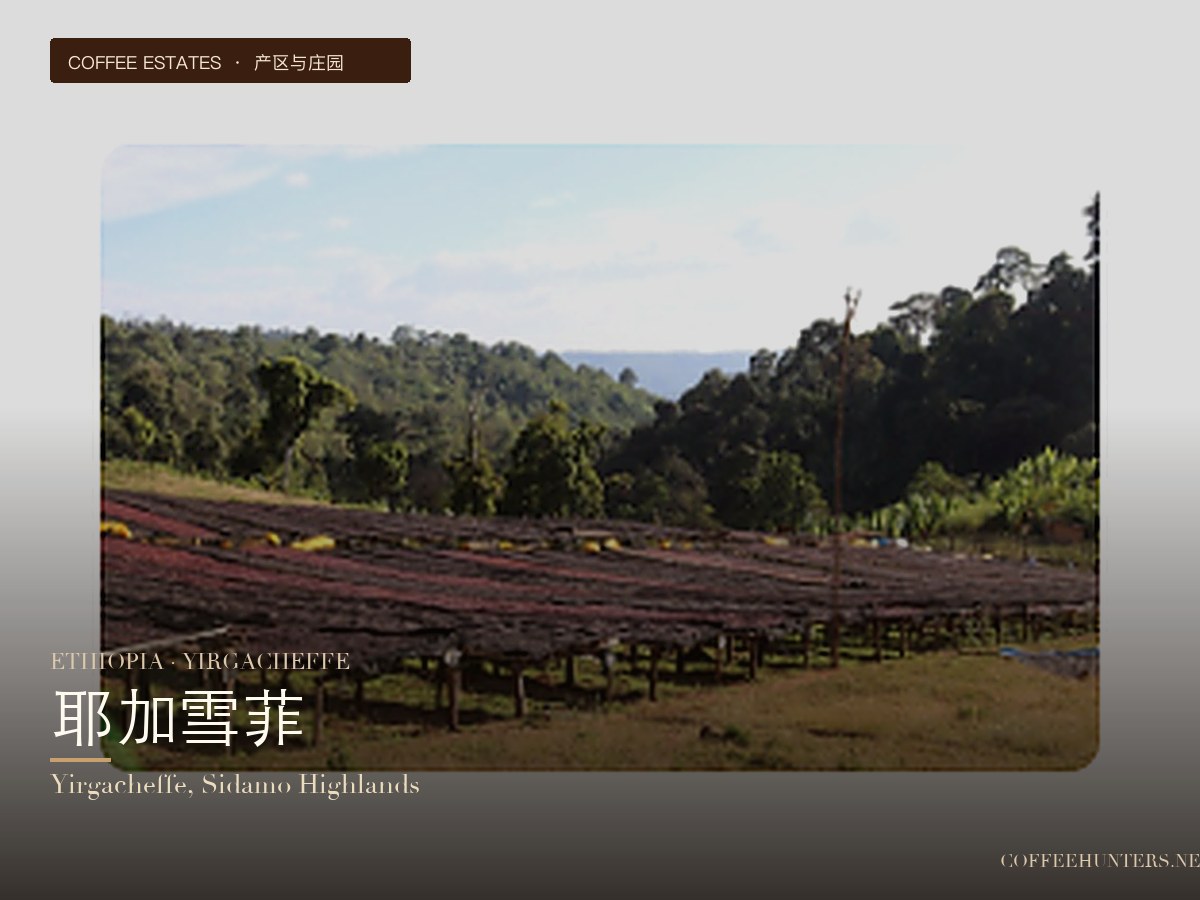
Located on the Sidamo Plateau in the Gedeo region of southern Ethiopia, lies the small town of Yirgacheffe, situated at an altitude of approximately 2,000 meters. The name, meaning “let’s settle here” in the local Amharic language, was originally just a quiet farming settlement on the plateau. It wasn’t until the 1950s, when coffee traders began sourcing green beans from the area, and with the establishment of washed processing facilities in the 1970s, that Yirgacheffe gradually entered the international specialty coffee market. Today, it is regarded as one of the world’s exemplary high-altitude coffee-producing regions.
Yirgacheffe belongs to the Southern Nations, Nationalities, and Peoples' Region (SNNP) of Ethiopia, situated on the western slopes of the East African Rift.The elevation generally ranges between 1,700 and 2,200 meters,making it one of the few commercial coffee-growing areas in the world situated at such extreme altitudes. The region is characterized by its mountainous terrain and frequent fog, with average annual temperatures maintained between 18–22°C, and day-night temperature differences exceeding 10°C. Rainfall is concentrated during two main rainy seasons: April to May and September to November. This combination of “high altitude, significant diurnal temperature variation, and a dual rainy season cycle” causes coffee cherries to ripen slowly, allowing sugars to accumulate fully, thus creating the region’s signature fragrant floral and fruity profiles.
Unlike coffee-growing regions in Central and South America, which often focus on single cultivated varieties, Ethiopia is considered a genetic treasure trove of Arabica coffee. Nearly all coffee produced in Yirgacheffe comes from Heirloom varieties—locally referred to as the "jungle of native varieties"—which include numbered strains such as 74110 and 74112, as well as many unnumbered ancient variants. This varietal diversity means that even coffee from different fields within the same processing station can exhibit subtle flavor differences during cupping, which is precisely what makes Ethiopian coffee so uniquely captivating.
The processing methods in Yirgacheffe are mainly divided into traditional washed and natural (sun-dried) categories. Washed-processing representatives include regions such as Kochere, Aricha, and Idido, where coffees typically present a profile dominated by bright lemon, citrus, and jasmine floral notes. In contrast, naturally processed coffees—such as certain batches under the Yirgacheffe classification (like the Huila-sourced natural lots such as “Hua Kui”)—often showcase intense flavors of strawberry, blueberry, and dark chocolate with winey undertones. These two processing methods coexist and complement each other, collectively forming the rich and diverse flavor spectrum of Yirgacheffe.
When tasting a high-quality cup of Yirgacheffe, the first impressions are often striking jasmine and bergamot aromas, followed by vibrant acidity reminiscent of lemon and lime, and a finish that leaves a honey-like sweetness with a soft black tea note. Its acidity is crisp yet not as sharp and intense as Kenyan beans, while its sweetness is delicate, unlike the heavier and more stable sweetness of Brazilian beans. The overall flavor is clean and transparent, much like a lemon flower tea infused with honey. For this reason, many coffee enthusiasts regard Yirgacheffe as the “paragon of fruity-floral profiles,” as it has shaped the specialty coffee industry’s original and most beautiful impression of “fruity-floral” flavors.
Within the Yirgacheffe region, there are numerous well-known processing stations. The Kochere station in the Kochere region is famed for its intense citrus character; Idido and Anchasa excel in producing washed batches with delicate floral notes. Among smallholder farms, the natural lots from Aricha have won the Cup of Excellence championship multiple times. A common feature among these stations is their rigorous selection of fresh cherries, fermentation times generally exceeding 72 hours, and adherence to traditional washing techniques using well water, ensuring consistent quality and flavor across each batch.
For coffee enthusiasts, Yirgacheffe is highly suitable for brewing with pour-over devices such as the V60 or Kalita Wave, which highlight acidity and floral notes. Recommended parameters are: water temperature of 90–92°C, coffee-to-water ratio of 1:15 to 1:17, grind size medium-fine (similar to white sugar granules), with total extraction time controlled between 2 minutes 30 seconds and 3 minutes. Brewing can be done via a three-pour method: begin with a 30-second bloom, followed by steady pouring to half the target volume, then finish with the final pour. If you prefer a fuller sweetness and creamier body, try using the Kalita Wave flat-bottom dripper; if you aim to enhance floral and acidic expression, the V60 is the more direct choice. Paying attention to the combination of dripper type and technique can further bring out the nuanced flavor layers of Yirgacheffe.
Yirgacheffe holds a pivotal position in the specialty coffee realm, not only due to its unique flavor characteristics but also because it embodies the core spirit of the specialty coffee movement: respect for the natural conditions of the origin, appreciation for varietal diversity, and meticulous processing craftsmanship. When we taste a cup of Yirgacheffe, we’re not just experiencing its enchanting floral and fruity aromas, but also catching a glimpse of Ethiopia’s millennia-long coffee cultivation history, as well as the daily lives of farmers on the Sidamo Plateau who toil at dawn to harvest the cherries.
The above content is compiled by CoffeeHunters, a coffee news website.