








Introduction:Have you ever wondered why iced pour-over coffee is often more expensive than hot pour-over, or even requires more coffee grounds? This article delves into the reasons behind using more coffee grounds in iced pour-over brewing, analyzes the scientific logic of adjusting the coffee-to-water ratio, and provides practical parameter suggestions to help you brew a perfectly balanced iced pour-over that won’t be diluted by ice.
Many coffee enthusiasts are often asked whether they’re willing to pay extra when ordering iced pour-over, and this is closely related to the amount of coffee grounds used. Some coffee shops price iced pour-over higher not because the brewing process is more complicated, but because it requires more coffee beans, which increases costs. So, why do you need to use more coffee grounds for iced pour-over? It’s directly related to flavor extraction and the dilution effect of ice.

First, let’s take a look at the basic method of making iced pour-over. A common approach is to place ice cubes directly under the filter cone. Hot water is poured in, and the resulting coffee liquid is rapidly cooled by the ice, delivering a refreshing taste. However, the biggest difference between this cooling method and traditional hot pour-over is that hot water can extract various flavor compounds from the coffee grounds more efficiently when in contact with them. In contrast, due to differences in water temperature and the final cooling effect, iced pour-over requires adjustments to the coffee-to-water ratio to ensure sufficient concentration.

Taking common brewing parameters as an example, both hot pour-over and iced pour-over can use 15 grams of coffee grounds, but the coffee-to-water ratios are vastly different. Hot pour-over typically uses a 1:15 ratio, meaning about 225 milliliters of hot water is poured in. Iced pour-over, on the other hand, commonly uses a 1:10 ratio, utilizing only about 150 milliliters of hot water along with around 100 grams of ice. This setup is designed to offset the impact of melting ice on coffee concentration, ensuring that the final cup still boasts a rich array of flavors.

From actual data, the final volume of hot pour-over coffee is about 225 milliliters, while iced pour-over, after adding ice, typically totals around 200 milliliters—considered a standard single serving. However, the size of ice cubes and their melting speed vary from shop to shop, which also affects the final coffee concentration. If the ice cubes are small or melt too quickly, using a 1:10 ratio may result in the coffee being diluted to a watery taste within a short time, losing its intended flavor intensity.

To address this, some shops choose to increase the coffee-to-water ratio to 1:7 or 1:8, reducing the amount of water poured to boost overall coffee concentration and counteract the dilution caused by melting ice. But doing so inevitably reduces the total volume of coffee liquid, which might make customers feel the portion is insufficient. As a result, some shops opt to increase the amount of coffee grounds instead—maintaining an appropriate liquid volume while ensuring enough flavor compounds are extracted, delivering a rich and balanced sip every time.

In addition, many baristas proactively increase the coffee grounds to pursue a higher level of flavor expression. By using more coffee, more complex aromas and textures can be extracted, making the iced coffee richer and fuller in mouthfeel, significantly enhancing the overall drinking experience. For consumers who prefer bold flavors, this is undoubtedly a more appealing choice.
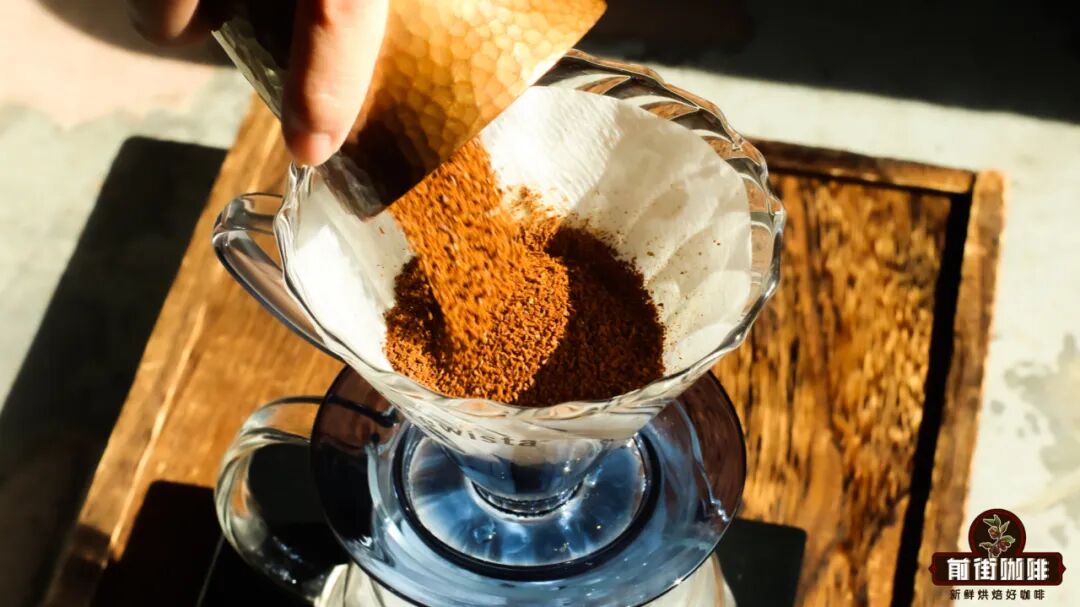
If you’re a home brewer experimenting with iced pour-over, try a simple test: keep all other parameters the same and simply add 2 to 3 grams more coffee grounds, then observe the flavor changes. By fine-tuning the coffee-to-water ratio, you can find the balance point that suits your taste best. In practice, it’s recommended to use a medium-coarse to coarse grind (such as around setting 9.5 on an Ek43 grinder), maintain a water temperature of about 92°C, and keep the brewing time within 2 minutes for optimal extraction.

In summary, the reason iced pour-over requires more coffee grounds is a comprehensive consideration of the dilution effect of ice, the efficiency of flavor extraction, and the final taste balance. Whether it’s to maintain concentration, extend flavor longevity, or elevate overall drink quality, properly adjusting the coffee-to-water ratio and coffee quantity are key strategies. Once you understand these principles, you can also adjust to create your own perfect iced pour-over recipe tailored to your personal taste.
The above content is compiled by CoffeeHunters, a coffee news website.


