








Introduction:Papua New Guinea coffee is often hailed as the "Little Blue Mountain." What makes it so special? This article delves into its varietal lineage with Jamaican Blue Mountain coffee, their similar growing environments, and the unique flavor profile of the Sigri Estate Bird of Paradise washed Typica. From historical background to roasting recommendations, we help you fully understand the characteristics and brewing essentials of this high-altitude specialty coffee.
Blue Mountain coffee gained immense fame in the last century, leading to the emergence of many products labeled as "Blue Mountain," such as Blue Mountain-flavored coffee or blends, which actually have no connection to the real thing. A customer once asked whether Papua New Guinea coffee, also known as the "Little Blue Mountain," falls into this category of misleading products. The answer is no.
The reason Papua New Guinea coffee is called the "Little Blue Mountain" is certainly not just for show. First, its primary cultivated variety is the same as that of Blue Mountain coffee—Typica (as shown in the image As shown, the left is the Bird of Paradise, and the right is Blue Mountain coffee). Coffee cultivation in Papua can be traced back to the late 19th century, when Dutch sailors introduced coffee seedlings to the Rigo district of Papua, where coffee farming took root. By the early 20th century, commercial cultivation had gradually begun, and by 1908, approximately 180 acres of land were planted with coffee.
In 1931, to improve coffee quality, Papua specifically imported the Typica variety from Jamaica. It’s worth mentioning that due to Jamaica being a closed island and its unique microclimate, the Typica grown there has, over more than two hundred years of domestication, developed stronger disease resistance—especially to coffee berry disease—outperforming regular Typica in both overall quality and yield. As a result, it is referred to as "Blue Mountain Typica." Many producing regions have sought to improve quality by importing this Blue Mountain Typica, and Papua is one of them. This is one of the key reasons it shares a prestigious reputation with Blue Mountain.

However, the variety alone is not enough to earn the title of "Little Blue Mountain." Like Jamaica, Papua New Guinea is an island nation with many similarities in geography and climate. Located between the equator and 10 degrees south latitude, Papua enjoys a tropical climate with high humidity and abundant rainfall. Coupled with high-altitude growing conditions and mineral-rich volcanic soils, these factors provide excellent growth conditions for coffee, enabling locally grown Typica to exhibit flavor potential similar to that of Blue Mountain.
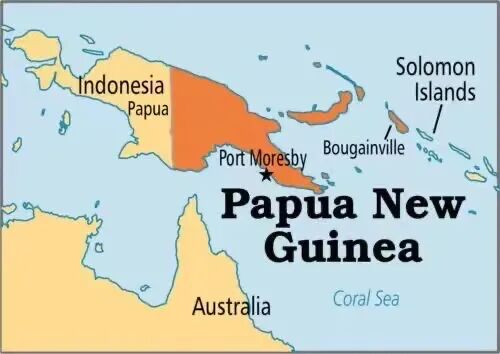
Yet, when actually tasting, one can still discern the unique regional characteristics of Papua coffee. After multiple cuppings, we ultimately selected the Bird of Paradise coffee from the Sigri Estate as the representative of Papua New Guinea coffee. Speaking of Bird of Paradise, it originally referred to Sigri Estate coffee with the image of Papua’s national bird—the Bird of Paradise—printed on the sacks. Although many Papua coffee sacks now bear this pattern, the term “Bird of Paradise coffee” was initially exclusive to Sigri Estate, which is one of the reasons we chose it as our representative.

Established in 1950, the Sigri Estate is one of the pioneers of Papua’s coffee industry and among the first well-known estates introduced to China. The estate is located in the Waghi Valley of the Western Highlands Province, at an altitude of about 1,500 meters. With a cool climate, abundant rainfall, and volcanic mineral-rich soils, it offers an ideal environment for coffee cultivation.
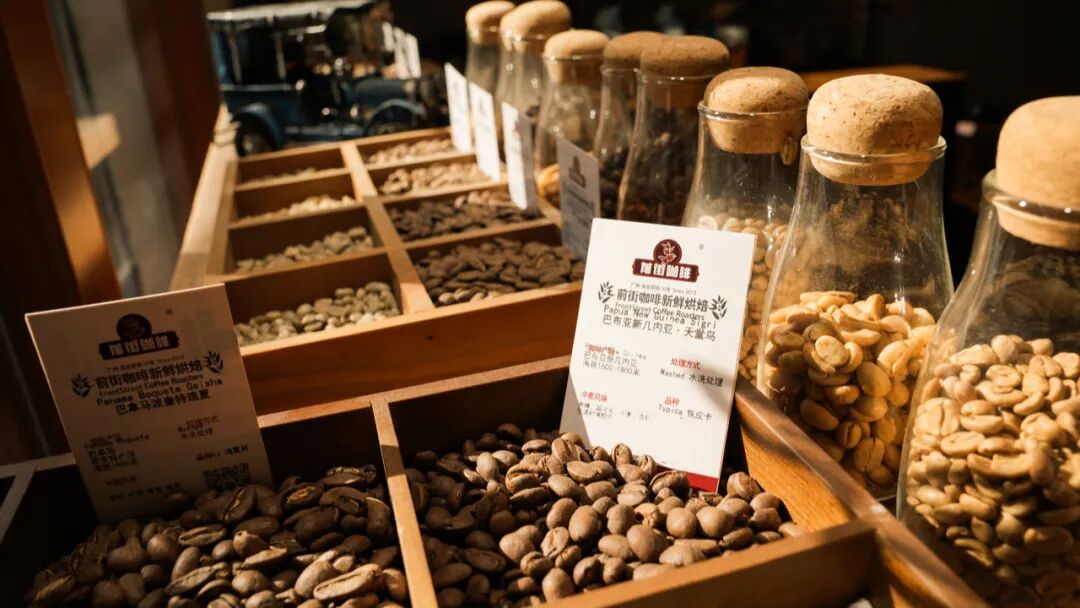
Beyond its exceptional natural conditions, the Sigri Estate is also highly meticulous in both cultivation and post-harvest processing. To protect the ecosystem, the estate completely avoids the use of pesticides and insecticides during cultivation. As for post-harvest processing, every step from harvesting to processing is carried out with great care to ensure the coffee meets high-quality standards. These rigorous production practices enable the Bird of Paradise coffee from Sigri Estate to deliver an exceptional flavor experience.

For roasting, we opt for a medium roast profile to highlight the coffee’s balanced flavor spectrum. Medium-roasted Bird of Paradise coffee features a smooth and full-bodied mouthfeel, with a rich layering of flavors. In addition to the chocolatey and nutty notes commonly found in dark roasts, it also presents gentle citrus and berry acidity, while the finish unveils a sugarcane-like sweetness. Overall, it delivers an elegant profile reminiscent of Blue Mountain coffee, yet retains the distinctive charm of Papua New Guinea coffee—definitely worth a try.

The above content is compiled by CoffeeHunters, a coffee news website.

