







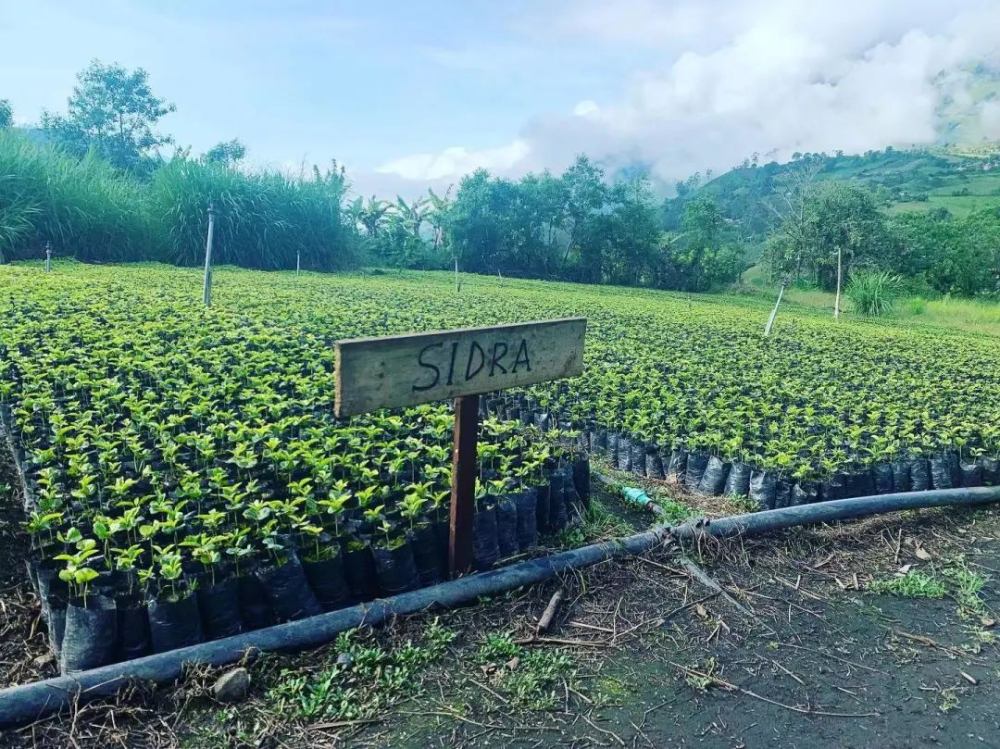
Introduction:Sidra is a uniquely flavored coffee variety that has garnered significant attention in recent years. With its bright acidity, sweet notes, and rich fruity profile, it has become a favorite among pour over enthusiasts. This article delves into the origins and genetic background of the Sidra variety, and provides a detailed exploration of the flavor characteristics and optimal brewing methods for the anaerobic natural Sidra from Finca La Línea in Colombia, helping you brew a layered, fruit-forward specialty coffee at home.
When selecting coffee beans, aside from origin and flavor, an increasing number of coffee lovers are paying attention to the key factor of “variety.” Sidra, also spelled as Sydra or Bourbon Sidra, derives its name from the Spanish word for “apple juice” or “cider,” which already evokes a fruity aroma.
Sidra originally originated in Ecuador. According to records, there was once a coffee breeding center supported by Nestlé located in the Pichincha Province. The center was dedicated to developing various hybrid varieties in hopes of enhancing overall coffee performance. However, the project was later discontinued, and some experimental varieties made their way to the market—Sidra being one of them.
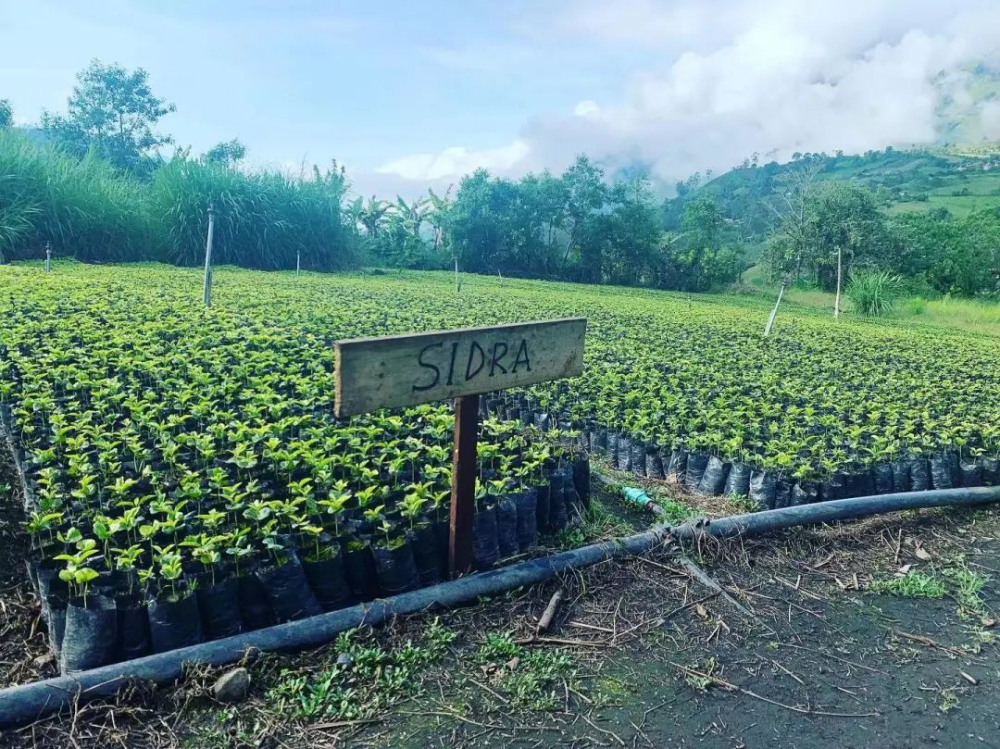
Early breeding institutions primarily utilized Ethiopian landraces, crossbreeding them with local Typica and Bourbon varieties. Since Sidra’s physical characteristics resemble those of Typica and Bourbon, many coffee farmers in Ecuador believed it to be a descendant of these two varieties. However, research from the fourth wave of specialty coffee—including studies by institutions such as the World Coffee Research Center (WCR)—has revealed through genetic testing that Sidra’s genetics are actually closer to certain Ethiopian landrace varieties, particularly the peaberry and round-seeded mutations.
Interestingly, Sidra can be divided into “round-seed” and “peaberry” types. Round-seed Sidra has a more rounded shape, and genetic testing suggests it may be a blend of Typica and Geisha genes. In contrast, peaberry Sidra has an elongated, oval-shaped bean and does not exhibit Typica or Bourbon genetic markers. Instead, it shows a more complex polygenic makeup, which may also contribute to its particularly outstanding flavor profile.
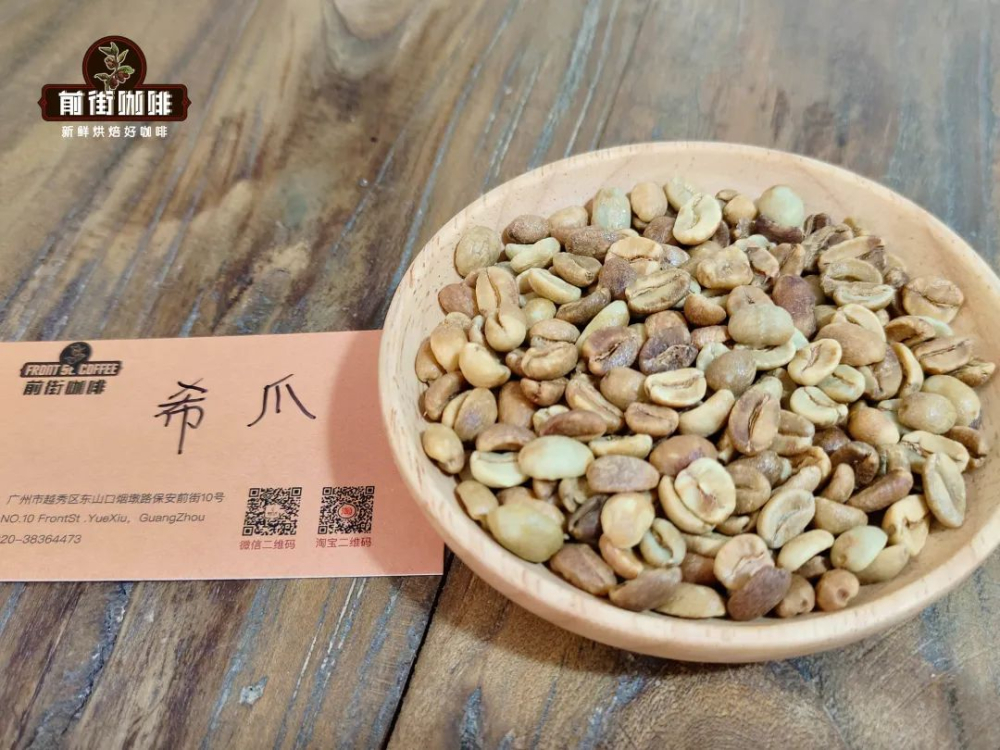
In major international green coffee competitions, standout Sidra beans often exhibit intense fruity and floral notes, which is why they stand out in the specialty coffee market. The anaerobic natural Sidra produced by Finca La Línea in Colombia is one of the finest examples. Processed using anaerobic fermentation and natural sun-drying, this coffee offers a highly layered flavor profile, including notes of passionfruit, grape, apricot, red wine, floral, and chocolate. It is especially well-suited for coffee lovers who enjoy sweet and tangy profiles.
However, due to its deep fermentation, improper home brewing can easily result in underwhelming flavors or overly fermented tastes. Therefore, mastering the correct brewing parameters is crucial. Below is our recommended brewing recipe, suitable for the V60 filter cone, which fully highlights the delicate and fruity characteristics of Sidra:
Coffee dose: 15 grams
Brew ratio: 1:15
Brewing temperature: 92°C
Grind size: 20-mesh sieve, 75%~80% passing rate, approximately equivalent to the 9.5 setting on an Ek43 grinder, resembling fine sugar granules (slightly fine)
It is recommended to use a three-stage pouring method when brewing. There is no need to rigidly adhere to the number of pours—the key is to control the total extraction time, ideally around 2 minutes:
Step 1: Pour hot water equal to twice the coffee dose (about 30 grams) for the bloom, allowing about 30 seconds for the coffee grounds to degas.
Step 2: Using moderate water flow, pour approximately 120 milliliters of hot water in a wide circular motion. Note that anaerobically processed coffee tends to extract more quickly, so it is advisable to control the water flow speed to avoid under-extraction.
Step 3: Once the water has drained through, switch to small circular movements and pour the final 75 milliliters of hot water in the center of the coffee bed. Then let it drip through until brewing is complete.

Using the above parameters, brewed Sidra typically exhibits bright acidity, rich fruitiness, and layered complexity, including aromas of grape, passionfruit, apricot, along with subtle floral notes and hints of red wine and chocolate. The overall profile is very balanced and enjoyable. If brewed as cold pour over, the bitterness is further reduced, and the flavor becomes closer to a refreshing grape juice—making it especially suitable for summer enjoyment.
If you frequently visit coffee shops or purchase specialty coffee beans, you may have heard people ask: “Do you have Geisha?” or “Besides Geisha, what other special varieties do you offer?” In such cases, Sidra is a highly recommended alternative. It not only offers a unique flavor profile but is also more readily available in stable supply compared to Geisha, making it ideal for coffee lovers looking to explore special varieties without going to extremes.
The above content is compiled by CoffeeHunters, a coffee news website.

