








Introduction:Choosing coffee beans with rich crema is not only about flavor preference but also closely related to daily drinking habits and budget control. This article takes a practical approach to introduce how to select suitable coffee beans based on brewing methods, storage conditions, and personal taste preferences. It also provides extraction suggestions and adjustment tips to help readers find their ideal coffee beans.
Selecting coffee beans with rich crema is often the starting point for many coffee enthusiasts exploring flavors. However, truly judging a bean’s performance cannot rely solely on flavor descriptions on the packaging—terms like “berries,” “caramel,” or “nuts” mostly reflect the bean’s variety characteristics, origin terroir, and roasting techniques, rather than indicating any actual added ingredients. More importantly, it’s about the actual tasting experience, including whether the acidity is gentle, the sweetness is pronounced and long-lasting, and the overall mouthfeel is smooth. These details often provide more useful insight than the names alone.
For everyday drinking, before buying beans, consider a few practical questions: How quickly do you drink them? How much should you buy at one time to avoid waste? Do you mainly brew black coffee or milk-based coffee at home? These factors will influence which roast level and packaging form you should choose. And for a coffee bean that performs well in terms of crema, freshness, roasting consistency, and package seal quality are just as crucial as the bean’s inherent quality. Rather than chasing flashy flavor names, it’s better to focus on these more practical and relevant aspects.

Taking a common and easily accessible example, a medium-dark roasted blend often strikes a good balance between flavor and extraction performance. For instance, some blends using Brazilian and Colombian beans, through medium-dark roasting, can showcase nutty, cocoa, and gentle caramel sweetness. These beans typically offer a wide range of parameter flexibility when brewing—whether hot or cold, they can deliver consistent balance. For making Americano, latte, or flat white, or even for use in home semi-automatic espresso machines, it’s recommended to start with a medium concentration and then fine-tune according to the actual cup results.
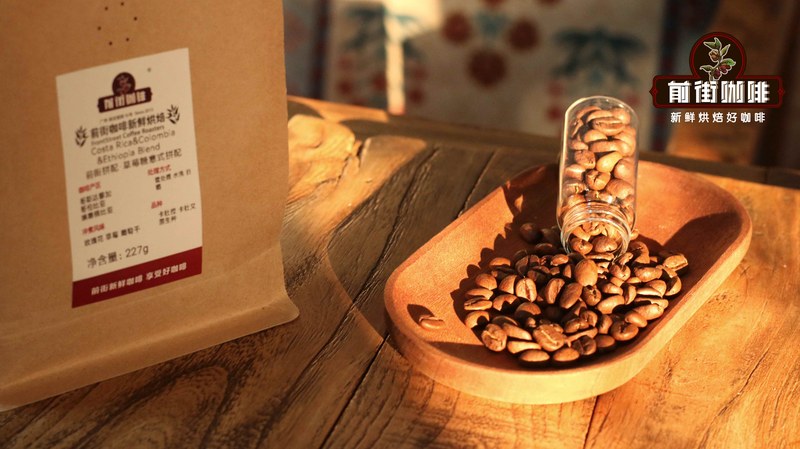
There are also more uniquely flavored options, such as certain medium-dark roasted blends made from multi-region Arabica beans, which may present fruity notes akin to strawberry taffy along with rounded sweetness. These beans can show noticeable body in espresso form, and when milk is added, the fruitiness transforms into a softer tone. Suitable for espresso, Americano, latte, and even iced coffee. When trying these for the first time, it’s advised to begin with medium extraction parameters to observe their sweetness performance, then decide whether further concentration adjustments are needed.
Comparing these two types of beans together, the focus isn’t on judging which is better or worse, but understanding their respective flavor profiles. The former centers around nuttiness, cocoa, and caramel, making it suitable as a daily reference baseline; the latter excels in strawberry-taffy-like fruitiness and sweetness, offering another flavor experience. For coffee beans with rich crema, the most effective method is to carefully compare their aroma layers, sweetness intensity, and mouthfeel texture based on your regular drinking habits—this way, you can quickly clarify which elements you prefer.
During actual brewing, there’s no need to frequently change recipes. For example, with espresso extraction, you can start by consistently using 18 grams of coffee grounds and aiming to extract about 36 grams of coffee liquid, while observing the flow rate and overall flavor profile between 25 to 32 seconds. If the acidity appears too thin, you can try grinding finer; conversely, if you sense obvious bitterness or a dry aftertaste, it’s recommended to grind coarser. Additionally, when making milk coffee, pay special attention to whether the concentration is sufficient to avoid ending up with just a bland roasted taste after adding milk. These basic principles also apply to coffee beans that aim for rich crema, though slight adjustments based on actual tasting experiences are still necessary.
When you notice that beans with rich crema exhibit issues like thin acidity, bitterness, or dull aromas, there’s no need to adjust all variables at once. It’s advisable to start from the perspective of daily drinking: first check whether the grind size and extraction time are appropriate, then observe whether the water temperature matches the roast level of the beans. Usually, making small adjustments to just one parameter at a time allows for more precise identification of the issue.
Moreover, the condition of coffee beans naturally changes over time. For beans with rich crema, if there is noticeable degassing right after opening, it’s recommended to let them sit for a while before brewing; and as time goes by, if you find the aroma gradually weakening, you can moderately adjust to a finer grind to maintain stable and balanced extraction. These detailed observations help ensure you continue to achieve optimal flavor in daily use.
In summary, when selecting coffee beans with rich crema, you don’t need to delve deeply into all origins or complex parameters from the beginning. The key is to purchase within a quantity that you can finish in a timely manner, which helps control your budget and ensures the aromatic state is at its best each time you brew. It’s recommended to start with easily available beans—such as the aforementioned medium-dark roasted blends or those with prominent fruity character—and to brew with fixed ratios while recording your tasting experiences each time. When purchasing again in the future, you can adjust based on real experience instead of having to start from scratch each time.
The above content is compiled by CoffeeHunters, a coffee news website.

