Introduction:Hawaiian Kona coffee is one of the few specialty coffees in the world renowned for being produced in the United States, boasting a unique geographical setting and a rigorous grading system. This article delves into the growing environment of Kona coffee, the characteristics of the Typica variety, the washed processing method, and how to bring out its mellow and rich flavors through suitable brewing techniques. It’s a must-read guide for those who love exploring island-grown coffees and are keen on advancing their pour over skills.
The history of Kona (Kona) coffee cultivation in Hawaii dates back to 1828, when American missionaries introduced Bourbon coffee seedlings from Brazil, which were successfully trialed locally. By the mid-19th century, coffee had become one of Hawaii's important cash crops. Currently, the annual production of Kona coffee is roughly between 2,000 and 3,000 tons, almost all of which comes from the narrow Kona growing region on the western coast of Hawaii’s Big Island. This area is only about 50 kilometers long and 3 kilometers wide, yet it stands as one of the few specialty coffee regions in the world that can claim “USA” as its place of origin.
The Kona coffee growing region is located on the western side of Hawaii’s Big Island, featuring a unique terrain backed by Mauna Kea volcano (elevation 4,205 meters) to the north and Mauna Loa volcano (elevation 4,169 meters) to the south, and facing the vast Pacific Ocean. Coffee trees are primarily planted at elevations between 100 and 900 meters. Though lower than other well-known regions such as Ethiopia or Colombia, the area benefits from ample sunlight, fertile volcanic soil, and consistent moist sea breezes brought by the Pacific currents, resulting in Kona coffee known for its “low-elevation, high-sweetness” character.
The variety used in Kona coffee is mainly a local variant derived from Typica, commonly referred to as “Kona Typica.” Since its introduction in the 19th century, this variety has gradually adapted to Hawaii’s unique volcanic environment and maritime microclimate, developing distinct flavor profiles: gentle acidity, with common tasting notes of nuts, dark chocolate, and caramel sweetness. It delivers a pronounced sweetness and balanced layers upon tasting, making it the “mild-profile” specialty bean favored by many coffee enthusiasts.
Kona coffee has an extremely strict origin certification and grading system. Only coffee grown within the officially designated “Kona Coffee Belt” qualifies to be labeled as “Kona.” Even within the same region, beans are further classified into various grades—Extra Fancy, Fancy, Number 1, Select, and Prime—based on bean size, defect rate, and processing quality. Notably, all these grades must undergo rigorous inspection and certification by the Hawaii Department of Agriculture to ensure consistency in origin and product quality.
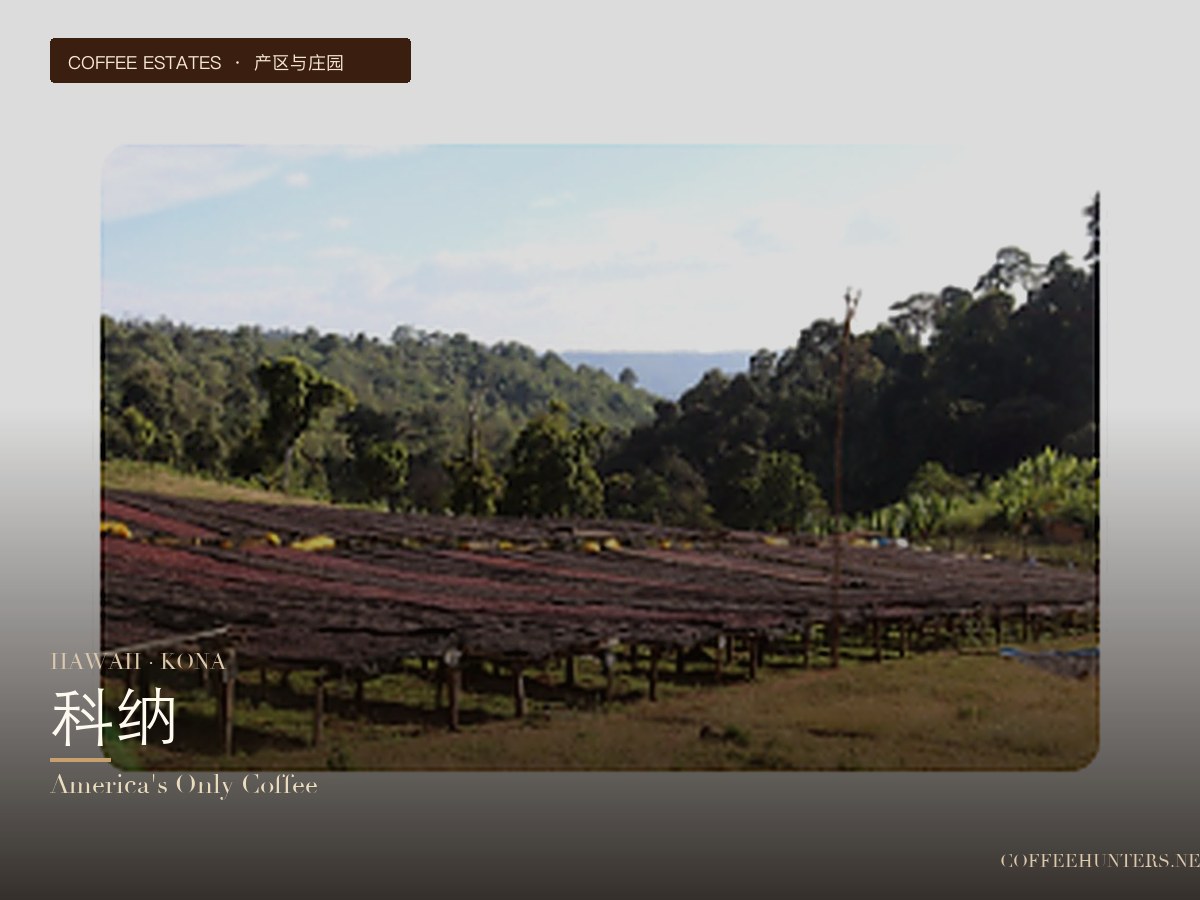
In terms of processing methods, Kona overwhelmingly adopts the washed process. Local small-scale processing facilities typically follow a standard procedure: first removing the pulp, then fermenting the beans (for about 18 to 24 hours), followed by thorough rinsing with clean water, and finally drying the beans on sun patios (Patio). The entire drying process takes approximately 7 to 14 days. Some premium batches may experiment with honey or natural processing, but these remain relatively rare, with washed processing still dominating to ensure clear and stable flavors.
A high-quality cup of Kona coffee displays a very unique and harmonious flavor profile during cupping. Upon opening the bag or grinding the beans, aromas of nuts, toasted malt, and subtle chocolate are often detected. When sipped, the acidity is mild, often accompanied by a refreshing note akin to lemon or green apple. Mid-palate reveals layers of sweet notes such as almond candy, brown sugar, and honey. The finish lingers with soft floral tones and a tea-like aftertaste. Overall, the cup is clean, smooth, and balanced—sharing similarities with Jamaican Blue Mountain, but often with even more pronounced sweetness.
There are numerous representative farms for Kona coffee. Among them, Greenwell Farms is one of the oldest, established in 1850 and still family-owned. Others such as Royal Kona Coffee, Hawaiian Queen Coffee, Hula Daddy, Kona Coffee & Tea Company, and Mountain Thunder Coffee Plantation are also well-known brands with stable quality and are worthy of exploration and comparison by coffee enthusiasts.
Due to limited production (only 2,000 to 3,000 tons per year), high labor costs (restricted by U.S. labor laws), along with its strict grading system and the rarity of “American origin,” Kona coffee has always maintained a high price point. The wholesale price of green beans generally ranges from $20 to $40 per pound, while the retail price after precision roasting is even higher, making it a quintessential example of high-end specialty coffee.
When brewing Kona coffee, it’s recommended to fully respect its gentle and balanced characteristics. Using a V60 or Chemex dripper is advised, with water temperature controlled between 88–90°C (slightly lower than usual), a coffee-to-water ratio of about 1:16 to 1:18, and medium-fine grind size. A three-stage pouring method is suggested: start with a 30-second bloom, pour up to half the total water volume in the second stage, and finish with fine stream pouring. To enhance the nutty and chocolatey notes of Kona, you may opt for a Kalita Wave and extend the pouring time. If you prefer to highlight its acidity and delicate floral aromas, the V60 single-pour method is more suitable, helping to accentuate its clear flavor profile.
In summary, Hawaiian Kona coffee is one of the few specialty coffees in the world that proudly bears the “American origin.” It not only represents the coffee culture developed on American soil but also showcases the diverse facets of island-grown coffees. Understanding Kona is not just about tasting a cup of coffee—it’s about exploring a unique and historically significant piece of the specialty coffee puzzle.
The above content is compiled by CoffeeHunters, a coffee news website.