Introduction:Yemen is the birthplace of modern commercial coffee, and its Mocha coffee is renowned for its unique flavor and historical significance. This article delves into Yemeni coffee’s growing regions, ancient varieties, traditional processing methods, and the complex and captivating flavors in the cup, while also providing practical pour over parameters to help you better appreciate the charm of this origin-tier coffee.
The global journey of coffee began on Yemeni soil. As early as the mid-15th century, Yemen started large-scale coffee cultivation, and by the early 16th century, it exported coffee to the Middle East and Europe through the port of Mocha (now called Mukha). Yemen monopolized coffee exports for nearly two hundred years until the early 17th century, when the Dutch East India Company introduced coffee seeds to Indonesia, ending its dominance. Today, the term “Mocha” not only refers to Yemen’s ancient port but has also become synonymous with chocolate-flavored coffee beverages.
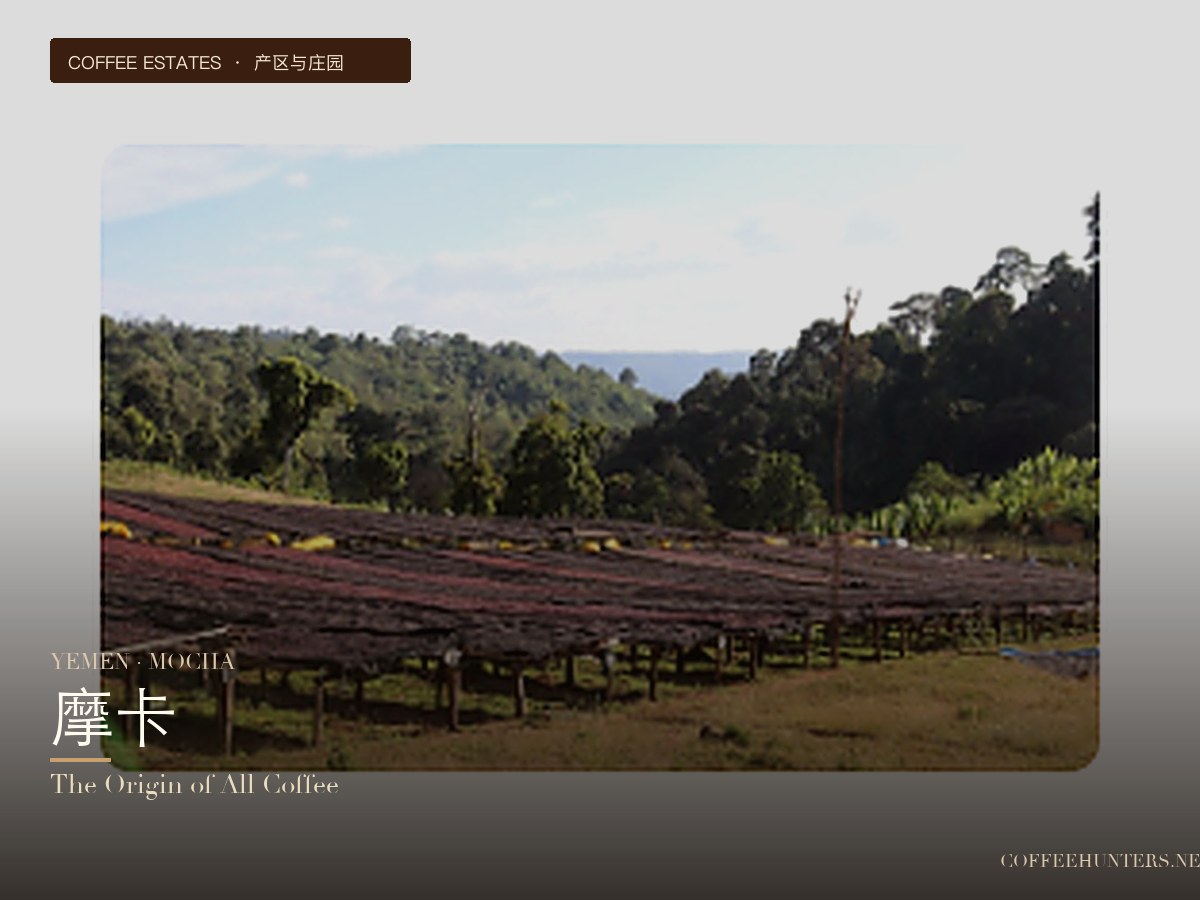
Yemen’s geographical conditions present significant challenges for coffee cultivation. This country located in the southwest of the Arabian Peninsula consists mostly of arid plateaus and deserts. However, coffee is primarily grown in several sub-regions within the western mountains, including Haraz, Sana’a, Mahweet, and Hayma, at elevations of approximately 1500 to 2200 meters. These areas are not only among the highest-altitude coffee-growing regions in the world but also among the driest. Due to the lack of a proper irrigation system, Yemeni coffee trees rely almost entirely on natural rainfall and groundwater for survival. Such a harsh growing environment has created the unparalleled unique flavor profile of Yemeni coffee.
In terms of variety, Yemeni coffee is dominated by ancient Typica variants, locally known as Udaini, Dawairi, Jufaini, and Ismaili, among other traditional varieties. These varieties have been cultivated for hundreds of years, and their genetic makeup differs significantly from the commercial varieties commonly seen in today’s market. This “ancient lineage” gives Yemeni coffee special acidity and herbal notes in cupping that are hard to replicate and are considered original flavors unique to the region.
Yemen’s coffee processing methods are quite traditional and primitive, relying almost entirely on what is known as the natural or sun-dried method. However, Yemen’s sun-dried process differs from that of other regions such as Brazil—local producers typically do not sort cherries based on sugar levels but instead allow whole coffee cherries to dry naturally on stone slabs or rooftops of earthen houses. This practice imparts a unique fermented character, earthy aroma, and layers of spice to Yemeni coffee. Additionally, Ismaili is a uniquely Yemeni processing technique where dried coffee cherries are left to rest in warehouses for several months before hulling, further enhancing the complexity of the flavors.
A genuine Yemeni Mocha, when cupped, displays an exceptionally rich and layered flavor profile. Upon opening the bag, one is often greeted by intense aromas of wine, fermented fruit, tobacco, and various spices. On the palate, the acidity is low to medium, with a full body; the mid-palate reveals a complex mix of dark chocolate, dried fruits, spices, and earthiness; the finish leaves a distinct note of red wine, herbal aroma, and a soil-like character. Overall, it is a coffee of high complexity, fine layering, and a long-lasting aftertaste.
However, Yemen’s coffee industry has long been affected by civil war and political instability. Since the outbreak of the civil war in 2015, many coffee exporters have been forced to halt operations, leading to a sharp decline in coffee trade volume. Currently, Yemen’s annual coffee production is only about one-third of what it was in the 1990s, but this scarcity has driven up its market price and further highlighted its uniqueness.
Yemen has several well-known coffee-growing regions, among which Haraz is the most prestigious specialty coffee region, with average elevations between 1800 and 2200 meters. Coffee trees are mostly planted on steep mountain terraces, contributing to its highly distinctive flavor. There is also some specialty coffee grown around Sana’a, though production is relatively limited. The Mahweet region is known for its unique processing methods, while Hayma is an emerging specialty coffee region that has gained attention in recent years.
Yemen’s coffee industry is primarily composed of smallholder farmers and cooperatives. Commonly seen export brands in the market are usually operated by large exporters, such as Al-Ezzi Industries, whose Mocha brand enjoys considerable international recognition. In addition, some emerging specialty coffee brands, like Qima Coffee and Mokhtar Family Estate, focus on single-region specialty lots, dedicated to showcasing the diverse profiles of Yemeni coffee.
If you wish to brew Yemeni Mocha at home, here are some suggestions: Given its complex flavor yet lower acidity, it is important to avoid over-extraction during brewing to prevent unpleasant off-flavors. It is recommended to use a V60 or Origami dripper, with water temperature controlled at 88 to 90°C (slightly lower than usual), a brew ratio set between 1:16 and 1:18, and a medium-fine grind size. A single-pour brewing method can be used—start with a 30-second bloom, followed by slow pouring with fine streams of water for about 60 seconds, which helps fully bring out its rich aromas and layered characteristics.
In summary, within the world of specialty coffee, Yemen may not be the most widely recognized origin, but its historical significance and cultural importance are irreplaceable. Without Yemen, there would be no global coffee industry as we know it today. Tasting Yemeni Mocha is not just about enjoying a cup of coffee, but also about tracing the roots of coffee, and experiencing the millennia-old aromas and history.
The above content is compiled by CoffeeHunters, a coffee news website.