Introduction:Sumatran Mandheling coffee is renowned for its distinctive low acidity, full-bodied texture, and rich notes of spices and earth—all stemming from the traditional wet hulling process. This article delves into the origins of Mandheling’s growing regions, the characteristics and reasons behind wet hulling, key coffee varieties, classic flavor profiles, current trends toward specialty production, and information on well-known estates. It also includes practical pour over parameters and techniques to help you fully appreciate the charm of this classic Southeast Asian coffee.
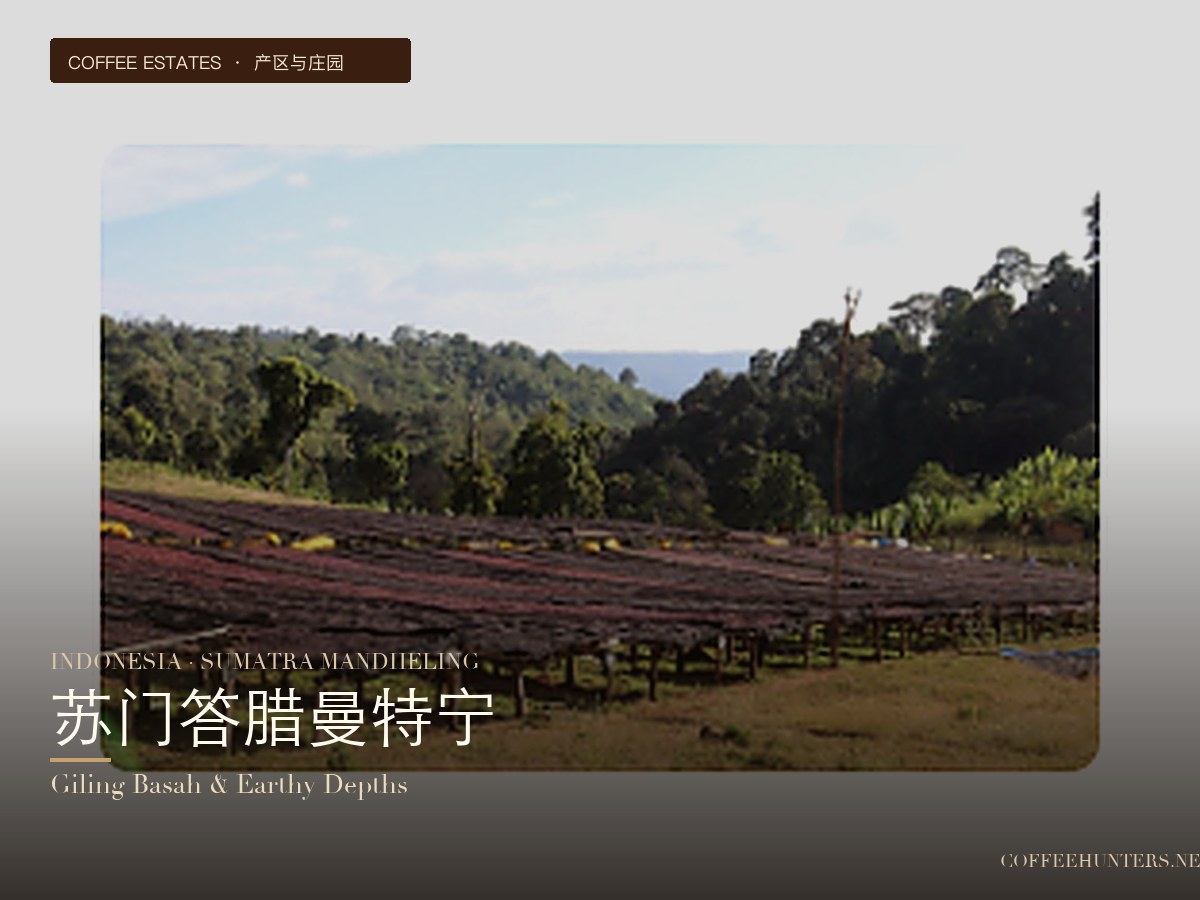
The history of coffee cultivation in Sumatra dates back to 1696, when the Dutch East India Company introduced coffee to Indonesia. Among the regions, the area around Lake Toba in northern Sumatra stands out as one of the country’s most representative coffee-growing zones. The term “Mandheling” actually comes from the phonetic transliteration of the local Mandailing ethnic group, which was historically known for its coffee trade and once established significant kingdoms in northern Sumatra. Today, “Mandheling” has become a general term for coffee from northern Sumatra, with key production areas concentrated in Lintong, Tapanuli, and around Lake Toba.
The unique flavor profile of Mandheling is largely due to the “wet hulling” method (Giling Basah, also known as semi-washed). This processing method differs significantly from traditional washed processing: after removing the coffee cherry’s pulp and mucilage, the parchment-covered beans still have a moisture content of around 30–35%. Instead of proceeding directly to sun drying, the outer layer—including the sticky mucilage and parchment—is mechanically removed at this stage, followed by further drying. Since this removal happens while the beans are not yet fully dry, the resulting green beans often exhibit a distinctive green or bluish-green hue. This process also contributes to the complex cup profiles commonly associated with Mandheling, such as earthy, spicy, and herbal notes.
The emergence of wet hulling is closely tied to Sumatra’s unique tropical rainforest climate. The region receives over 2000 mm of rainfall annually, with extremely high humidity. Using traditional washed processing would require a lengthy drying period of 14 to 21 days, which is not only time-consuming but also susceptible to weather impacts. Wet hulling drastically reduces the drying time to just 5–7 days, allowing processing to be completed before the rainy season sets in. Additionally, the partial retention of mucilage on the bean surface imparts extra sweetness and a fuller body to the coffee after roasting.
In terms of varieties, Mandheling primarily grows Typica (including local variants such as Bergendal and Sidikalang). In some specialty-grade Mandheling lots, less common varieties can also be found, such as S795 (a Java variety, a hybrid of Kenyan and Indian lineages), Abyssinia (a variant originating from Ethiopia), and Tim-Tim. The inclusion of these varieties enables certain specialty Mandheling lots to showcase more complex and layered flavor profiles than traditional Mandheling.
Traditional Mandheling exhibits highly recognizable flavor characteristics in cupping: the dry aroma often carries distinct notes of earth, tobacco, and roasted spices; the acidity is extremely low, with a full and heavy mouthfeel; mid-palate flavors are dominated by dark chocolate, herbs, spices, and earth; the finish lingers with notes of cedar, tobacco, and subtle herbal tones. Overall, Mandheling sets itself apart from other mainstream specialty coffees with its full body, solid sweetness, and almost non-existent acidity.
Over the past decade, the specialty evolution of Mandheling has accelerated markedly. Many local processing facilities have begun experimenting with innovative methods, such as double wet hulling, organic processing, and even the introduction of anaerobic fermentation techniques. Single-estate lots from the Lintong region, as well as organic-certified batches from the Sidikalang region, have earned high praise and recognition in the international specialty coffee market.
When discussing Sumatran Mandheling, it’s essential to highlight several representative estates and regional brands. Lintong Estate, Sidikalang Estate, and Sumatra Organic Estate are among the most notable producers in the area. Additionally, Koperasi Permata Gayo, Indonesia’s largest coffee cooperative, produces organic Mandheling that has garnered widespread acclaim from international buyers and serves as a steady supply for many coffee roasters.
For brewing recommendations, Mandheling’s full-bodied character makes it well-suited for brewing methods that preserve coffee oils and body—such as French press, siphon (clever dripper), or Kalita Wave. It is advised to use a water temperature of 88–90°C (slightly lower than usual), with a brew ratio between 1:15 and 1:16, and a medium-coarse grind size that’s slightly coarser than your everyday setting. To accentuate Mandheling’s signature herbal and spicy notes, opt for a French press with a full 4-minute immersion. For those preferring enhanced sweetness and chocolate flavors, the Kalita Wave with a three-pour method is recommended, as it helps improve clarity and layering in the cup.
In summary, Mandheling may not be the type of coffee that everyone falls in love with at first try—its low acidity and intense earthy, herbal tones might seem unusual to some drinkers. However, it represents the pinnacle of the “low-acid, full-bodied” style within the specialty coffee world and serves as an indispensable “core component” in many espresso blends. Getting to know Mandheling is not just about experiencing a classic coffee, but also an important step in exploring the diversity of global specialty coffee.
The above content is compiled by CoffeeHunters, a coffee news website.