Introduction:Explore Guatemala’s two major high-altitude specialty coffee regions — Huehuetenango and Acatenango. From climate and varieties to processing methods, gain an in-depth understanding of their unique flavor profiles and brewing recommendations. This article will help you master the key selection criteria and extraction parameters for these two popular pour over beans, offering valuable insights for both beginners and coffee enthusiasts.
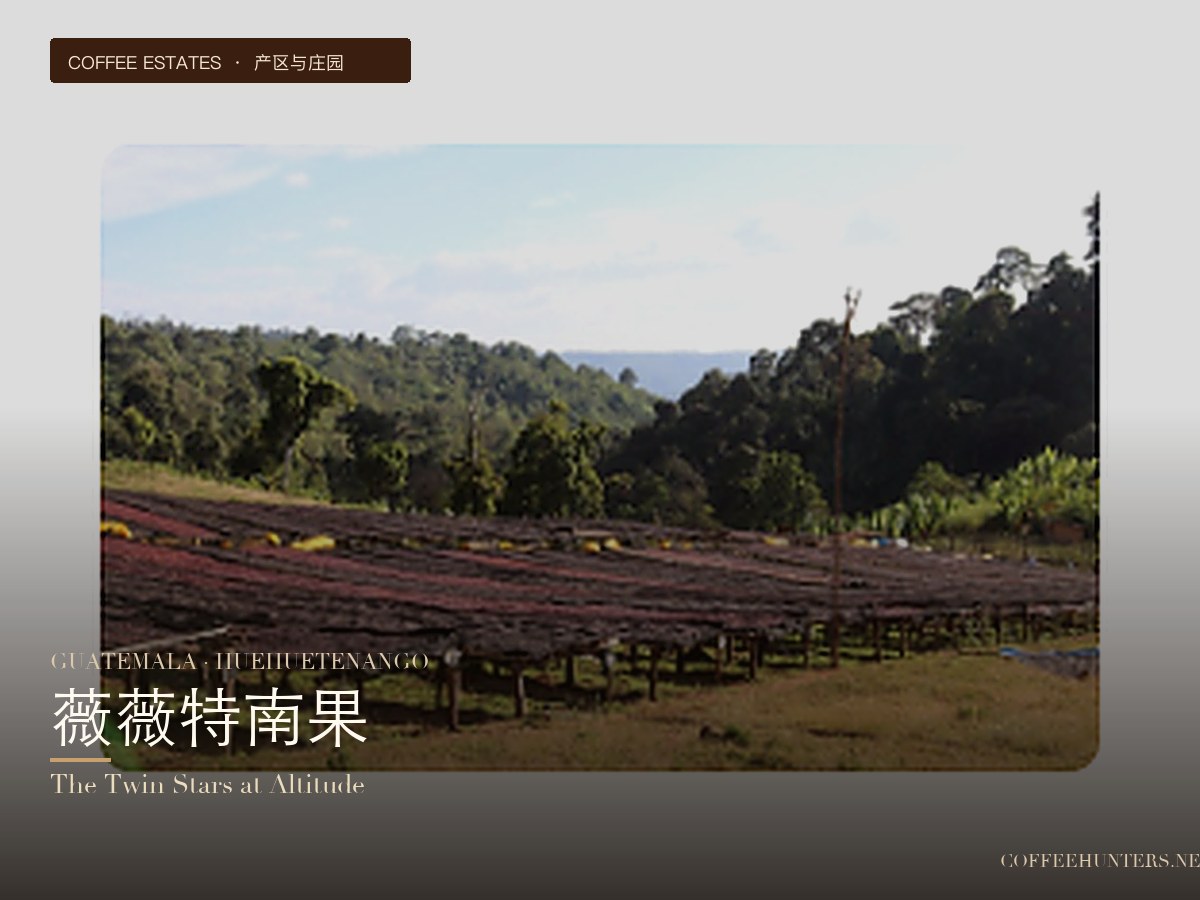
Huehuetenango, located in the westernmost part of Guatemala and bordering Mexico, is one of the country’s highest-altitude and most climatically unique coffee-growing areas. The elevation here generally ranges between 1,500 and 2,000 meters, with some premium micro-regions even exceeding 2,000 meters, making it one of the few coffee-growing regions in Central America with such high altitudes. Its name originates from Nahuatl, meaning “land of the ancient ancestors,” and it was also once an important settlement of the Mayan civilization.
The unique microclimate of Huehuetenango plays a significant role in producing coffee with distinctive flavors. The dry, hot winds known as the Chiapas Winds, originating from Chiapas, Mexico, sweep through the region, helping to maintain relatively dry air even at high elevations. Coupled with abundant sunshine, this extends the maturation period of coffee cherries, allowing them to accumulate richer sugars and laying a solid foundation for complex flavors.
In terms of coffee varieties, Huehuetenango primarily grows traditional and stable ones such as Bourbon, Catuaí, and Caturra. However, in the specialty coffee scene, rarer varieties like Pacamara, Marsellesa, and Geisha can also be found. Since most of the farms are smallholder operations, typically cultivating just 1 to 3 hectares each, even within the same region, coffees from different micro-plots can exhibit remarkably nuanced differences in cupping.
Another notable region — Acatenango — is situated in the Chimaltenango Department in central Guatemala, named after the nearby Acatenango Volcano. The elevation of this region ranges approximately from 1,300 to 1,900 meters. Influenced by volcanic topography, its climate is complex and varied: slope areas are usually cool, while valley regions are relatively warm, creating diverse microclimates that result in Acatenango coffees showcasing richly layered flavor profiles.
In terms of variety, Acatenango shares similarities with Huehuetenango, but the level of specialty coffee concentration is higher. Many well-known large estates often label their products as ‘Single Estate’ specialty lots, ensuring greater quality and traceability. Regarding processing methods, although washed remains the mainstream, the proportion of honey and natural processes has been gradually increasing in recent years, bringing more diverse flavor variations to the coffee.
In terms of flavor profile, Huehuetenango excels in ‘floral and fruity notes paired with high acidity and sweetness.’ Common aromas include jasmine, orange blossom, and bergamot, while the acidity exhibits the freshness of lemon and green apple. The sweetness is mainly characterized by honey and apricot, with lingering notes often accompanied by black tea and caramel. In contrast, Acatenango’s flavor tends toward ‘round, full-bodied, and chocolatey tones.’ The acidity often carries the vibrancy of citrus and grapefruit, while the sweetness is anchored by milk chocolate and almond candy, with the finish also revealing distinct smoky and mineral notes, resulting in an overall fuller mouthfeel.
When it comes to representative estates, Huehuetenango boasts well-known farms such as Finca El Injerto, Finca La Bolsa, and Finca Vista Hermosa. Among them, Finca La Bolsa is particularly renowned for growing the large-bean variety Maragogype. As for Acatenango, it is represented by estates like Finca La Soledad and Finca El Volcán, whose products often receive high accolades in international evaluations.
For brewing recommendations, the coffees from these two regions are both well-suited for use with V60 or Origami drippers, which can highlight acidity and layered complexity. It is recommended to control the water temperature between 91–93°C, with a brew ratio of about 1:15 to 1:16. If you wish to emphasize the bright floral and fruity characteristics of Huehuetenango, you can use the V60 one-pour technique; if you prefer the round and full-bodied taste of Acatenango, it is suggested to switch to the Kalita Wave and employ a three-pour method to achieve a more balanced expression of richness and aroma.
In summary, the success of Huehuetenango and Acatenango once again confirms that in the world of specialty coffee, altitude is not only a crucial factor influencing flavor but also a key indicator of quality. These two major regions, blessed with Central America’s premier growing conditions — including high-altitude environments, unique microclimates, and fertile volcanic soils — together shape the irreplaceable position of Guatemalan coffee in the global specialty market.
The above content is compiled by CoffeeHunters, a coffee news website.