Introduction:Recently, signals in the coffee futures market have been mixed: analysts predict that Arabica prices could fall by nearly 9% next year, yet Brazil is shipping large quantities of coffee to ICE delivery warehouses. With current inventories at a 26-year low, how will this wave of supply impact prices? This article delves into inventory changes, trader movements, and weather factors to help readers grasp the key trends in the future coffee market.
The coffee futures market has recently sent out conflicting signals: on one hand, the market generally expects Arabica coffee prices to drop by about 8.8% by the end of 2026, while on the other, a large volume of Brazilian Arabica coffee is being intensively shipped to ICE exchange delivery warehouses. Since ICE certified stocks have fallen to their lowest level in 26 years, this concentrated influx of coffee could exert significant downward pressure on prices.
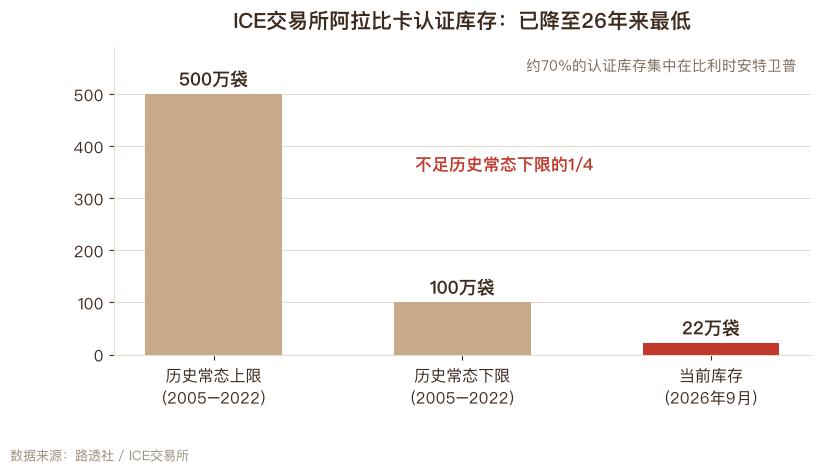
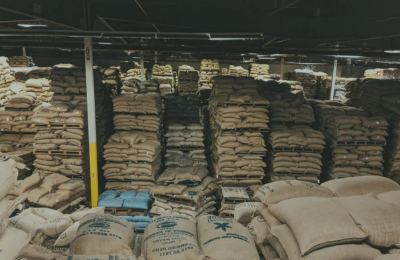
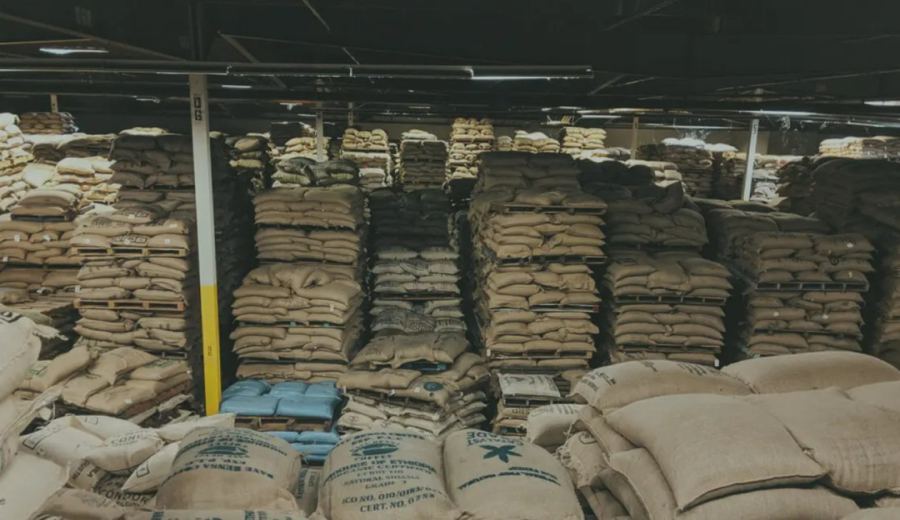
Just how low are the inventories? According to reports, current ICE certified stocks are less than 220,000 bags, far below the 1 million to 5 million bag range commonly seen from the mid-2000s to early 2022. More critically, about 70% of these stocks are concentrated in Antwerp, Belgium, with almost no remaining storage capacity elsewhere. It is precisely because inventories are at historically low levels that Arabica futures prices were supported to climb to $3.50 per pound in July, reaching a nearly six-month high.
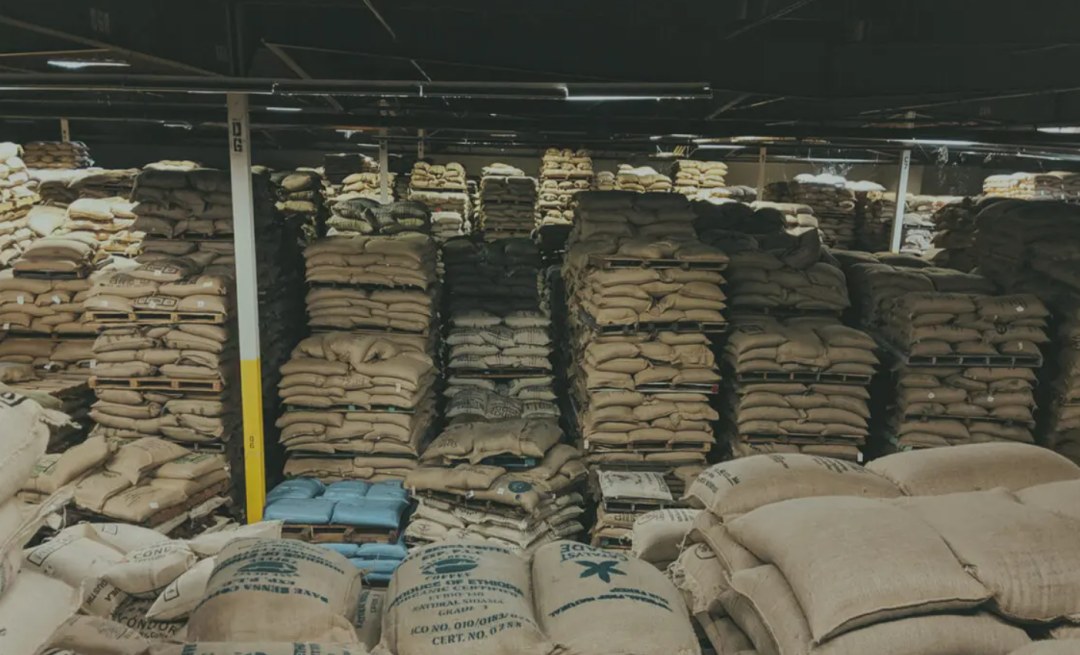
Currently, coffee from Brazil is entering the exchange in bulk. Data shows that over 62,000 bags of Brazilian coffee have arrived at warehouses, awaiting testing and certification to participate in December futures contract trading. Market sources indicate that major international trader Olam is planning to ship 150,000 to 200,000 bags of coffee to the exchange to fulfill its December contract delivery obligations; another trader, LDC, is making similar moves (neither company has publicly responded). These actions are expected to significantly increase the stock levels in delivery warehouses.
Further observation of customs data also reveals a clear trend. Brazilian brokerage firm Terra Investimentos analyzed official figures and noted that Brazil’s coffee exports to Belgium this year surged by 245.3% compared to the same period last year, totaling 31,500 metric tons, equivalent to over 525,000 bags. The market generally believes this is an arrangement by traders to send coffee to exchange delivery warehouses. Additionally, some traders revealed that Brazil’s August Arabica green bean exports were about 150,000 bags higher than usual, suggesting these may also have been shipped to the exchange. Overall, this wave of exports from Brazil is expected to more than double the quantity of ICE certified stocks.
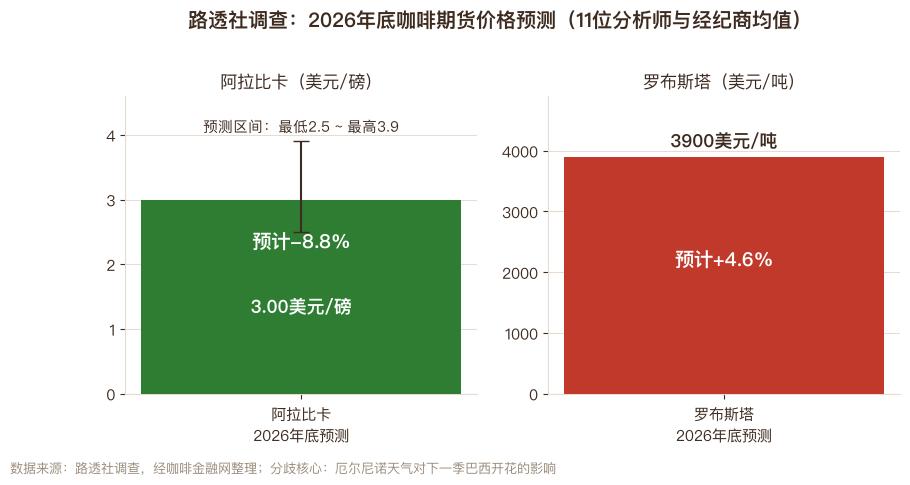
So, how will prices evolve in the future? According to a Reuters survey released on Monday, the average estimate from 11 analysts and brokers is that by the end of 2026, Arabica futures prices will close at $3.00 per pound, down about 8.8% from current levels; in contrast, Robusta coffee is expected to rise by 4.6% to $3,900 per ton. However, market opinions are notably divided: predicted price ranges for Arabica range from a low of $2.50 to a high of $3.90 per pound, with the main point of contention being the impact of El Niño weather on the flowering of Brazil’s next coffee crop. For instance, HedgePoint pointed out that if flowering proceeds normally, prices may fluctuate between $2.30 and $2.60 per pound; conversely, prices could even be higher than they are now.
From a supply fundamentals perspective, the market generally expects Brazil to achieve record coffee production in the 2026/27 season, and the global coffee oversupply situation may expand from 1.7 million bags in 2025/26 to 8.2 million bags. However, analysts caution that supply is not the real issue—the key lies in when this coffee will actually enter the market. Many well-capitalized producers currently face little sales pressure, having already recovered their production costs, and since Brazil is a region where coffee storage costs are relatively low, supply elasticity is actually limited. Meanwhile, major consumer markets such as the United States, Europe, and Japan have low inventory levels, making the market highly sensitive to supply disruptions, weather changes, or logistics issues.
In summary, the trajectory of Arabica coffee prices in the coming months will hinge on the tug-of-war between two forces: on one hand, the large influx of Brazilian coffee will quickly replenish exchange inventories, putting downward pressure on prices; on the other hand, historically low inventory levels, the uncertainty of El Niño weather, and the fragile supply chains of consuming countries could all trigger market volatility at any time. For industry professionals and buyers, rather than simply tracking price changes, it is more important to closely monitor ICE certified inventory data and weather conditions during Brazil’s coffee flowering period—these are the key indicators that will influence future market trends.
The above content is compiled by CoffeeHunters, a coffee news website.