Introduction:The Nyungwe region in Rwanda is renowned for its unique high-altitude environment and meticulous washed processing methods, producing specialty coffees with bright acidity and layered complexity. This article delves into the region’s geographical conditions, key varieties, processing techniques, and typical flavor profiles, while also providing expert pour over parameters and equipment recommendations. It serves as an introductory guide for those seeking African-flavored beans and aiming to refine their brewing skills.
Rwanda’s coffee cultivation history dates back to 1904, when German missionaries first introduced coffee seedlings. However, prior to the social unrest in 1994, the country’s coffee production was predominantly focused on commercial-grade beans, with the specialty market largely overlooked. After the unrest subsided, with the support of international organizations and aid resources, Rwanda gradually rebuilt its coffee industry chain and hosted its first Cup of Excellence international competition in 2008, marking its official entry into the global specialty coffee scene.
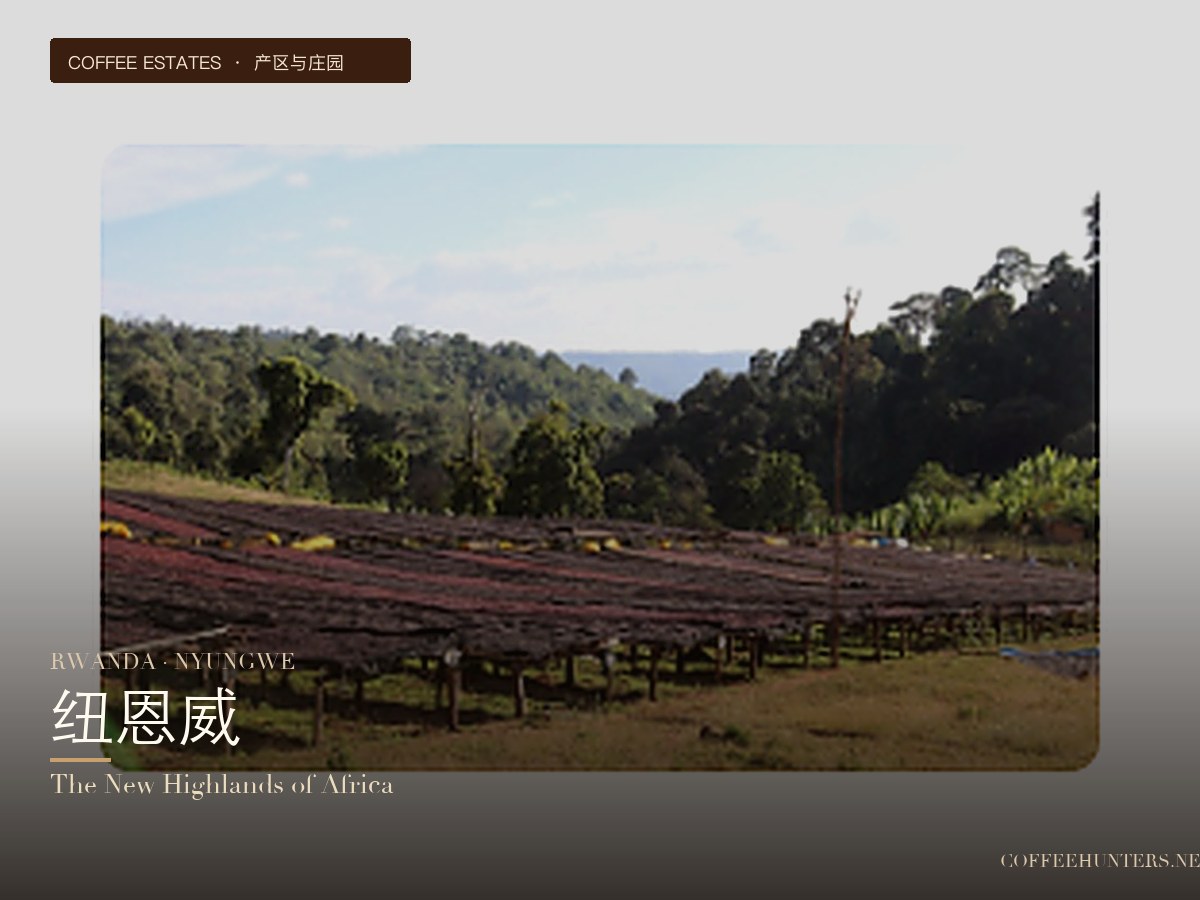
The Nyungwe region is located in southwestern Rwanda, bordering Burundi, and is one of the country’s core specialty coffee-producing areas. Its main coffee farms are clustered around the Nyungwe Forest National Park, with种植 elevations generally ranging between 1,500 and 2,000 meters, making it one of Africa’s few high-altitude coffee regions. This area not only features rugged terrain and cool climates but also benefits from a microclimate of year-round humidity and mist due to its proximity to vast mountain rainforests, creating an ideal environment for slow fruit maturation and flavor accumulation.
In terms of variety, nearly all of Rwanda’s coffee is dominated by Red Bourbon, accounting for over 95% of plantings. This classic Arabica cultivar is celebrated for its stable and excellent cupping performance, often exhibiting bright acidity, full body, and pronounced sweetness. Additionally, in some specialty lots, rare Bourbon-family varieties selected by local agricultural institutions—such as Mayaguez or Jackson—can be found, adding further unique aromatic layers to the coffee.
Rwandan coffee is almost exclusively processed using the washed method, with Central Washing Stations (CWS) playing a pivotal role. These stations purchase freshly harvested coffee cherries from numerous smallholder farmers in the surrounding areas and uniformly perform pulping, fermentation, washing, and drying steps to ensure consistent processing quality across all batches. This “central station paired with smallholder production” model has become a cornerstone of Rwanda’s rise in the specialty coffee arena.
A top-tier cup of Rwandan coffee often delivers an impressive sensory profile: upon sniffing, it exudes intense floral and fruity aromas reminiscent of jasmine and orange blossom notes commonly found in Ethiopian beans; on the palate, it showcases medium to high acidity with a tartness akin to Kenya’s tartaric acid character; the mid-palate blends bright fruitiness from blackcurrant, ripe grapes, and citrus; and the finish lingers with the mellow sweetness of black tea and honey. The overall cup is layered, with a balanced interplay of sweetness and acidity, earning it the reputation as a “quintessential African Bourbon.”
Within the region, representative cooperatives include Dukunde Kawa, Abakundakawa, and Koakaka, with Dukunde Kawa having won multiple accolades in the Cup of Excellence international evaluations. Among processing stations, premium lots produced by entities such as Muraho Trading and Long Miles Coffee have also garnered high acclaim and recognition in the international specialty coffee market.
It’s worth noting that Rwanda’s coffee production is predominantly based on a decentralized smallholder model, with large private estates being extremely rare. However, a few “estate-level” processing units—such as Bumbogo Estate and Kanzu Washing Station—carefully select coffee cherries from single plots to craft terroir-driven specialty lots, which often fetch impressive prices in international auctions.
If you’re brewing Rwandan coffee at home, it’s recommended to use pour over devices that highlight acidity and layering, such as the V60, Origami, or Kalita Wave. The ideal water temperature range is 90–92°C, with a suggested coffee-to-water ratio of 1:15 to 1:16, and a medium-fine grind size. For a bright expression of floral and fruity notes, the V60’s single-pour (一刀流) method with fast extraction is ideal; if you prefer to emphasize sweetness and a fuller body, the Kalita Wave’s three-pour method is a better choice.
Lastly, it’s important to highlight that Rwanda’s coffee industry places great emphasis on sustainability alongside quality. Most cooperatives have obtained international certifications, including labels such as Rainforest Alliance and Fair Trade. Coffee cultivation in the region is often integrated with forest conservation, enabling economic benefits and ecological protection to advance hand in hand—a model of responsible agriculture.
The above content is compiled by CoffeeHunters, a coffee news website.