Introduction:Antigua is one of Guatemala’s most iconic coffee-growing regions, renowned for the unique flavors nurtured by its volcanic soil. This article delves into the region’s geographical conditions, cultivated varieties, processing methods, and classic flavor profiles, while also providing practical pour over parameters to help you better understand the essence of this classic Central American washed coffee.
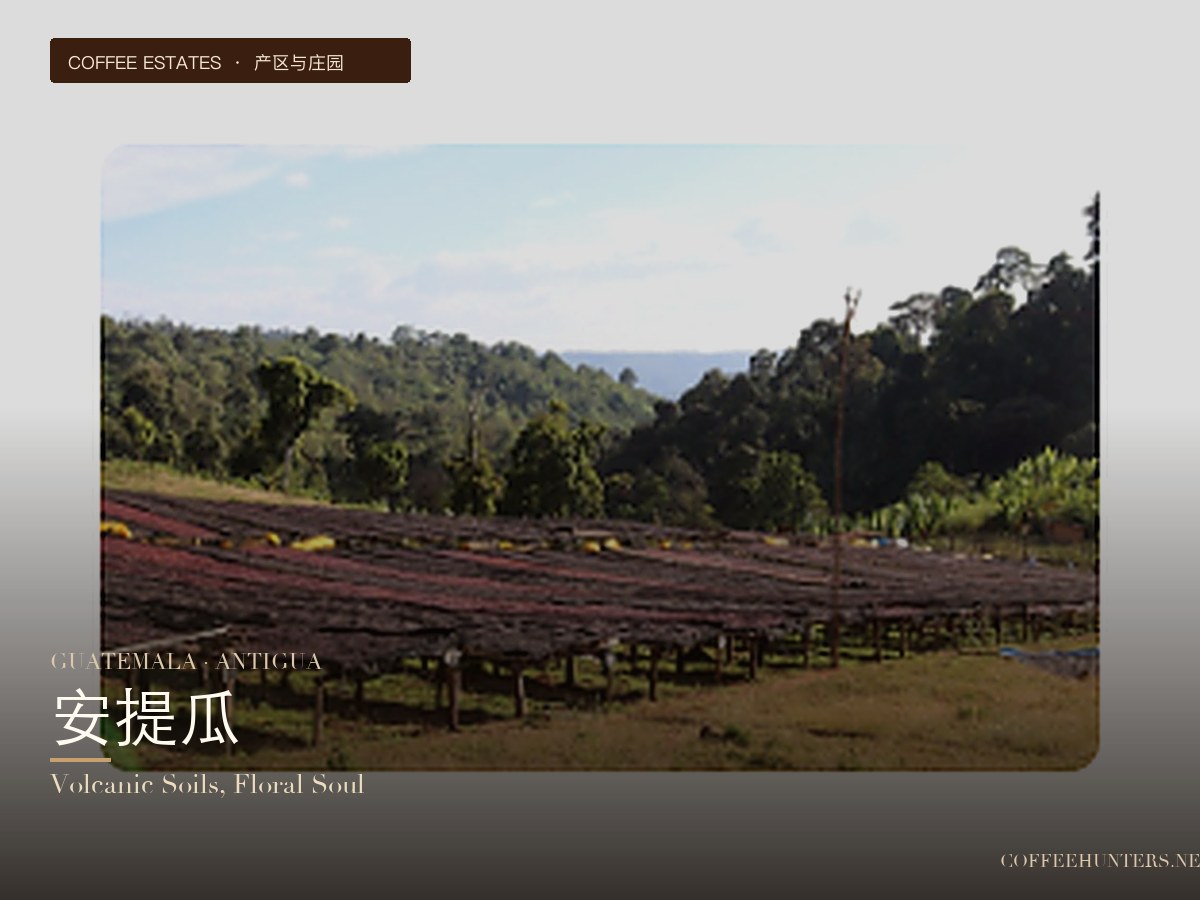
Antigua (Antigua) is located in the Sacatepéquez department in central Guatemala, at an altitude ranging from 1,500 to 1,700 meters. Its geographical location is unique, surrounded on three sides by the active volcanoes Agua, Fuego, and Acatenango. As early as around 1740, Jesuit missionaries introduced coffee cultivation to the area, and by the 19th century, coffee had become a significant cash crop. To this day, Antigua is not only one of Guatemala’s earliest coffee regions to receive origin certification but is also regarded as a classic representation of Central American specialty coffee.
The most distinctive feature of this region is its exceptionally fertile volcanic soil. Due to the frequent activity of nearby volcanoes, the soil is rich in minerals such as potassium, phosphorus, and magnesium—all highly beneficial to coffee growth—and it offers excellent drainage and aeration. This soil environment encourages coffee tree roots to grow deep and absorb a more diverse range of nutrients, resulting in coffee that exhibits a more layered structure and distinct mineral tones in the cup. Additionally, volcanic ash deposited after eruptions forms a natural fertile layer, further contributing to the unique “rich mineral character” of Antigua coffee.
The terrain of Antigua is basin-like, surrounded by mountains, creating a distinctive microclimate. During the dry season (approximately November to April of the following year), abundant sunshine and dry air help accumulate sugar in the coffee cherries; in the rainy season (May to October), moist airflow from the Caribbean brings regular rainfall, supplying the water needed for coffee tree growth. This climate, with clearly defined and stable wet and dry seasons, provides ideal ripening conditions for coffee, often resulting in beans that showcase outstanding sweetness and complexity in flavor.
In terms of cultivated varieties, Antigua primarily grows Bourbon, which accounts for over 60% of total planting area. The Bourbon variety, with its relatively lower yield, delivers higher sweetness concentration and complexity, forming a key pillar of Antigua coffee’s high quality. Another approximately 30% of the area is planted with Catuai, a moderately yielding and resilient variety. In some specialty-grade batches, rarer varieties such as Pacamara or Yellow Bourbon can occasionally be found, adding extra variation and surprise to the flavor.
In terms of processing methods, Antigua almost exclusively uses washed processing, which is one of the main reasons for its clean and well-defined flavors. Local processing mills generally follow the standard procedure of depulping, fermenting, washing, and drying. The fermentation stage typically lasts between 14 to 24 hours, after which the beans are thoroughly rinsed with clean water to remove any remaining mucilage. Drying is mostly carried out on open-air patios for about 7 to 14 days, ensuring the coffee beans reach an ideal moisture content and stable quality.
A high-quality washed coffee from Antigua often exhibits the following flavor characteristics during cupping: in the dry aroma, notes of caramel, orange peel, and lightly roasted nuts can be detected; upon tasting, the acidity is bright and rounded, often accompanied by the fresh tones of lemon or green apple; the mid-palate transitions into a soft combination of milk chocolate, almond paste, and brown sugar; the finish is long-lasting, with a distinct sense of mineral weight and a hint of smokiness. Overall, it presents a balanced and full-bodied profile, serving as a model for understanding Central American washed coffee.
If you’d like to experience the charm of Antigua firsthand, pour over brewing is recommended. Using equipment such as V60, Kalita Wave, or Chemex can all highlight its delicate characteristics. It is suggested to control the water temperature between 90 to 92°C, with a brew ratio set between 1:15 and 1:16, and a medium-fine grind size is ideal. If you prefer to emphasize acidity and floral notes, using a V60 with a single pour method is a good choice; if you wish to enhance sweetness and overall body, the Kalita Wave or French press would be more suitable, helping achieve fuller extraction and softer flavor lines.
In summary, Antigua is not only a classic name within Guatemala’s coffee map but also a defining representative of the “Central American washed” style. With its consistent quality and uniform flavor profile, it showcases a unique personality that balances sweet and acidic notes, features layered complexity, and delivers a distinct mineral character. Gaining a deeper understanding of Antigua not only allows you to savor an exceptional coffee but is also a key step in mastering the core vocabulary of Central American specialty coffee.
The above content is compiled by CoffeeHunters, a coffee news website.